The Indian Army has recruited generations of soldiers from different regions, communities and physical backgrounds. Among the millions who have worn the uniform, Sahil Kumar and Janak Singh hold a particularly unusual place because of their extraordinary height.





Both soldiers stood close to or above seven feet tall, making them exceptional even outside the military. Sahil Kumar became one of the tallest recruits documented in the modern era, while Janak Singh was identified as the tallest serving Indian Army soldier in an archival photograph from 1948.
Complete height records of every soldier who has served in the Indian Army are not publicly available. However, surviving photographs and contemporary captions establish Sahil Kumar and Janak Singh as two of the tallest publicly documented soldiers associated with the force.
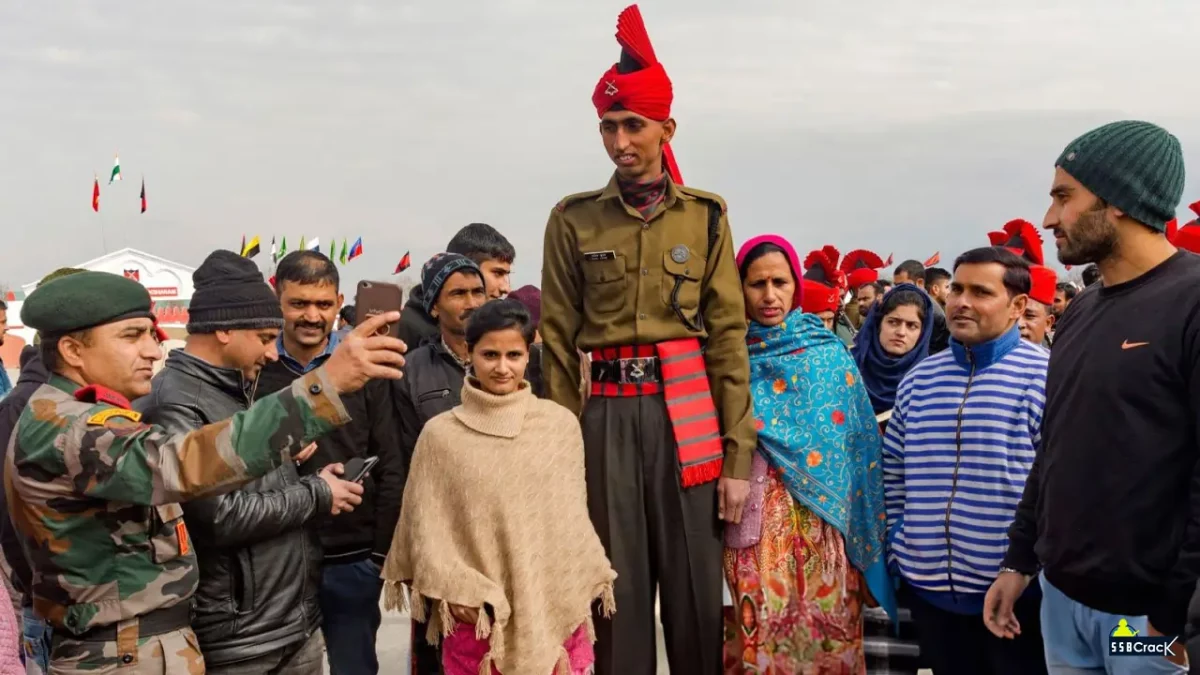
Sahil Kumar attracted nationwide attention during a passing-out parade held at Rangreth on the outskirts of Srinagar on February 26, 2018. The young recruit from Jammu and Kashmir stood visibly taller than every other soldier participating in the ceremony.
A contemporary photographic caption listed Sahil Kumar’s height as 218 centimetres. While some reports described him as 7 feet 1 inch tall, the metric measurement converts to approximately 7 feet 2 inches, making him an extraordinary presence on the parade ground.
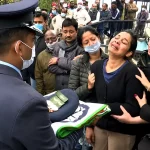
Photographs from the ceremony showed Sahil towering over his fellow recruits as he celebrated with members of his family. His exceptional height immediately attracted public attention, but completing Army training required much more than an impressive physical appearance.
Sahil underwent the same demanding military training and assessments required of the other recruits. He successfully cleared the prescribed physical, medical and professional standards before being allowed to participate in the passing-out parade.
He was among more than 250 recruits who took the military oath after completing 49 weeks of rigorous training. The programme prepared them for the physical, professional and operational responsibilities involved in serving as soldiers of the Indian Army.
The training reportedly included weapons handling, map reading and preparation for counter-insurgency operations. These skills were especially important for recruits joining a regiment with extensive operational responsibilities in Jammu and Kashmir.
The recruits were taught to work as disciplined members of a military unit and perform effectively under challenging conditions. Intensive physical conditioning was also conducted to develop their stamina, strength, confidence and mental resilience.
Despite his unusual height, Sahil successfully completed all the required training and medical procedures. His achievement demonstrated that an exceptionally tall candidate can serve in the Army when his physical condition remains proportionate and does not interfere with military duties.
After completing their training, Sahil Kumar and the other recruits were inducted into the Jammu and Kashmir Light Infantry Regiment. Commonly known as JAK LI, the regiment has a proud military history and a deep connection with the people of Jammu and Kashmir.
The passing-out parade marked the transformation of the young recruits from civilians into trained soldiers. By taking the military oath, they formally committed themselves to serving the nation and upholding the traditions, discipline and responsibilities of the Indian Army.
For Sahil’s family, the ceremony was a moment of immense pride. Photographs showed the exceptionally tall soldier standing with his relatives after successfully completing almost a year of physically and mentally demanding training.
His height made him famous across the country, but his greater accomplishment was earning the right to wear the uniform. He completed every stage of training and proved that he possessed the discipline and determination expected of an Indian Army soldier.
Nearly seven decades before Sahil’s passing-out parade, another exceptionally tall Indian soldier was photographed standing in formation. He was identified as Janak Singh, a 26-year-old Rajput soldier from Ambala.
The archival photograph was reportedly taken on November 13, 1948, shortly after India gained independence. It captured an important period when the Indian Armed Forces were undergoing major reorganisation following Independence and Partition.
Janak Singh was described in the accompanying historical caption as the tallest soldier serving in the Indian Army at that time. His height was recorded as almost 2.13 metres, or approximately six feet and eleven-and-three-quarter inches.
In the photograph, Janak Singh can be seen standing alongside other soldiers holding rifles. His head and shoulders rise dramatically above the men around him, making his extraordinary height immediately noticeable.
The image provides a rare glimpse into the early years of the Indian Army after Independence. The soldiers are shown wearing the training attire of that period and standing in a disciplined military formation with their weapons.
Even among physically fit military recruits, Janak’s towering frame appears exceptional. His height dominated the photograph and explains why he was specifically identified in the original caption as the tallest soldier in the Army.
The historical caption identified him as a Rajput from Ambala and mentioned that he was 26 years old. Ambala was an important military centre and played a significant role during the restructuring of the armed forces after Partition.
However, detailed information about Janak Singh’s regiment, postings, length of service and later life is not readily available in public records. His identity and extraordinary height have primarily survived through the archival photograph and its accompanying description.
He should not be confused with other military personnel who shared the name Janak Singh. The unusually tall soldier was the 26-year-old serviceman from Ambala photographed in 1948, rather than Major General Janak Singh Katoch or another similarly named officer.
When their reported measurements are compared, Sahil Kumar was approximately 218 centimetres tall, while Janak Singh stood at nearly 213 centimetres. Sahil was therefore around five centimetres taller than the soldier documented in 1948.
Janak Singh was recognised as the tallest serving Indian Army soldier of his era. Sahil Kumar, meanwhile, became one of the tallest recruits documented in modern Indian military photography after completing his training in 2018.
Their stories belong to very different periods of Indian military history. Janak served during the demanding post-Independence era, while Sahil entered a modern Army supported by contemporary training methods, equipment and operational doctrines.
Despite the gap of almost 70 years, both soldiers became memorable because they stood far above their comrades. Their photographs offer a striking comparison between two generations of exceptionally tall Indian Army personnel.
The Indian Army prescribes minimum physical standards based on the category of entry, recruiting region and nature of the appointment. The requirements may vary for general-duty soldiers, technical personnel, clerks, tradesmen, women candidates and officer entries.
Depending on the category and region, minimum height requirements can range from approximately 157 centimetres to around 170 centimetres. Relaxations are also provided to candidates from specified communities, hill regions, tribal areas and certain military families.
Eligible Gorkha candidates, outstanding sportspersons and relatives of serving or former military personnel may also receive relaxation under prescribed recruitment rules. These provisions acknowledge the physical diversity of candidates arriving from different regions of India.
Army recruitment notifications generally focus on minimum height, chest measurements and proportionate body weight. They do not prominently mention one universal maximum height that applies to every category of entry into the Indian Army.
However, extremely tall candidates must still satisfy complete medical requirements. Their weight should be proportionate to their age and height, and their stature should not prevent them from performing physical tests, training exercises or operational duties.
Height was the feature that made Sahil Kumar and Janak Singh publicly famous, but military service depends on far more than physical appearance. Discipline, fitness, teamwork, courage and the ability to perform under pressure are essential qualities for every soldier.
Sahil’s completion of 49 weeks of training proved that he possessed the physical and mental strength required to serve. His passing-out parade was not merely a public spectacle involving an unusually tall recruit but the culmination of months of sustained effort.
Similarly, Janak Singh’s photograph presents him not as a civilian curiosity but as a disciplined soldier standing in formation with his comrades. His extraordinary height made him distinctive, but he remained part of a professional military unit.
Together, their stories represent two remarkable moments separated by generations. Janak Singh stood nearly seven feet tall in the Indian Army of 1948, while Sahil Kumar emerged as an even taller recruit in 2018.
Until comprehensive official historical records become publicly available, it may not be possible to establish an undisputed all-time ranking of the tallest soldiers. Nevertheless, Sahil Kumar and Janak Singh remain two of the tallest and most strikingly documented soldiers in Indian Army history.