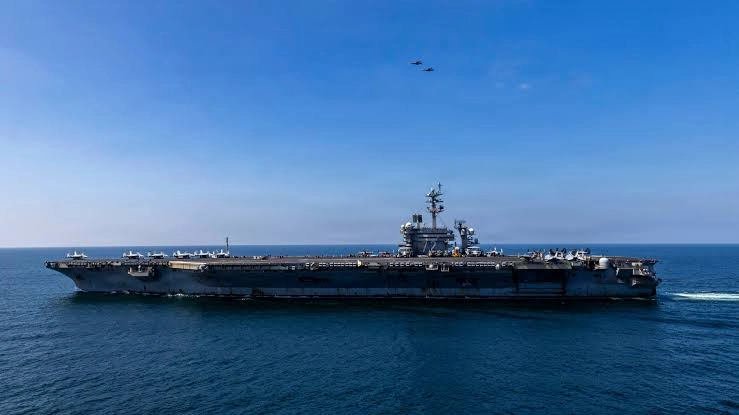
The prolonged deployment of the US Navy’s aircraft carrier USS Abraham Lincoln is reportedly taking a severe toll on sailors and Marines aboard the vessel, with families alleging multiple incidents in which crew members attempted or considered going overboard amid mounting mental and physical strain.





According to reports cited by Military Times and Stars and Stripes, the carrier has now spent around nine months at sea, including approximately 250 consecutive days without a port call. The vessel is carrying roughly 5,000 sailors and Marines, making the deployment one of the most demanding in its recent operational history.
The concerns came to wider attention following a town hall meeting in San Diego, where around 200 family members reportedly confronted senior US Navy officials over the conditions faced by their relatives aboard the carrier.
Families described the repeated extensions to the deployment as a major source of stress. One family member reportedly told acting Navy Secretary Hung Cao that her husband had expressed fears about not waking up the following day, highlighting the seriousness of the mental-health concerns being raised.
Another sailor’s wife, Annabelle Loma, told Military Times that her husband had attempted to jump overboard after the deployment was extended repeatedly. She said he was exhausted and concerned about the possible consequences for his career.
In a separate incident cited in the reports, another sailor’s wife said her husband intervened when a fellow crew member attempted to go overboard, grabbing the sailor and pulling them back onto the deck.
The reported incidents have intensified concerns among families about the psychological impact of the unusually long deployment and the availability of adequate support for sailors experiencing severe stress.
The USS Abraham Lincoln departed San Diego on November 21, initially for a deployment in the Pacific. Following the escalation of the US-Israel conflict with Iran, the carrier was redirected towards the Middle East and subsequently became involved in combat operations.
The deployment was originally expected to conclude in May but has reportedly been extended several times. According to reports, the crew has had only limited opportunities to go ashore, with stops reported in Guam in December and Oman in July.
The prolonged operational tempo has also been accompanied by complaints about living conditions aboard the carrier. Reports have cited issues including mould in showers, broken toilets and laundry facilities, periods without hot water and shortages of basic supplies.
California Congressman Mike Levin has publicly raised concerns about the conditions, citing complaints from crew members about food quality, water availability, sanitation and other basic amenities.
Reports have also previously highlighted concerns about food shortages and poor-quality meals aboard the carrier. Earlier criticism of these reports was dismissed by US Defence Secretary Pete Hegseth as “fake news”, according to the report.
The latest allegations, however, have renewed questions about the ability of the US Navy to sustain personnel welfare during exceptionally prolonged deployments, particularly when ships remain at sea for months with limited opportunities for rest and recovery.
The USS Abraham Lincoln’s situation also highlights the wider challenge of balancing operational requirements with crew welfare during extended combat deployments. Families have called for greater transparency from military leadership and stronger support for sailors facing prolonged separation, exhaustion and psychological stress.
The US Navy has yet to publicly confirm all of the specific allegations regarding attempted overboard incidents described by family members. The reports nevertheless underline growing concerns surrounding the human cost of maintaining a prolonged carrier deployment amid continuing military operations in the Middle East.