

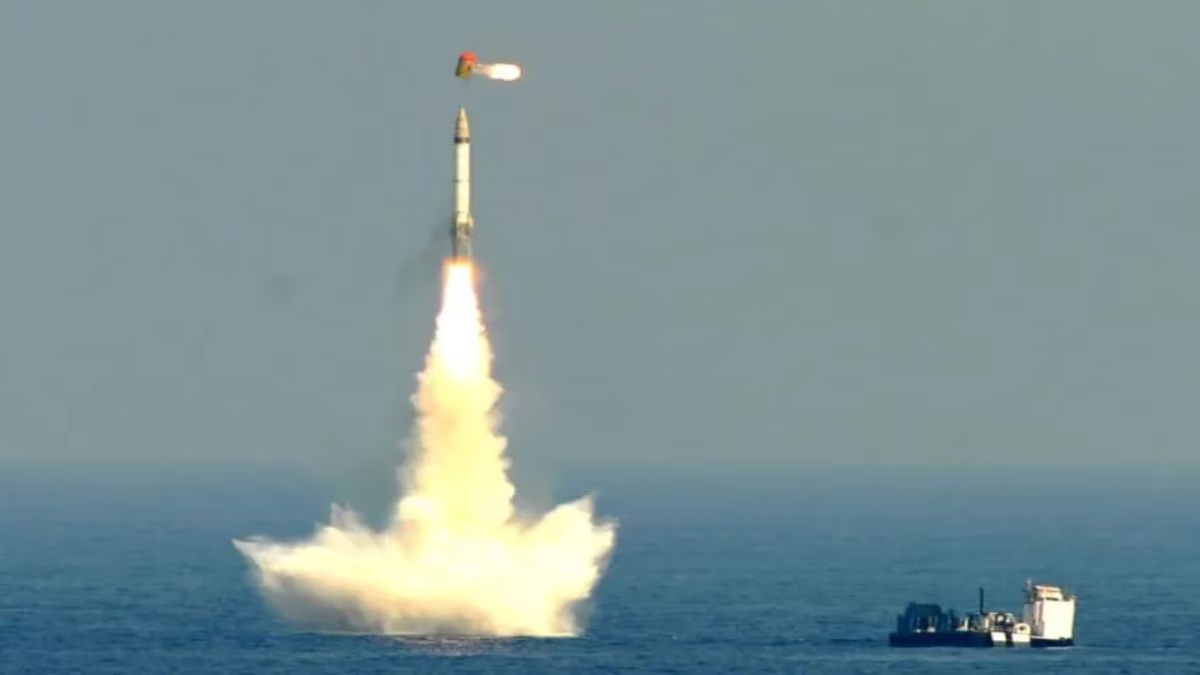
India has successfully conducted a test of the K-4 submarine-launched ballistic missile (SLBM), marking a major milestone in strengthening its sea-based nuclear strike capability. The missile was test-fired from the nuclear-powered submarine INS Arighaat in the Bay of Bengal, off the coast of Visakhapatnam, on Tuesday.





Designed to strike targets at a range of up to 3,500 kilometres, the K-4 missile provides a substantial boost to India’s undersea nuclear deterrence, completing a critical component of the country’s nuclear triad—the ability to deliver nuclear weapons from land, air, and sea.
The K-4 SLBM, which was commissioned into the Indian Navy on August 29, 2024, places India among a select group of nations possessing operational submarine-launched nuclear missile capability. The missile is capable of carrying a 2.5-ton nuclear warhead and can be deployed from Arihant-class nuclear submarines.
Derived from the land-based Agni-III ballistic missile, the K-4 has been specially modified for underwater launch. The missile is engineered to eject from a submarine launch silo, breach the ocean surface, and then ignite its rocket motor to begin its powered flight—an advanced capability mastered by only a handful of countries.
Defence experts describe the K-4 as the stealthiest leg of India’s nuclear triad, as ballistic missile submarines are designed to operate silently for extended periods during deterrence patrols, remaining hidden in vast oceanic spaces and ensuring a credible second-strike capability.
The K-series of missiles is named in honour of A P J Abdul Kalam, reflecting his pivotal role in India’s Integrated Guided Missile Development Programme (IGMDP).
The successful test underscores India’s growing strategic maturity, indigenous missile development capability, and commitment to maintaining a credible minimum deterrence posture in an increasingly complex regional security environment.