

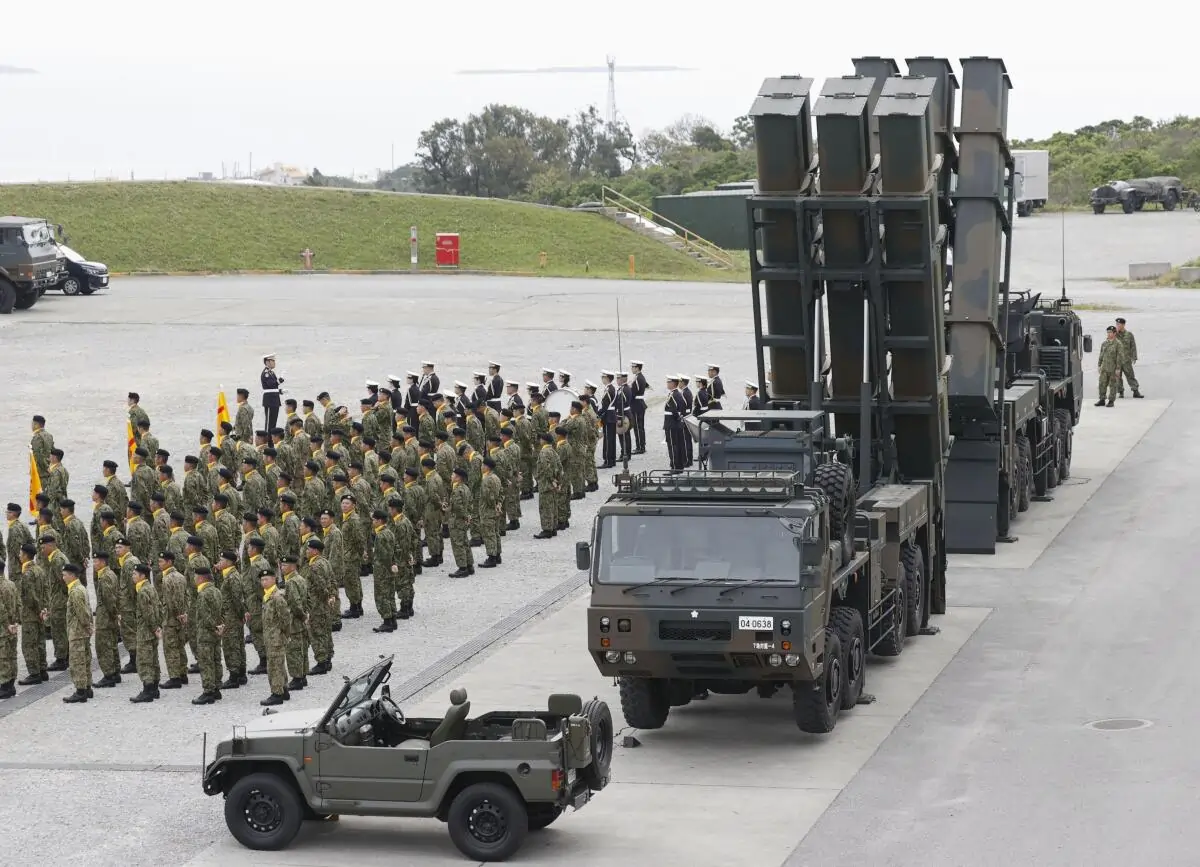
Japan’s Cabinet has approved a record defence budget exceeding ¥9 trillion (about $58 billion) for fiscal year 2026, marking a sharp escalation in military spending amid mounting regional tensions, particularly with China. The draft allocation represents a 9.4% increase over the previous year and advances Tokyo’s plan to raise defence spending to 2% of GDP—a goal the government now aims to meet two years ahead of schedule.





Under Sanae Takaichi, the government has committed to strengthening Japan’s strike-back capabilities and coastal defences, responding to pressure from allies and a rapidly changing security environment in the Indo-Pacific.
Shift Toward Long-Range Strike Capabilities
A central feature of the budget is the expansion of offensive capabilities, a departure from Japan’s post–Second World War constraints. More than ¥970 billion is earmarked for “standoff” weapons, including ¥177 billion to upgrade Type-12 surface-to-ship missiles with an extended range of about 1,000 km. The first deployments are scheduled for Kumamoto prefecture in Japan’s southwest by March, a year earlier than planned.
Japan’s 2022 National Security Strategy identifies China as its primary strategic challenge, calling for a more proactive posture for the Japan Self-Defense Forces within the U.S.–Japan alliance.
Drones and Unmanned Systems to Offset Manpower Gaps
To address staffing shortages driven by an ageing population, the budget allocates ¥100 billion to a “SHIELD” unmanned defence system—a network of aerial, surface, and underwater drones for surveillance and defence by March 2028. Initial procurements may come from overseas suppliers (potentially Turkey or Israel) to accelerate deployment.
Rising Frictions With China
Tensions have intensified following statements by Prime Minister Takaichi suggesting Japan could act if China moves against Taiwan. Recent Chinese aircraft carrier operations near Japan’s southwestern islands and incidents involving radar locks on Japanese aircraft prompted protests from Tokyo. Japan’s Defence Ministry will establish a new office to analyse Chinese military activity, capabilities, and countermeasures.
Industrial Base and International Collaboration
The budget also invests in Japan’s defence industry and exports, including ¥160+ billion for a next-generation fighter jet co-developed with Britain and Italy, targeted for 2035 deployment, alongside AI-enabled “loyal wingman” drones. Nearly ¥10 billion is allocated to support defence exports, buoyed by Mitsubishi Heavy Industries securing Australia’s Mogami-class frigate upgrade contract.
What Comes Next
Parliament must approve the defence allocation by March as part of a ¥122.3 trillion national budget. If the five-year build-up proceeds as planned, Japan will become the world’s third-largest military spender, behind the United States and China. Funding relies on higher corporate and tobacco taxes, with income tax increases slated from 2027—though sustaining spending beyond 2% of GDP remains a subject of debate.
The decision signals a historic recalibration of Japan’s security posture, prioritising deterrence, readiness, and technological edge in an increasingly contested region.