In the Indian Army, the Subedar Major holds a position of profound importance, blending historical legacy with contemporary operational demands. This rank, the pinnacle for Junior Commissioned Officers (JCOs), embodies leadership that connects the grassroots soldiering experience with strategic command decisions. While traditionally a unit-level role, recent developments have elevated it to an army-wide appointment, underscoring the army’s commitment to inclusive leadership. This detailed exploration covers the origins, structure, duties, and evolving significance of the Subedar Major, drawing from established military practices and recent institutional changes.





Historical Evolution
The Subedar Major rank traces its roots to the colonial era under the British East India Company. Introduced on October 28, 1817, in the Native Infantry of the Bengal Army—one of the three Presidency armies—it was designed to provide indigenous leadership within the ranks. The Madras Army adopted it on February 2, 1819, and by 1825, an equivalent rank of Risaldar-Major was established in the Bengal Native Cavalry, later extended to the Bombay and Madras Presidencies. During British rule, Subedar Majors were known as Viceroy’s Commissioned Officers and wore insignia equivalent to a British major, though they remained subordinate to all British officers.
Post-independence in 1947, following the Partition of India, the British Indian Army was divided between India and Pakistan, retaining the Subedar Major as the senior-most JCO rank in both forces. Over decades, the role has adapted to the needs of a sovereign nation’s military, emphasizing national ethos over colonial structures. In the modern Indian Army, with over 1.4 million active personnel as of recent estimates, Subedar Majors continue to serve as custodians of regimental traditions while integrating technological and social advancements. The rank’s evolution reflects broader military reforms, including increased focus on welfare and inclusivity, especially with growing diversity such as women’s integration into various roles.
Rank Versus Appointment: Clarifying the Distinction
The term “Subedar Major” refers both to a rank and, in specific contexts, an appointment. As a rank, it is the highest achievable for JCOs, typically attained after years of service progressing from Naib Subedar to Subedar. Exceptional Subedar Majors may receive honorary commissions as Honorary Lieutenants or Captains, recognizing outstanding contributions.
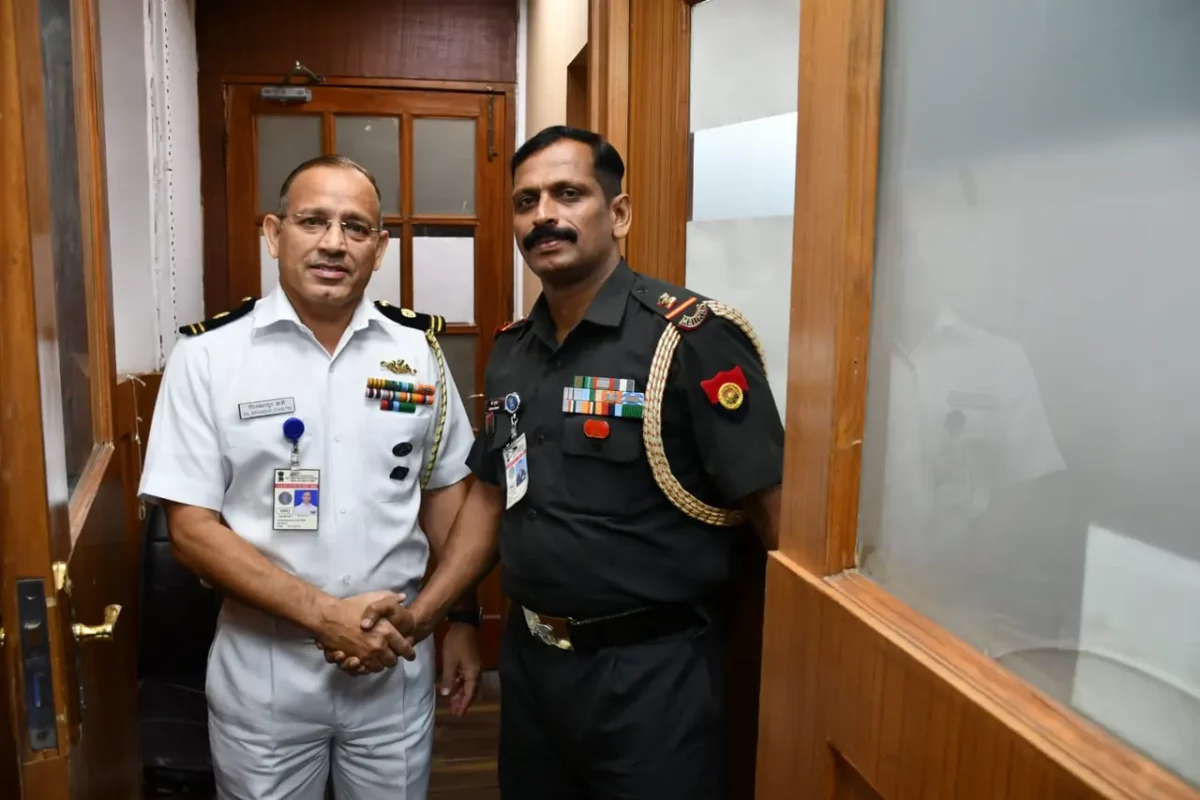
At the unit level (e.g., battalion or regiment), the Subedar Major is an appointment held by the senior-most JCO, often addressed as “SM Sahab” with immense respect. This position involves direct oversight of daily operations. In contrast, the “Army Subedar Major” is a newer, apex appointment instituted on June 16, 2023, to represent JCOs and soldiers at the highest levels of the Indian Army. This role, formalized across battalions, brigades, divisions, corps, commands, and Army Headquarters, acts as a bridge to senior leadership. The first holder was Subedar Major Gopa Kumar S (Honorary Lieutenant), succeeded by Subedar Major Durgesh Singh in January 2026. This appointment highlights the army’s emphasis on empowering junior leaders, ensuring grassroots concerns reach decision-makers.
Promotion to Subedar Major is merit-based, requiring extensive experience, integrity, and leadership skills. At the army level, selection is even more rigorous, focusing on individuals with proven track records in soldier welfare and operational excellence.
Roles and Responsibilities: A Multifaceted Leadership Position
Subedar Majors are the backbone of unit functionality, serving as advisors, administrators, and mentors. Their duties encompass a wide spectrum, ensuring discipline, morale, and efficiency. Below is a table outlining key responsibilities, categorized for clarity:
| Category | Key Responsibilities | Examples/Notes |
|---|---|---|
| Advisory and Leadership | Act as chief advisor to the Commanding Officer (CO) on morale, discipline, and unit functionality; mentor young officers and soldiers. | Provide confidential insights on troop welfare; nurture leadership in juniors. |
| Discipline and Security | Enforce standards, address violations, report incidents affecting security or morale; oversee unit security including troops on assignments. | Maintain collective discipline; ensure safety of personnel and assets. |
| Administrative and Financial | Manage personnel records, leave, compliance; handle cash transactions as unit cashier. | Oversee budgets with fiscal integrity; assist in implementing directives. |
| Training and Development | Plan and supervise training for soldiers, JCOs, and NCOs; promote continuous improvement for combat readiness. | Adapt programs to modern technology; focus on skill enhancement. |
| Welfare and Morale | Advocate for soldiers and families; address grievances; boost morale through programs. | Handle mental health and family support; strengthen soldier-leadership bonds. |
| Cultural and Ceremonial | Preserve regimental ethos, traditions, and customs; lead parades and guards of honor. | Educate on unit history; upkeep religious places within the battalion. |
| Communication Bridge | Facilitate exchanges between officers and enlisted personnel; relay concerns upward. | Ensure clear order comprehension; resolve conflicts at ground level. |
| Operational Support | Assume temporary command if needed; make tactical decisions for readiness. | Support in crises; maintain cohesion during deployments. |
These responsibilities make Subedar Majors equivalent to Group-B gazetted officers, with a salary structure reflecting their seniority (typically in the range of INR 60,000–80,000 per month, plus allowances, though exact figures vary by service length and honors). Their role is akin to Warrant Officers in other armies but uniquely emphasizes Indian regimental heritage.
Insignia and Equivalents
The insignia for a Subedar Major features the Ashoka Lion Capital with a gold National Emblem, accompanied by a red-gold-red stripe to distinguish it from commissioned officers’ ranks. This design symbolizes authority and national pride. For visual reference, the rank insignia is depicted below:
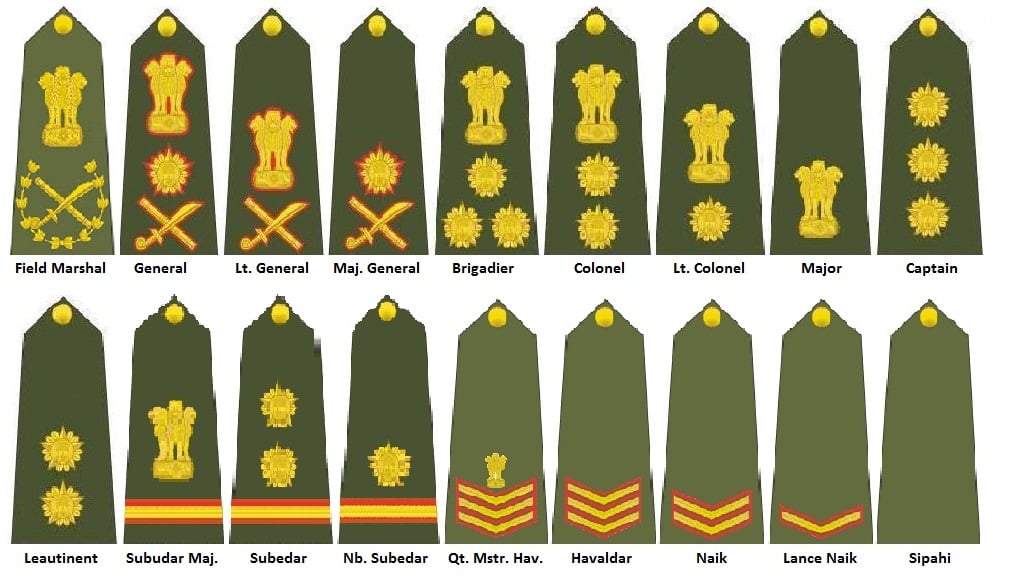
Equivalent ranks include Risaldar Major in cavalry units, with the next higher rank being Lieutenant and the next lower Subedar.
Recent Developments and Challenges
The institution of the Army Subedar Major in 2023 marks a pivotal reform, with Subedar Major Durgesh Singh’s appointment in January 2026 as the second holder emphasizing unity and trust. This move formalizes Subedar Majors at all organizational levels, enhancing morale and addressing modern challenges like evolving social norms, mental health, and technological integration. Future trends may see the role adapting to inclusivity, such as managing diverse workforces with more women in the army.
Challenges include balancing tradition with modernity, where Subedar Majors must navigate changing soldier expectations while upholding discipline. Solutions like enhanced welfare frameworks and communication tools are being implemented to sustain their effectiveness.
Conclusion
The Subedar Major appointment, whether at unit or army level, remains a cornerstone of the Indian Army’s leadership framework. By fostering duty, honor, and cohesion, it ensures the soldier’s voice is heard, blending timeless traditions with forward-looking reforms. This role not only honors historical roots but also propels the army toward greater operational excellence and inclusivity.