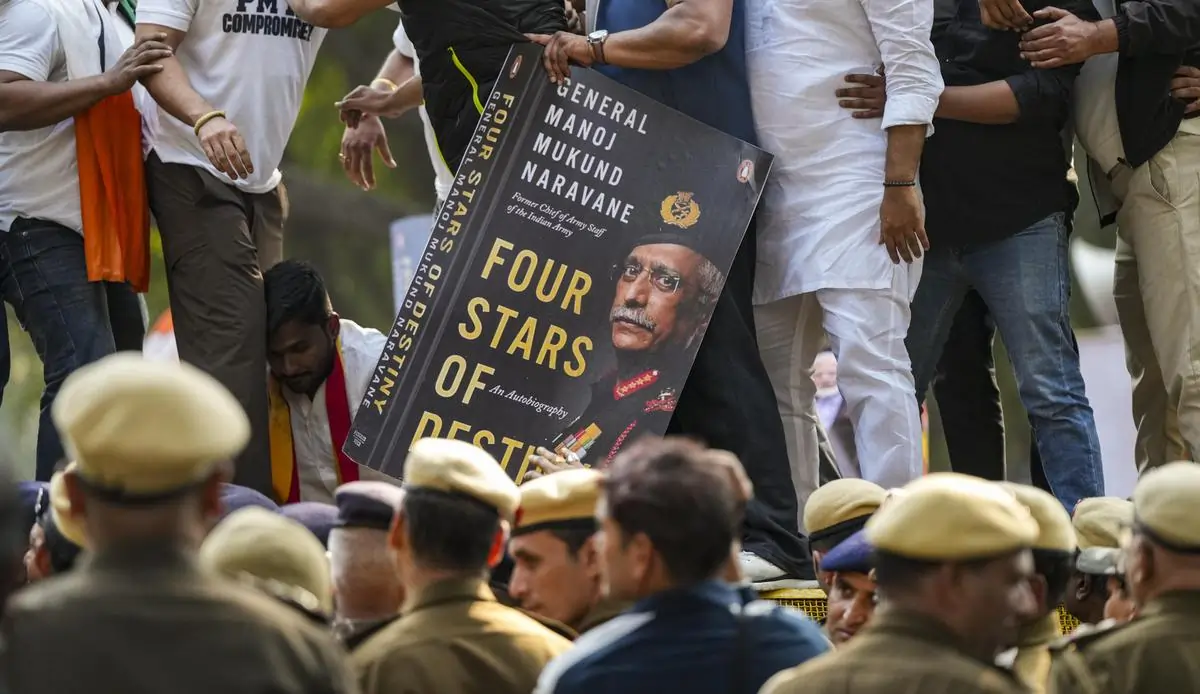
Amid the ongoing controversy surrounding former Army Chief General Manoj Mukund Naravane’s unpublished memoir Four Stars of Destiny, the Ministry of Defence is preparing a comprehensive set of guidelines for serving and retired armed forces personnel who intend to publish books in the future.





Senior defence officials confirmed that the proposed framework will clearly spell out the process to be followed before any manuscript is approved for publication. A recent meeting was held within the ministry where a detailed presentation on the issue was made, with discussions focusing on harmonising existing service rules with statutory provisions such as the Official Secrets Act.
At present, there is no single consolidated law governing book-writing by retired military officers. While serving personnel are bound by service regulations that mandate prior written permission for any literary or remunerative activity, retired officers operate in a legal grey zone. However, officials emphasised that the Official Secrets Act continues to apply for life, making it illegal to disclose classified information, sensitive operational details or material that could compromise national security.
For serving personnel, the rules remain stringent. Any proposal to write or publish a book must be routed through the chain of command, with clearances extending up to Army Headquarters or the Defence Ministry depending on the content. Topics related to operational plans, intelligence inputs, equipment capabilities, internal procedures or foreign relations are strictly prohibited. Even fictional works can attract scrutiny if they closely mirror real operations or reveal identifiable details.
Retired officers, while no longer governed by the Army Act in matters of publication, are expected to exercise judgment and seek clearance from the Defence Ministry if their manuscripts touch upon operational or sensitive issues. Lieutenant General (retd.) D.P. Pandey noted that retirement places an officer on the same civilian footing as others, but the responsibility under the Official Secrets Act remains. He added that material already in the public domain can generally be written about, while sensitive content requires prior approval.
The renewed focus on formalising guidelines follows the controversy over General Naravane’s memoir, which has not yet been published. Both the former Army Chief and his publisher, Penguin Random House India, have clarified that no print or digital copies have been released, despite reports of alleged circulation. The issue has also drawn political attention, intensifying calls for clearer norms.
Officials indicated that the upcoming guidelines aim to remove ambiguity, protect national security interests and provide clarity to authors in uniform and veterans alike. Once finalised, the framework is expected to bring consistency and transparency to how defence-related manuscripts are reviewed and approved in the future.