
Tehran/Washington, March 2, 2026 – Iran’s Islamic Revolutionary Guard Corps (IRGC) has asserted that its missile and drone strikes on U.S. military bases in the Middle East resulted in approximately 560 American personnel killed or wounded, a claim promptly dismissed by U.S. officials as exaggerated and unsubstantiated. This development arises amid escalating hostilities following joint U.S.-Israeli airstrikes on Iranian targets, which reportedly killed Iran’s Supreme Leader Ayatollah Ali Khamenei and other senior figures.





The IRGC’s announcement, issued through state-affiliated media and spokespersons, described the strikes as part of “Operation True Promise 4,” targeting at least 14 U.S. bases across countries including Bahrain, Kuwait, the United Arab Emirates, Qatar, and Saudi Arabia. According to IRGC spokesperson Ebrahim Zolfaghari, the attacks were executed with precision, inflicting significant casualties on American forces and disabling key installations, such as the Ali Al Salem Air Base in Kuwait. Iranian reports further alleged strikes on U.S. oil tankers and naval assets in the Persian Gulf and Strait of Hormuz, emphasizing that the operations were a direct response to the “aggression” by the U.S. and Israel.
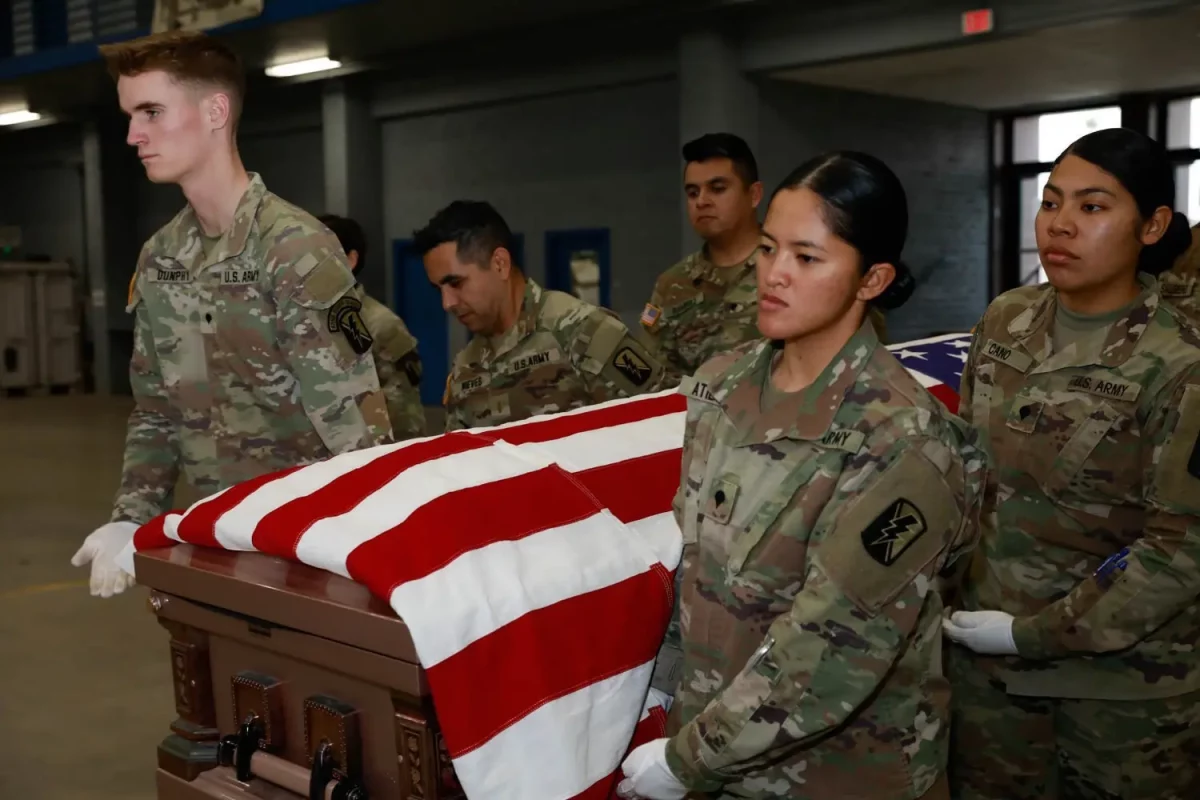
U.S. Central Command (CENTCOM), overseeing military operations in the region, categorically rejected these figures in a statement posted on X, describing the Iranian claims as “propaganda” intended to inflate the impact of their retaliation. Instead, CENTCOM confirmed that three U.S. service members were killed in action and five others seriously wounded during the exchanges, with several more sustaining minor injuries such as shrapnel wounds and concussions, allowing them to return to duty. The fatalities occurred primarily at a base in Kuwait, marking the first acknowledged American losses in the conflict, dubbed “Operation Epic Fury” by the U.S. military. Officials emphasized that damage to U.S. installations was minimal and did not disrupt ongoing operations, crediting robust air defenses for intercepting the majority of incoming missiles and drones.
President Donald Trump, addressing the situation in an interview, acknowledged the potential for casualties in warfare but reiterated that U.S. forces were “ahead of schedule” in their objectives, which include neutralizing Iranian naval capabilities and proxy networks. He expressed condolences for the fallen troops while dismissing Iranian threats of further escalation. Democratic leaders in Congress have criticized the administration for initiating strikes without explicit congressional authorization, though White House officials maintain that key lawmakers were briefed in advance.
The conflicting casualty reports highlight the information warfare accompanying the physical confrontations. Iranian state media and IRGC statements have consistently portrayed their counterstrikes as highly effective, with claims of “hundreds” of U.S. deaths echoed across various outlets. In contrast, multiple U.S. and allied sources, including assessments from the Pentagon and independent verifications, align on lower figures, with some early reports initially indicating no casualties at all before updates confirmed the deaths. Analysts suggest that Tehran’s inflated estimates may serve domestic propaganda purposes, bolstering national resolve amid reported heavy Iranian losses—over 200 civilians killed and 700 injured in the initial U.S.-Israeli assault, according to the Iranian Red Crescent Society.
The broader conflict, which erupted on February 28, has drawn in regional allies, with Iran launching over 370 missiles and 830 drones at Israel and Gulf states hosting U.S. forces. Israel has reported achieving air superiority over Tehran and confirmed the elimination of key Iranian leaders. The United Nations Security Council has convened emergency sessions, where Iranian diplomats accused the U.S. and Israel of war crimes, while calling for international condemnation.
As exchanges of fire continue, the international community monitors for signs of de-escalation or further intensification. The U.S. has vowed to sustain operations for several weeks if necessary, while Iran has warned of an “intense offensive” against American and Israeli interests. Independent verification of casualty figures remains challenging due to the fluid and restricted nature of the battlefield.