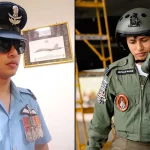

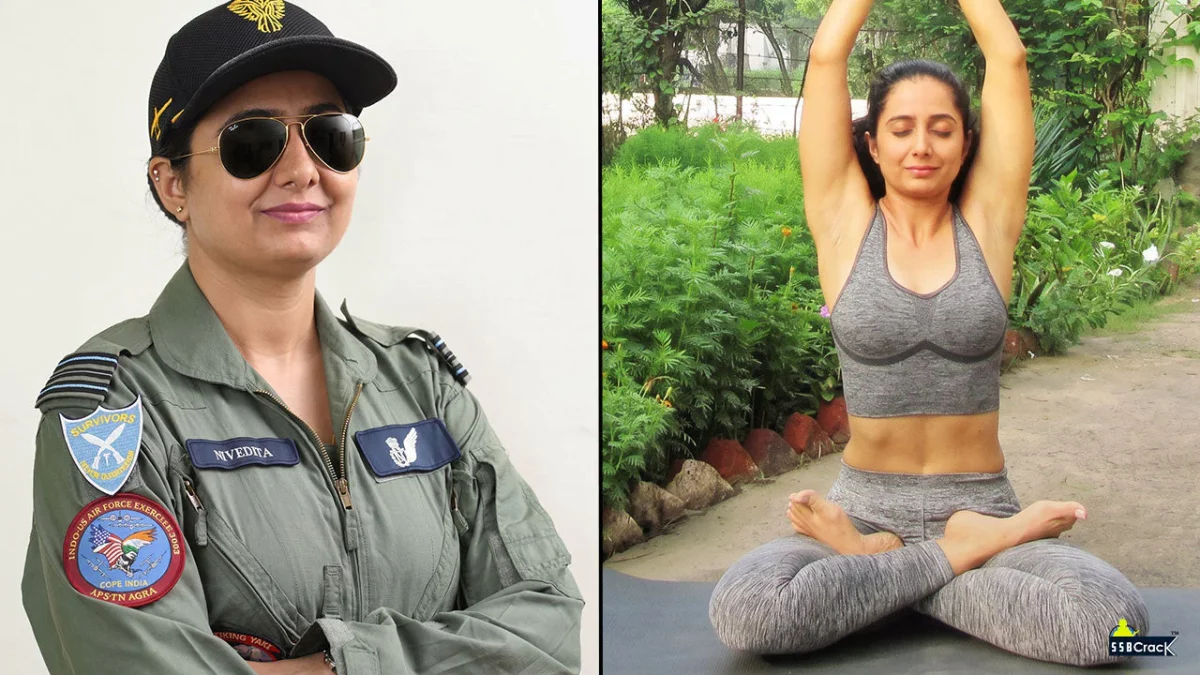
Squadron Leader Nivedita Choudhary stands among the most inspiring women officers of the Indian Air Force, remembered for her historic achievement in mountaineering and her disciplined journey in uniform. A trained navigator, adventure enthusiast and later yoga mentor, she created history on 21 May 2011 when she became the first woman officer from the Indian Air Force to scale Mount Everest.




Her achievement was also a proud moment for Rajasthan, as she became the first woman from the state to reach the summit of the world’s highest mountain. From a modest background in Rajasthan to the top of Everest, her life reflects courage, discipline, mental strength and the ability to push beyond every visible limit.
Nivedita Choudhary was born around April 1985 in Mukundgarh village in Nawalgarh tehsil of Jhunjhunu district, Rajasthan. She came from a humble family that valued education, hard work and self-belief. Her father, Prabhakar Singh Chaudhary, was a farmer who moved the family to Jaipur to give his children better educational opportunities. Her mother, Kamla Devi, supported the family with the same quiet strength that later became visible in Nivedita’s own personality.
The family lived modestly in Malviya Nagar, Jaipur. Despite limited means, her father encouraged his children to grow strong, independent and ambitious. He even kept a cow at home so that the children could get nutritious milk during their growing years. This simple but meaningful detail reflected the family’s deep commitment to health, discipline and perseverance.
Nivedita studied at Gandhi Nagar Government Girls’ School in Jaipur. Even as a schoolgirl, she was not limited to academics alone. She excelled in several activities and won recognition in swimming, athletics, cycling, debate and dance. Her wide range of interests showed that she had both physical stamina and mental confidence from an early age.
One incident from her school days revealed her fighting spirit. When she was in Class 9, she was reportedly stopped from participating in a state-level athletics competition due to an age-related technical issue. Instead of accepting the decision quietly, she approached the High Court and secured the right to take part. This early act of courage showed the determination that would later help her face some of the toughest mountains in the world.
After school, Nivedita pursued engineering at Arya Engineering College, now known as Arya College of Engineering & IT, in Jaipur. During her college years, she joined the NCC Air Wing, which became a turning point in her life. Her exposure to flying through Super Dimona aircraft sorties awakened her interest in aviation and inspired her to aim for a career in the Indian Air Force.
Though she was studying engineering, her heart was drawn towards the sky. The discipline of the NCC, the thrill of flying and the idea of serving the nation together shaped her decision to join the armed forces. What began as a college activity soon became a life-changing calling.
Nivedita Choudhary was commissioned into the Indian Air Force on 21 June 2008 as a navigator through the 28th Short Service Commission Women Navigator Course. She was around 23 years old at the time. Her commissioning marked the beginning of a demanding professional journey in one of India’s most respected military services.
As a navigator, she underwent rigorous training and learned the technical, operational and mental skills required for military aviation. She trained on aircraft such as the HAL HPT-32 Deepak and later served in the transport stream of the Indian Air Force. She was posted to a squadron in Agra, where she worked on the AN-32 transport aircraft, a rugged platform widely used by the IAF in challenging operational conditions.
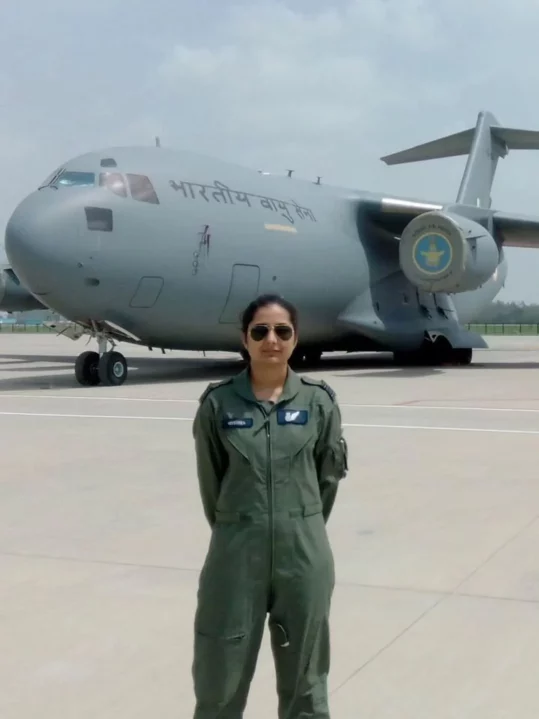
Her role as a navigator demanded accuracy, alertness and calm decision-making. Flying military transport aircraft requires deep coordination between crew members and the ability to function under pressure. Nivedita carried these qualities into every area of her life, including mountaineering.
Her career progressed steadily, and she was promoted to the rank of Squadron Leader on 21 June 2014. During her service, she also worked as an Outdoor Training Instructor at the Air Force Academy in Hyderabad, where she helped train future officers. This role reflected her ability not only to perform but also to guide and motivate others.
The turning point in her mountaineering journey came in October 2009, shortly after she had joined her squadron in Agra. She came across a call for volunteers for the Indian Air Force women’s expedition to Mount Everest. Without overthinking the risks or the magnitude of the challenge, she volunteered.
That one decision changed the direction of her life. She later recalled that she had signed up almost instinctively. What followed was years of intense preparation, physical hardship and mental conditioning.
In November 2009, she completed a basic mountaineering course in Darjeeling. Her performance during the course helped her earn a place in the team being prepared for high-altitude expeditions. Before attempting Everest, she participated in several important climbs that tested her endurance and skill.
She climbed Mount Bhagirathi-II, which stands at 6,512 metres, and Mount Stok Kangri, which rises to 6,153 metres. These expeditions helped her understand the demands of altitude, weather, teamwork and survival in extreme mountain conditions.
One of her most important preparatory achievements was the ascent of Mount Kamet, a 7,557-metre peak and one of India’s major high-altitude climbing challenges. The Mount Kamet expedition proved to be extremely demanding. The team faced bad weather, hidden crevasses, poor visibility and the absence of fixed ropes.
As the senior-most member of a small team that included an Army jawan and an airman, Nivedita had to make difficult decisions under pressure. At one point, when the group considered turning back, she chose to continue. Her determination helped the team reach the summit. She later described the Kamet climb as even more eventful than Everest because of the uncertainty and danger involved.
This experience prepared her mentally for the world’s highest peak. Everest is not conquered only by strength. It demands patience, discipline, judgement and the ability to remain calm when the body and mind are pushed to their limits.
The Indian Air Force Everest expedition was flagged off on 13 April 2011, a day after Nivedita turned 26. The team included eight women officers, one medical officer and male support members. The expedition was led by Group Captain Narendra Kumar Dahiya and organised in collaboration with Rimo Expeditions.
The team took the southeast ridge route, the same historic route associated with the first successful Everest ascent by Sir Edmund Hillary and Tenzing Norgay in 1953. The route involved crossing the dangerous Khumbu Icefall, moving through high-altitude camps and finally making the summit push in brutal conditions.
As the youngest member of the expedition, Nivedita faced the mountain with focus and courage. Everest tested every climber through freezing temperatures, low oxygen levels, strong winds and exhaustion. At such altitude, every step becomes difficult, and every decision can be life-changing.
On the night of 20 May 2011, Nivedita began her final summit push from around 8,000 metres. She was accompanied by Corporal Raju Sindhu from Haryana and two Sherpa guides. The group moved through the darkness, battling cold, fatigue and steep terrain.
During the climb, one of the Sherpas reportedly began struggling after refusing supplemental oxygen. Nivedita paused and helped administer oxygen before continuing the ascent. This moment reflected not only her determination but also her compassion and presence of mind under extreme conditions.
She reached the “balcony” area around 3 am and continued towards the summit through steep and difficult sections. On 21 May 2011, she finally stood on top of Mount Everest, creating history for the Indian Air Force and for Rajasthan.
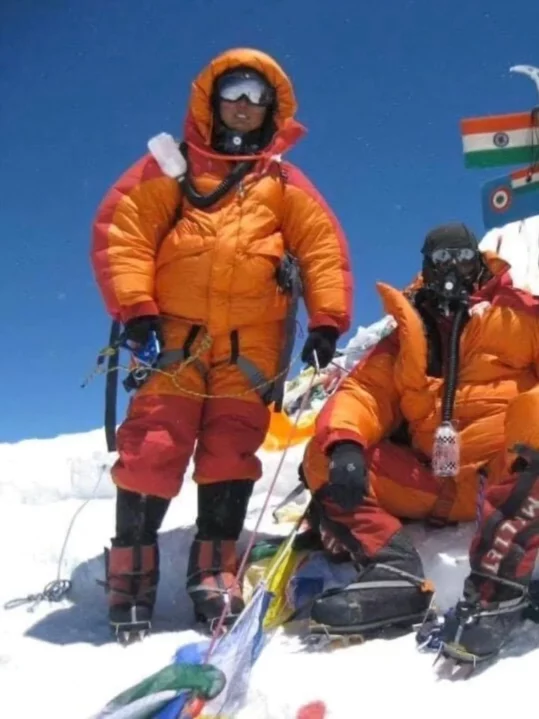
At 8,848 metres, she became the first woman officer of the Indian Air Force to summit Everest. She also became the first woman from Rajasthan to achieve the feat. Standing at the highest point on earth, she represented not just herself but every young Indian woman who dreamed of going beyond conventional boundaries.
She reportedly spent around one hour at the summit, taking in the extraordinary 360-degree view from the top of the world. For a mountaineer, such a moment is the reward for months and years of training, pain, fear and perseverance. For Nivedita, it was also the moment when her name entered the history of Indian military adventure.
Other members of the IAF women’s team, including Squadron Leader Nirupama Pandey and Flight Lieutenant Rajika Sharma, also reached the summit days later. The expedition became a proud chapter in the Indian Air Force’s tradition of adventure and endurance.
Nivedita’s achievement was widely celebrated. She was honoured by then Defence Minister A.K. Antony and Rajasthan Chief Minister Ashok Gehlot for her exceptional accomplishment in adventure sports and her service to the nation. Her success inspired young women, especially from small towns and rural backgrounds, to believe that no peak was beyond their reach.
What made her achievement even more meaningful was her belief that mountaineering is as much a mental challenge as a physical one. She often emphasised that the mind plays a decisive role in extreme conditions. Her own journey proved that calmness, discipline and mental stability are essential for overcoming the most difficult obstacles.
After serving the Indian Air Force for around a decade, Squadron Leader Nivedita Choudhary retired around 2018. Her time in uniform reflected professionalism, courage and a willingness to accept challenges beyond ordinary limits. Whether flying as a navigator, training young officers or climbing the highest mountains, she carried the same spirit of commitment.

After retirement, she began a new journey in the field of yoga, wellness and mentorship. She earned academic qualifications in yoga, including a postgraduate diploma and a Master of Science degree. Having practised yoga for several years, she used it as a medium to promote physical strength, mental balance and inner discipline.
She taught yoga to Indian Air Force personnel at Air Force Station Hindan and later founded Naivedya Yoga. Through this initiative, she conducted retreats and wellness programmes, including sessions in natural surroundings such as Corbett National Park. Her work in yoga reflected the same philosophy that helped her succeed in the mountains: strength must come from both body and mind.
She has also been associated with mentorship initiatives, guiding aspiring aviators, adventurers and young achievers. Her journey from the cockpit to the summit and then to wellness leadership gives her a unique voice as a mentor. She continues to inspire people through her experiences, discipline and belief in holistic growth.
Squadron Leader Nivedita Choudhary’s life is a story of courage built quietly over time. She did not come from privilege, but she came from a family that valued dreams and discipline. She did not choose the easiest path, but she chose the one that gave her purpose. From a village in Rajasthan to the Indian Air Force, from the AN-32 cockpit to the summit of Everest, her journey is a powerful example of what determination can achieve.
Her story also reflects the growing role of women in the armed forces and in adventure sports. She proved that women officers could excel not only in professional military roles but also in extreme physical and mental challenges. Her success helped expand the imagination of what young women in uniform could accomplish.
Today, Squadron Leader Nivedita Choudhary is remembered as the first IAF woman officer to conquer Mount Everest and the first woman from Rajasthan to do so. But beyond these titles, she remains a symbol of courage, preparation and inner strength.
Her legacy continues to inspire defence aspirants, young women, mountaineers and anyone who dreams of rising above limitations. Her life reminds us that the highest peaks are not climbed in a single day. They are conquered through years of discipline, courage, training and the refusal to give up when the climb becomes difficult.