
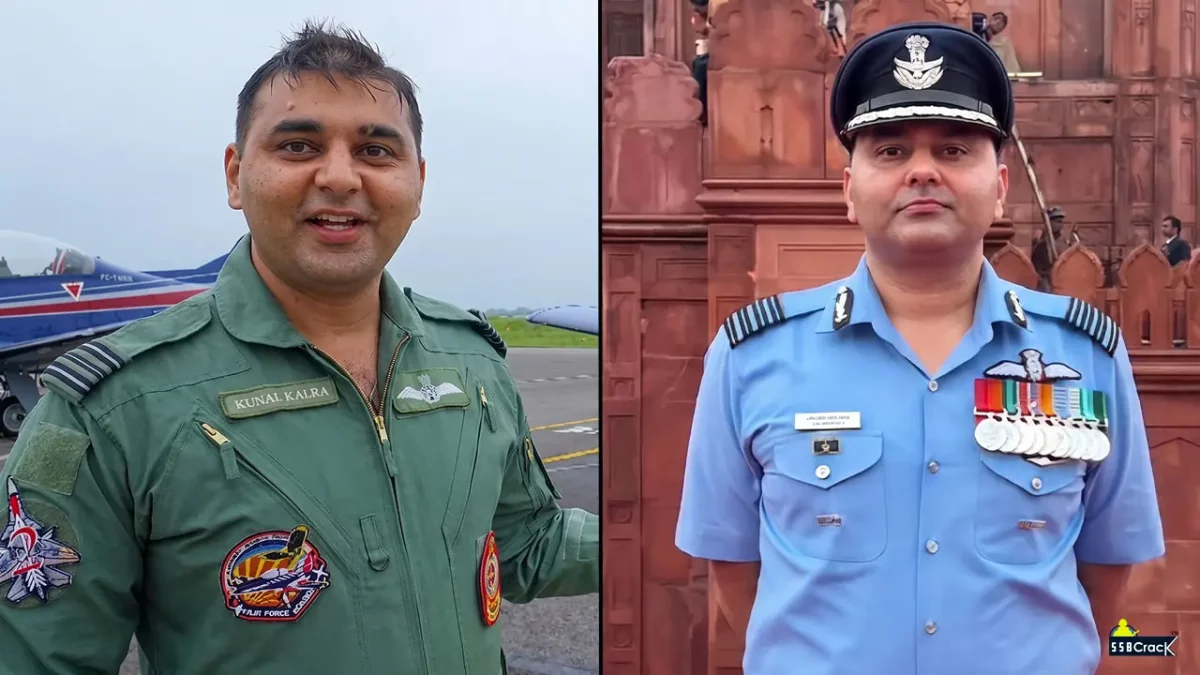
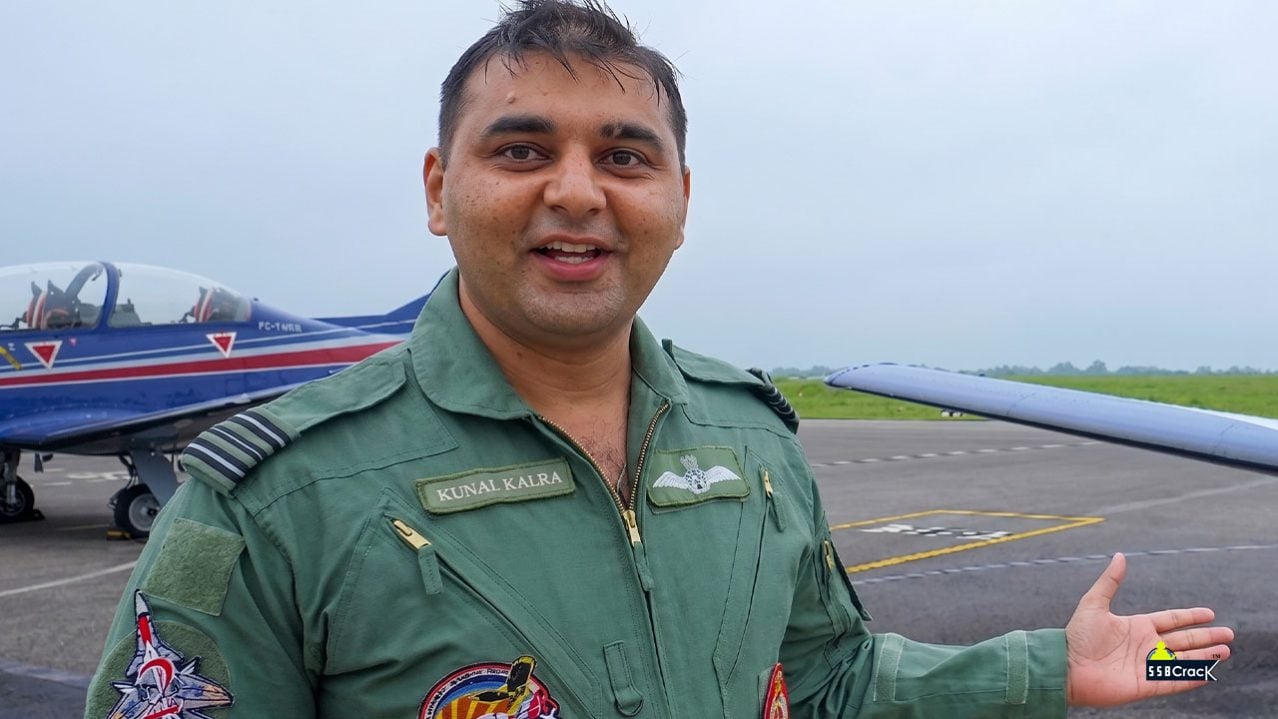
In the distinguished history of the Indian Air Force, certain officers distinguish themselves not only through rank and tenure but through decisive action under the most demanding circumstances. Group Captain Kunal Kalra, recipient of the Vir Chakra, exemplifies this standard. A seasoned Su-30MKI fighter pilot with nearly two decades of service, he commanded an unescorted deep-penetration night strike during Operation Sindoor in May 2025. He successfully neutralised heavily defended targets, managed multiple critical in-flight emergencies, and ensured the safe return of every aircraft and crew member under his command.
Early Life and Commissioning into the Indian Air Force
Group Captain Kunal Kalra was born and raised in Dehradun, Uttarakhand. The region, known for its proud tradition of producing distinguished military personnel, has been described by Uttarakhand Chief Minister Shri Pushkar Singh Dhami as the home of the “brave sons of Devbhoomi.”
He was commissioned into the Indian Air Force on 21 June 2008 as part of the 181st Pilots Course (Service Number 29889, Flying Branch). His subsequent promotions reflect a career of consistent merit: he attained the rank of Squadron Leader on 21 June 2014, Wing Commander on 21 June 2021, and Group Captain prior to the events of 2025.
A Career Marked by Breadth and Professional Depth
Prior to Operation Sindoor, Group Captain Kalra had developed exceptional professional versatility. He is primarily associated with the Su-30MKI, the Indian Air Force’s premier air superiority and strike platform, and has served with No. 2 Squadron IAF “Winged Arrows,” operating from Tezpur Air Force Station under Eastern Air Command.
Earlier in his career, he served as a Qualified Flying Instructor at the Air Force Academy, where he trained future pilots on the Pilatus PC-7 Mk II basic trainer aircraft. This instructional experience reinforced his capacity for clear thinking, methodical decision-making, and composure under pressure—qualities that later proved critical in combat.
He further broadened his expertise through international exposure, training with the Japan Air Self-Defense Force at Komatsu Air Base under the Japan-India Defence and Information Partnership framework. This engagement provided direct insight into the F-15 platform and the operational doctrines of a highly capable allied air force. The combination of instructional experience, multi-platform proficiency, and international training shaped an officer of notable technical depth and operational judgment.
Operation Sindoor: Strategic Context
The backdrop to Group Captain Kalra’s defining mission was the terrorist attack in Pahalgam, Jammu and Kashmir, on 22 April 2025. In response, the Indian Armed Forces launched Operation Sindoor between 7 and 10 May 2025. The Indian Air Force executed a series of deep-penetration precision strikes targeting terrorist infrastructure, including Lashkar-e-Taiba facilities in Muridke and Jaish-e-Mohammed facilities in Bahawalpur, as well as selected Pakistani military installations and airbases.
The operation involved low-level night flying, stand-off precision weapons, and direct engagement with enemy air defence systems. It has been characterised by military analysts as one of the most complex air campaigns in South Asian history. Within this coordinated effort, Group Captain Kalra, serving as Flight Commander, was assigned a mission that would test every aspect of his training and leadership.
The Mission: Unescorted Deep-Penetration Night Strike
Group Captain Kalra was designated mission leader of an unescorted strike package. The formation was tasked with penetrating deep into hostile airspace to neutralise two predesignated, heavily fortified targets protected by modern, layered air defence networks. No fighter escort was provided.
The mission was conducted at night under challenging meteorological conditions. The formation flew tactical low-level profiles, employing terrain masking and aggressive manoeuvring to minimise radar detection while maintaining strict radio silence. Towering cumulonimbus clouds, continuous lightning, severe turbulence, and rain added significant operational complexity. Any deviation carried the risk of compromising the mission and exposing the formation to enemy surface-to-air missiles, airborne interceptors, and radar-guided anti-aircraft systems.
Three Critical Challenges and Decisive Leadership
While inside the lethal engagement envelope, the formation encountered three successive crises, each requiring immediate judgment under extreme pressure.
First, a master caution indicated an aircraft unserviceability. Under standard protocols, this would have warranted mission abort. Group Captain Kalra assessed the fault, determined that the mission objectives remained achievable, and continued. He successfully engaged and destroyed the first target using stand-off precision weapons.
Immediately thereafter, while acquiring the second target, the weapon system experienced a critical electronic malfunction that prevented weapon release. The formation remained deep within hostile airspace, with enemy radars actively tracking the aircraft and ground-based as well as airborne threats present. Group Captain Kalra executed rapid in-flight troubleshooting, systematically addressed the malfunction, restored system functionality, and neutralised the second target before initiating withdrawal.
Recognising that enemy defences had been fully alerted, he then dynamically re-allocated remaining targets to other elements of the strike package. This real-time adjustment maximised operational effect while prioritising the safe extraction of all aircraft and personnel. Every wingman under his command returned safely.
Post-Mission Reflection
Following landing, a ground technician observed the empty weapons pylon and inquired about the ordnance. Group Captain Kalra replied simply: “Yeh gaye jahaan jaane chahiye the” (“They have gone where they needed to go”). The remark reflects the calm professionalism and complete mission focus that characterised his conduct throughout the operation.
Award of the Vir Chakra
For his gallantry, leadership, and professional skill during Operation Sindoor, Group Captain Kunal Kalra was awarded the Vir Chakra, India’s third-highest wartime gallantry honour. The award was approved by the President of India and announced around mid-August 2025. He was among nine Indian Air Force officers recognised for their contributions to the operation.
Uttarakhand Chief Minister Shri Pushkar Singh Dhami publicly congratulated him, describing him as a proud son of Devbhoomi. His actions have been documented in detail in veteran defence journalist Vishnu Som’s account, The Sky Warriors: Op Sindoor Unveiled.
Continuing Service and Enduring Legacy
As of 2026, Group Captain Kunal Kalra remains a serving officer in the Indian Air Force. His career continues to embody the values of courage, technical mastery, tactical adaptability, and selfless leadership.
For aspirants preparing for the National Defence Academy, Combined Defence Services, Air Force Common Admission Test, and Services Selection Board examinations, his example offers clear lessons: placing mission objectives above personal safety, maintaining technical proficiency and composure under pressure, adapting tactics in real time, and exercising leadership that safeguards every member of the team. These principles remain central to effective officership in the Indian Air Force.
Group Captain Kunal Kalra’s conduct during Operation Sindoor demonstrates that disciplined courage, combined with professional competence, can overcome formidable adversity—whether posed by enemy action, adverse weather, or equipment malfunction. His service stands as a testament to the highest traditions of the Indian Air Force.