
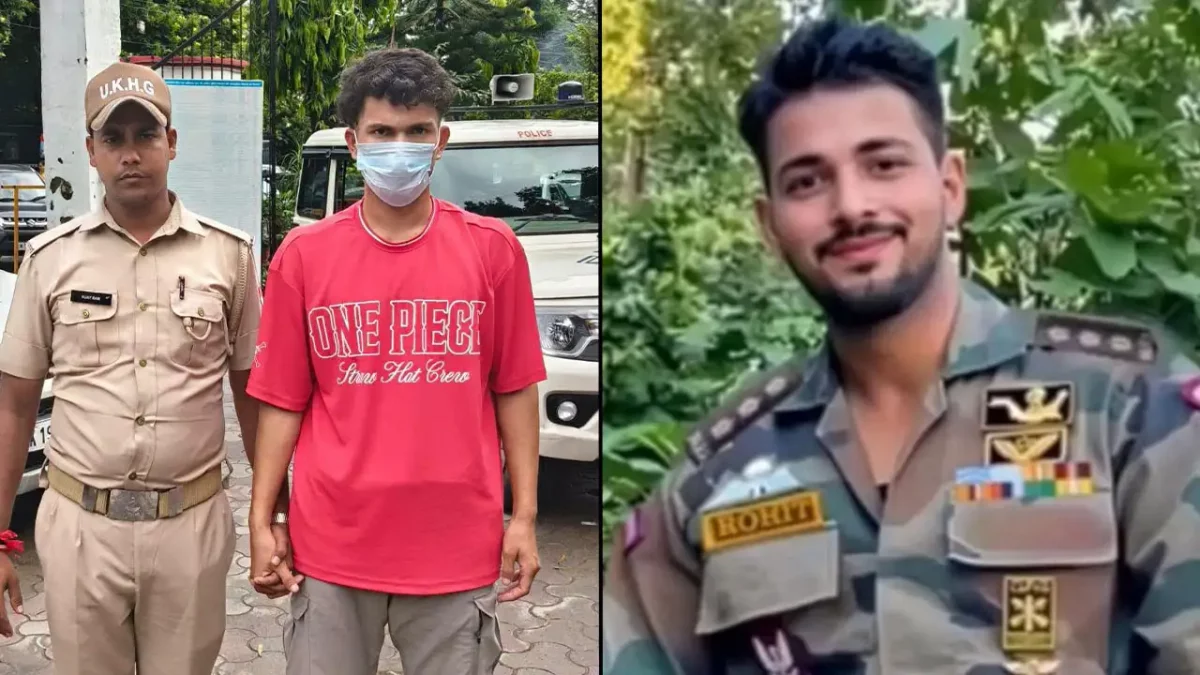
Haldwani, September 3, 2026 — A 20-year-old man has been arrested in Uttarakhand’s Haldwani for allegedly impersonating a Major of the Indian Army’s elite Para Special Forces on social media by using artificial intelligence to create fabricated photographs of himself in military uniform.
The accused, identified as Rohit Singh Mehta, was taken into custody following a joint operation by Military Intelligence and the Special Operations Group (SOG) of Nainital Police. Investigators said Mehta had never served in the Indian Army and was working at a Birla Opus Paints warehouse in Haldwani.
According to police, Mehta built an elaborate fake military identity online by downloading photographs of serving or former Army officers in uniform from the internet and social-media platforms. He allegedly used AI-based image-editing tools to replace the faces in those photographs with his own, creating images that portrayed him as an officer and commando of the Para Special Forces.
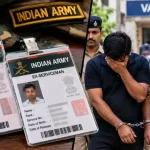
The digitally manipulated photographs and videos were subsequently uploaded to Instagram, Facebook and other social-media platforms, where Mehta allegedly presented himself as a Para SF Major. Police also recovered what appeared to be a fabricated Indian Army identity card.
Investigators said the impersonation was apparently driven by a desire to gain popularity on social media and impress women. During questioning, Mehta allegedly admitted that he wanted to increase likes, comments, shares and followers by projecting himself as an elite Army officer.
Police further alleged that he used the fabricated military persona to approach and influence young women online. The convincing AI-generated photographs helped reinforce his claim that he was serving with the Army’s Para Special Forces.
The case came to the attention of authorities on September 1 when Military Intelligence personnel alerted the Nainital Police SOG about an individual named Rohit Singh Mehta who was circulating photographs depicting himself as a Para commando and using what appeared to be a fraudulent military identity.
Officials subsequently checked his background and found no record indicating that he had ever served in the Indian Army.
Following the Military Intelligence input, Nainital Senior Superintendent of Police Dr Manjunath T.C. directed SOG in-charge Mohan Singh Saun and his team to investigate the matter and locate the suspect.
Investigators traced the mobile number associated with Mehta’s online activity and eventually located him at the Birla Opus warehouse in Haldwani, where he was employed. He was taken into custody and questioned by the authorities.
During searches, the SOG recovered two smartphones, Mehta’s Aadhaar and PAN cards, photographs and videos portraying him in an Army officer’s uniform, and a document suspected to be a fake Army identity card.
During interrogation, Mehta reportedly acknowledged that the military photographs were fabricated. According to police, he explained that he had downloaded genuine photographs of Army personnel and then used AI tools to morph the images, placing his own face onto officers wearing military and Para SF attire.
Nainital SSP Manjunath T.C. said district police had received information from Military Intelligence about an individual uploading a fake military identity along with photographs depicting himself as a Para commando. The subsequent joint investigation resulted in Mehta being identified and arrested.
Police said the accused had used fake photographs and videos to create the impression that he was an Army officer and had allegedly used the false identity to lure women through social-media platforms.
A case has been registered against Mehta under relevant provisions of the Bharatiya Nyaya Sanhita concerning impersonation, fraudulent representation and use of a false identity. The exact sections invoked in the FIR have not yet been publicly detailed in available reports. Following his arrest and completion of the initial legal formalities, the accused was sent to jail.
The incident also highlights an emerging challenge for law-enforcement and military-intelligence agencies as increasingly sophisticated AI image-generation and face-manipulation tools make it easier for individuals to fabricate convincing photographs of themselves wearing military uniforms or holding ranks they have never earned.
Impersonation involving the armed forces is particularly sensitive because photographs, ranks, uniforms, unit insignia and identity documents can provide a false appearance of official authority. The use of the Para Special Forces identity adds further concern because Para SF units are among the Indian Army’s specialised combat formations.
The September case is separate from another impersonation incident reported in Haldwani in April 2026, when a different individual allegedly wore an Army uniform in public and claimed to be a Major before being identified by a serving officer and arrested. In the latest case, however, investigators say the deception was primarily conducted online through AI-manipulated photographs and social-media accounts rather than by physically appearing in public as an Army officer.
Further investigation could establish the full extent of Mehta’s online activities, including how long the fabricated military identity had been used, how many people he contacted while posing as an officer and whether any additional offences were committed through the impersonation.