Sunday, Feb 22, 2026
SSBCrack
Search
  • Home
  • Indian Defence News
  • Notification
  • SSB Interview
    • SSB Interview Date
    • Screening
    • Psychology
    • GTO
    • Personal Interview
    • Conference
    • Medical
    • Merit List
  • Books
    • OIR Test & PPDT
    • SSB Interview
    • Psych Tests Workbook
    • SSB Psychology
    • NDA Exam
    • CDS Exam
    • AFCAT
    • EKT
  • eBooks
    • SSB eBook
    • OIR Test eBook
    • TAT eBook
    • SRT eBook
    • WAT eBook
    • Current Affairs
    • General Knowledge
  • Online Courses
    • NDA Exam
    • CDS Exam
    • CDS OTA Exam
    • AFCAT Exam
    • MNS Exam
    • TA Exam
    • ACC Exam
  • Download APP
  • Success Stories
  • Join Us
Reading: Tejas Pilot Was Performing High-Risk Negative-G Manoeuvre Moments Before Crash at Dubai Air Show
Share
Font ResizerAa
SSBCrackSSBCrack
  • Home
  • Notification
  • SSB Interview
  • Books
  • eBooks
  • Courses
Search
  • Home
  • Notification
  • SSB Interview
  • Books
  • eBooks
  • Courses
Follow US
© 2010 - 2025 SSBCrack . All Rights Reserved.

Home » Tejas Pilot Was Performing High-Risk Negative-G Manoeuvre Moments Before Crash at Dubai Air Show

Indian Defence News

Tejas Pilot Was Performing High-Risk Negative-G Manoeuvre Moments Before Crash at Dubai Air Show

New Analysis Reveals High-Risk Aerobatic Move Behind the Tragic Crash.

By Adhidev Jasrotia
Last updated: November 22, 2025
Share
Tejas Crash

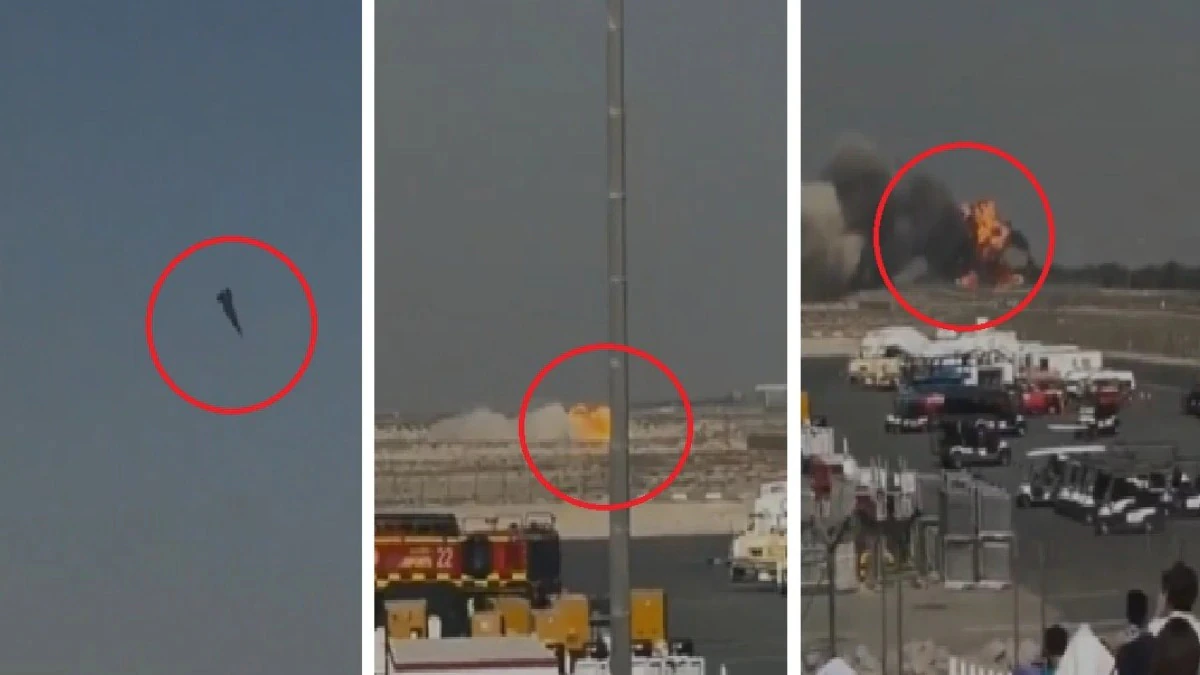
Fresh analysis of eyewitness accounts and video footage from the Dubai Air Show has confirmed that the TEJAS Light Combat Aircraft (LCA) was executing a complex negative-G manoeuvre just seconds before it crashed on November 21, killing Indian Air Force pilot Wing Commander Namansh Syal.
Olive Squad Coffee Mugs

The aircraft was seen entering the downward phase of a looping sequence when it experienced a rapid, uncontrolled loss of altitude. The transition left the pilot with almost no recovery window, and he was unable to eject before impact, resulting in fatal injuries.

What Is a Negative-G Manoeuvre?

Negative-G conditions occur when forces push the pilot away from the seat, creating sensations of weightlessness or upward pull. During such manoeuvres:

More Read

Lt Gen Pratik Sharma Reviews Sunderbani Sector After Successful Operation Jwala
Major Rishabh Singh Sambyal Becomes India’s Most Trending Army Officer
Air Vice Marshal Ratnesh Gupta Reviews Techno-Logistics Preparedness at Premier Air Base
  • Blood rushes toward the head, causing vision distortion and reduced reaction speed.
  • Even brief miscalculations can destabilise aircraft attitude.
  • Precision, timing, and full situational awareness are critical.

These manoeuvres are used in air displays to demonstrate aircraft agility but come with razor-thin safety margins, especially at low altitudes.

Why It Is Risky for High-Agility Fighters

The TEJAS is an aerodynamically unstable fighter intentionally built for extreme agility. Stability is maintained using a quad-redundant fly-by-wire (FBW) system that constantly makes micro-corrections.

During fast transitions between positive and negative G:

  • The FBW system must process rapid control changes.
  • Any sensor anomaly, delay in stabilization, or low-energy state can sharply reduce available lift.
  • A slight mis-timing during recovery can lead to a steep descent with insufficient altitude to pull out.

Preliminary observations suggest that the aircraft may have entered a low-energy or high-angular-momentum phase during its attempt to level out, causing the nose-down trajectory that proved unrecoverable.

Tejas’ Safety Record and the Rarity of the Crash

Before the Dubai incident, TEJAS had one of the strongest safety records among modern fighters:

  • Only one prior crash—in 2024 at Jaisalmer—occurred over 20+ years after its first flight.
  • It had been widely praised for reliability compared to legacy platforms like the MiG-21.
  • The aircraft participating in Dubai belonged to a frontline squadron based at Sulur.

The crash marks a rare and tragic setback for the programme, especially during an international display mission where TEJAS has often showcased India’s aerospace strengths.

Investigation Underway

A high-level Court of Inquiry is now analysing:

  • Flight data and cockpit recorder inputs
  • Pilot control actions in the final seconds
  • FBW system response and sensor performance
  • Atmospheric and wind conditions
  • Possible G-awareness and pilot workload factors

The findings will determine whether the cause lies in human factors, aircraft behaviour during negative-G recovery, environmental shifts, or technical anomalies.

A Reminder of the Risks of Aerobatic Displays

Air show sequences are meticulously rehearsed, yet the narrow safety margins during high-energy demonstrations leave little room for error. The Dubai accident underscores:

  • The extreme difficulty of negative-G manoeuvres
  • The inherent risks of pushing aircraft to the edge of performance
  • The need for absolute precision when flying unstable-platform fighters during displays

The loss of Wing Commander Syal has deeply shaken the aviation and defence community. While TEJAS continues to be a cornerstone of India’s fighter modernisation, the accident highlights the unforgiving nature of aerobatic flying—even with highly capable aircraft and expert pilots.

IMA Mug

IMA Mug

₹499
Shop Now
IAF Mug

IAF Mug

₹499
Shop Now
NDA Mug

NDA Mug

₹499
Shop Now
Navy Mug

Navy Mug

₹299
Shop Now
NSG Mug

NSG Coffee Mug

₹499
Shop Now
Share This Article
Facebook Whatsapp Whatsapp Telegram
ByAdhidev Jasrotia
An expert in Indian defence affairs, military recruitment, and geopolitical strategy, brings a strong foundation in national security journalism. Recommended for the Indian Army with All India Rank 138.
Previous Article BvS10 All You Must Know About BvS10 ‘Sindhu’: India’s New All-Terrain Armoured Vehicle Built by L&T
Next Article KC 135 IAF Inducts Leased Boeing KC-135 Refueller, Restores Critical Mid-Air Tanking Capability

TRENDING NEWS

Ballon

Balloon Bearing Pakistan Airline Mark Found Inside Air Force Premises in Agra, Probe Launched

February 16, 2026
Indian Army Initiates Termination Proceedings Against Missing Special Forces Officer

Indian Army Initiates Termination Proceedings Against Missing Special Forces Officer

February 16, 2026
Sainik School Students

18 Sainik School Ghorakhal Cadets Clear NDA SSB, Set Sights on Armed Forces Careers

February 15, 2026
Officer Receiving Trophy

Lt Shubham Kumar Adjudged Overall Best Student as Young Officers’ Course Concludes at Infantry School, Mhow

February 15, 2026

YOU MAY ALSO LIKE

Lt Gen Pratik Sharma Reviews Sunderbani Sector After Successful Operation Jwala
February 22, 2026
Major Rishabh Singh Sambyal Becomes India’s Most Trending Army Officer
February 21, 2026
Air Vice Marshal Ratnesh Gupta Reviews Techno-Logistics Preparedness at Premier Air Base
February 20, 2026
Lt Gen Dhiraj Seth Honours Veterans at Pangode Military Station
February 20, 2026
Lt Gen Pratik Sharma Witnesses Chinar Open Winter Games 2026 at Gulmarg
February 20, 2026
SSBCrack-Logo (2)

SSBCrack.com is a leading online platform dedicated to helping Indian defence aspirants prepare for the various armed forces examinations.

  • About Us
  • Cookie Policy
  • We Are Hiring
  • Write for SSBCrack
  • Share Your Story
  • Contact Us
  • SSBCrackExams
  • SSBCrack Hindi
  • SSBCrack News
  • SSB Interview Coaching
  • SSB Interview eBooks
  • Cookie Policy
  • Copyright Policy
  • Disclaimer
  • Terms and Conditions
  • PPDT Pictures
  • 15 OLQs for SSB
  • SSB Dress Code
  • SSB Rapid Fire Questions
  • SSB Interview Questions
  • SSB Interview Screening Test
  • SSB Interview Conference Questions
  • SSB Interview Process
  • Preparation Books
  • Online Courses
  • NDA Exam
  • CDS Exam
  • AFCAT
  • Success Stories
  • SSB Date
  • Screening
  • Psychology
  • Personal Interview
  • GTO
  • Conference
  • SSB Medical
  • Merit List

Follow US: 

© 2010-2026 SSBCrack. All Rights Reserved.

 
Welcome Back!

Sign in to your account

Username or Email Address
Password

Lost your password?