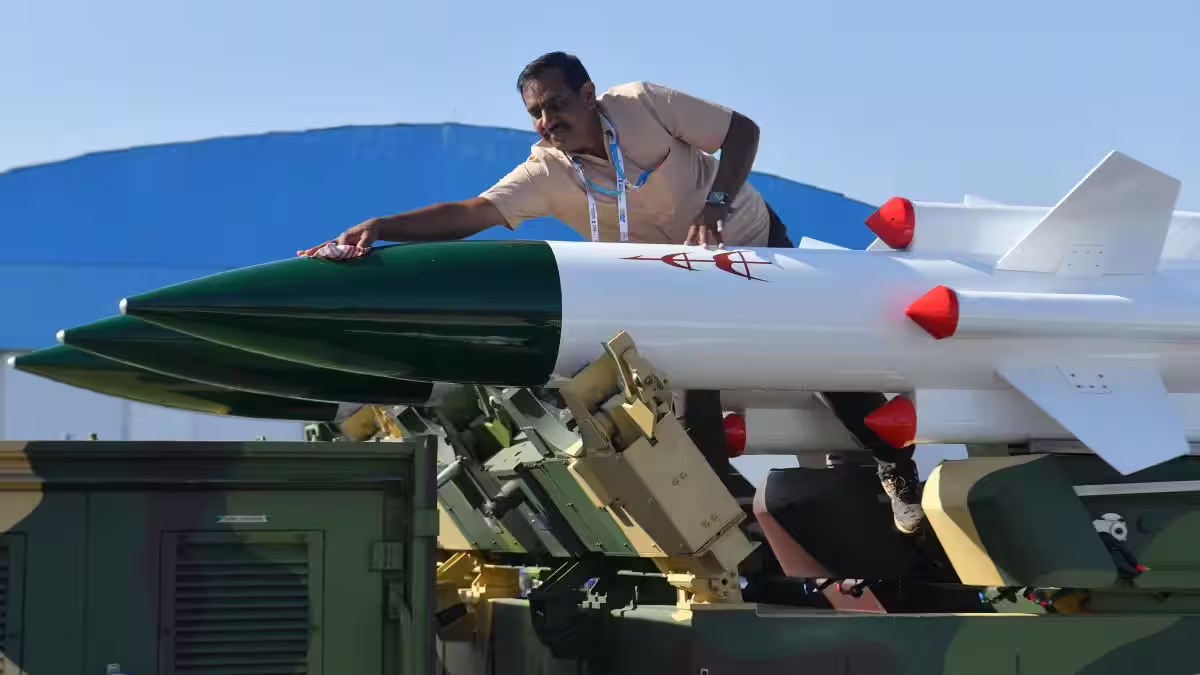

As 2025 comes to a close, India’s defence sector has witnessed one of its most transformative phases in decades. Declared the “Year of Reforms”, the year marked a decisive shift in India’s military posture—moving away from import dependence towards self-reliance, jointness, technological modernisation, and global competitiveness.





Driven by persistent border tensions with China, ongoing security challenges from Pakistan, and evolving regional geopolitics, New Delhi accelerated reforms across manufacturing, manpower, procurement, infrastructure, and exports, fundamentally reshaping the armed forces.
Indigenisation at the Core
At the heart of the reform agenda is the government’s aggressive push for indigenisation. The expansion of Positive Indigenisation Lists has brought thousands of defence items under mandatory domestic procurement, significantly reducing reliance on imports.
This policy has energised India’s defence industrial ecosystem, with thousands of MSMEs and startups now supplying critical components to the armed forces. A major milestone was the approval of 307 units of the Advanced Towed Artillery Gun System (ATAGS)—a 155mm howitzer co-developed by DRDO and Bharat Forge—signalling confidence in indigenous artillery solutions.
Enhanced Pinaka rocket systems, indigenous naval platforms such as INS Vikrant, and the routine operational use of indigenous drones along borders reflect the growing maturity of domestic defence manufacturing.
Manpower Reforms and Technology Integration
The Agnipath scheme continued to reshape the manpower profile of the armed forces by lowering the average age of troops and emphasising physical fitness and technical proficiency suited for modern, network-centric warfare.
While critics caution about potential loss of experienced personnel, supporters argue that the scheme improves adaptability while freeing up funds earlier consumed by pensions, which once accounted for nearly a quarter of the defence budget.
Parallelly, the Innovations for Defence Excellence (iDEX) initiative has supported hundreds of startups, leading to innovations in night-vision devices, surveillance drones, and AI-based imagery analysis—bridging the gap between military requirements and private-sector innovation.
Border Infrastructure and Ammunition Readiness
Since the 2020 Galwan clash, India has significantly strengthened border infrastructure. The Border Roads Organisation has constructed hundreds of kilometres of all-weather roads, strategic bridges, and critical tunnels, ensuring year-round access to forward areas.
Advanced landing grounds at Daulat Beg Oldi and Nyoma now support heavy aircraft operations at extreme altitudes. At the same time, long-standing ammunition shortages have been addressed through increased private-sector participation and a shift towards precision-guided munitions.
Faster Procurement and Emergency Powers
Procurement reforms in 2025 focused on speed and operational urgency. Emergency procurement powers now allow acquisitions of up to ₹300 crore within six months, while field commanders have greater financial authority to meet immediate operational needs.
Frontline units have inducted SIG716 assault rifles, the Navy has strengthened anti-submarine warfare capabilities with MH-60R Seahawk helicopters, and indigenous platforms such as Dhanush artillery guns and Arjun Mk1A tanks have moved swiftly from trials to induction.
Organisational Restructuring and Jointness
Organisational reforms gathered momentum with 2025 designated for advancing Integrated Theatre Commands. The role of the Chief of Defence Staff (CDS) has been strengthened to drive tri-service jointness, building on operational experience from formations like the Andaman and Nicobar Command.
While full implementation faces inter-service coordination challenges, the shift towards integrated planning and execution is now firmly underway.
Defence Exports Reach New Highs
India’s defence exports provided strong external validation of these reforms. Exports touched ₹21,083 crore in 2023–24, rising sharply from around ₹2,000 crore five years ago. Indian-made artillery systems, missiles, radars, and ammunition are now being exported to several countries, including the Philippines and Armenia.
The Road Ahead
Challenges remain, including delays in major platform acquisitions and the complex task of fully integrating theatre commands. However, the direction of travel is unmistakable.
Forced by geopolitical pressures and reinforced by policy alignment, India’s military in 2025 has decisively moved towards industrial depth, operational jointness, and a technological edge—making the “Year of Reforms” a defining chapter in the country’s defence history.