

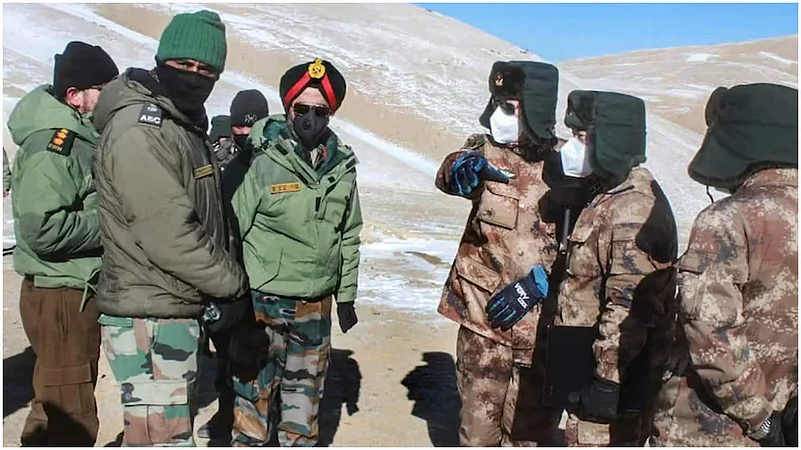
A new annual defence report released by the United States Department of Defense has cautioned India that China’s recent de-escalation along the Line of Actual Control (LAC) may be driven by broader strategic calculations rather than a genuine resolution of border disputes.





The report, titled Military and Security Developments Involving the People’s Republic of China – 2025, notes that Beijing is likely seeking to capitalise on reduced friction with India to stabilise bilateral relations and limit the rapid deepening of strategic ties between New Delhi and Washington.
According to the assessment, China’s move follows India’s October 2024 decision to disengage from remaining standoff sites along the LAC, announced shortly before a sidelines meeting between Xi Jinping and Narendra Modi at the BRICS Summit. That meeting reportedly triggered a series of monthly high-level engagements focusing on border management and confidence-building measures such as direct flights, visa facilitation, and academic and media exchanges.
However, the report underlines that India remains deeply sceptical of China’s intentions, with long-standing distrust, unresolved border issues, and recurring irritants continuing to constrain the relationship.
Normalisation Amid Lingering Distrust
Over the past year, India and China have taken measured steps towards normalisation after the end of a four-year military standoff in eastern Ladakh. These include the resumption of tourist visas, plans to restart the Kailash Mansarovar Yatra, resumption of direct flights, and events marking 75 years of diplomatic relations.
In August 2025, Modi and Xi publicly committed to deepening engagement and working towards a “fair” resolution of the border dispute. Yet, the US report stresses that partial disengagement at Depsang and Demchok still awaits full verification, with Indian assessments highlighting the need for confirmation of troop pullbacks and buffer zones.
China’s Larger Strategic Calculus
The report situates LAC de-escalation within China’s long-term national strategy of achieving the “great rejuvenation of the Chinese nation” by 2049, which includes building a world-class military capable of safeguarding sovereignty and expanding global influence.
Beijing defines its “core interests”—Communist Party control, economic development, and territorial sovereignty—as non-negotiable. These claims extend to Taiwan, the South China Sea, the Senkaku Islands, and India’s Arunachal Pradesh, where the People’s Liberation Army (PLA) continues to enhance high-altitude warfare and air defence capabilities.
The report suggests China may be seeking to free up military and diplomatic bandwidth by easing tensions with India, allowing it to focus on Indo-Pacific ambitions and counter US-led groupings such as the Quad.
India–US Ties and Strategic Autonomy
From Washington’s perspective, China’s outreach to India coincides with intensifying India–US defence cooperation, including co-production of jet engines and drones under the Initiative on Critical and Emerging Technology (iCET). The report implies Beijing views a thaw with India as a hedge against a unified US–India strategic front.
Despite this, India continues to pursue strategic autonomy, accelerating indigenous military modernisation with platforms such as Rafale fighter jets, S-400 air defence systems, Tejas Mk-2, and the AMCA programme, independent of external pressures.
Tactical Thaw, Not Strategic Resolution
The US defence report concludes that the current LAC calm reflects tactical pragmatism rather than a durable strategic settlement. While trade—now at record highs—acts as a stabilising factor, persistent issues such as China’s UN vetoes on Pakistan-based terrorists and stapled visas for Indian journalists highlight enduring friction.
For India, the message is clear: maintain vigilance while cautiously engaging, using the relative calm to strengthen military preparedness and indigenous defence capabilities. As the report warns, without sustained trust-building, LAC flashpoints could re-emerge, reshaping the regional balance in an increasingly contested Indo-Pacific.