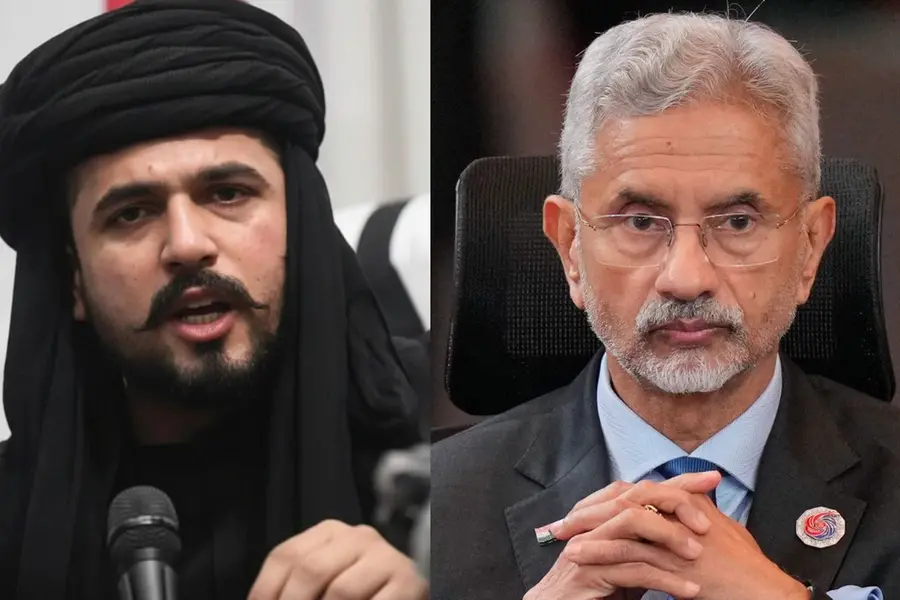
Baloch leader Mir Yar Baloch has issued a strong appeal to India’s External Affairs Minister S. Jaishankar, warning that China may soon deploy troops in Pakistan’s Balochistan province as part of its deepening strategic alignment with Islamabad.





In an open letter dated January 1, 2026, and shared publicly on social media, Mir Yar Baloch described the potential deployment of Chinese forces as a grave threat to regional stability, with serious implications for both Balochistan and India. He urged New Delhi to closely monitor developments and support Baloch resistance forces as the China-Pakistan Economic Corridor (CPEC) enters what he termed its “final and most sensitive phase.”
Concerns Over CPEC and Militarisation
Balochistan, Pakistan’s largest but most restive province, has long witnessed insurgency driven by allegations of political marginalisation, economic exploitation, and human rights abuses. Mir Yar Baloch claimed that accelerated work on CPEC—China’s flagship Belt and Road Initiative project connecting Xinjiang to Gwadar Port—could prompt Beijing to deploy troops to safeguard its investments.
He warned that such a move, undertaken without the consent of the local population, would radically escalate tensions in South Asia, potentially destabilising India’s western security environment and altering the strategic balance in the Indian Ocean Region.
India’s Strategic Stakes
India has consistently opposed CPEC, maintaining that the corridor passes through Pakistan-occupied Jammu and Kashmir (PoK), thereby violating India’s sovereignty. The possibility of a Chinese military presence in Balochistan—particularly near Gwadar Port—has long been viewed by Indian strategists as a potential extension of China’s strategic encirclement in the Indo-Pacific.
Mir Yar Baloch praised India’s Operation Sindoor in 2025, launched in response to the Pahalgam terror attack, describing it as a demonstration of resolve against Pakistan-backed terrorism. He suggested that India’s firm stance against cross-border terror aligns with the Baloch struggle against what he termed Pakistan’s “illegal occupation” of Balochistan.
Wider Regional Implications
Security concerns around CPEC have intensified following repeated attacks on Chinese nationals and infrastructure by Baloch militant groups, highlighting vulnerabilities despite Pakistan’s assurances of protection. Analysts note that any overt Chinese troop deployment could further internationalise the Balochistan issue, complicating China–India relations and adding a new dimension to India–Pakistan tensions.
Mir Yar Baloch also called for greater international scrutiny of human rights conditions in Balochistan and hinted at the need for global intervention to prevent further militarisation of the resource-rich region.
No Official Response Yet
As of January 2, 2026, there has been no official response from the Indian government, China, or Pakistan. The Ministry of External Affairs has traditionally refrained from commenting on internal political movements in Pakistan, even while raising concerns over sovereignty and terrorism at international forums.
Observers believe that while India remains attentive to developments in Balochistan—especially those involving China—it is likely to continue pursuing its interests through diplomatic, strategic, and multilateral channels rather than overt engagement.
The appeal by Mir Yar Baloch once again brings Balochistan into sharp geopolitical focus, underlining how local insurgencies, mega infrastructure projects, and great-power rivalry are increasingly intersecting in South Asia.