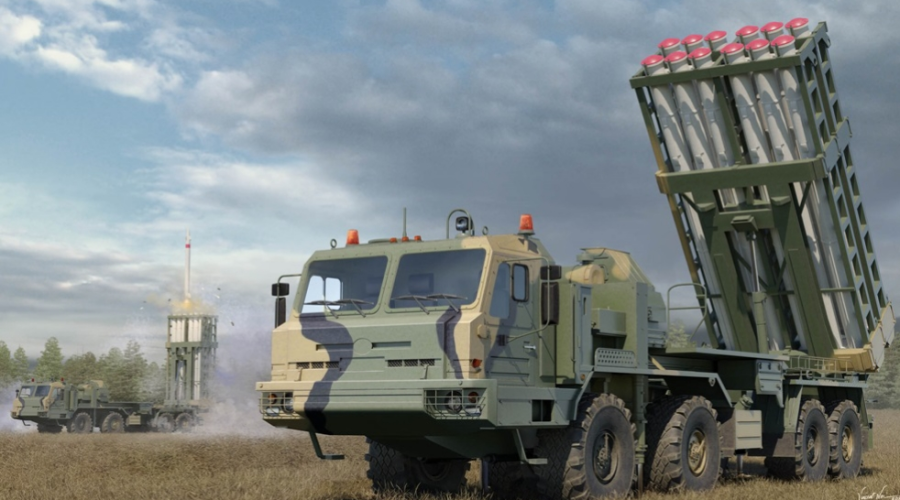
Russia has once again offered India the S-350 Vityaz air defence system, positioning it as a powerful complement to India’s existing S-400 Triumph batteries. The proposal reportedly includes full technology transfer, enabling local production and maintenance—an important boost to India’s indigenous defence ecosystem under Atmanirbhar Bharat.





Designed to plug into a layered and networked air defence architecture, the S-350 would strengthen India’s medium- and inner-tier air defence, creating a denser, faster-reacting shield against modern aerial threats from Pakistan and China.
Why the S-350 Vityaz Matters for India
According to Russia’s state-owned defence conglomerate Rostec, the S-350 is engineered to integrate seamlessly with the S-400 and India’s broader Integrated Air Defence System. The goal: close the gap between long-range interceptors and short-range point defence.
Key Capabilities at a Glance
- Range: Up to ~120 km against aerodynamic targets
- Targets: Aircraft, cruise missiles, drones, precision-guided munitions
- Simultaneous engagements: Up to 16 aerial targets (or ~12 ballistic targets)
- Launcher load: Up to 12 missiles per launcher
- Guidance: Active radar homing with advanced AESA radar support
Developed by Almaz-Antey, the S-350 replaces older S-300 variants and reflects Russia’s latest thinking in mobile, network-centric air defence.
Missile Suite and Radar Edge
The S-350 employs a flexible mix of interceptors:
- 9M96E / 9M96E2: Medium-range missiles with active radar guidance
- 9M100: Shorter-range missile for close-in defence
Its multifunction AESA radar enhances detection of low-flying and stealthy threats, a critical advantage against terrain-hugging cruise missiles and drone swarms.
Complementing India’s S-400 and Indigenous Systems
India has already operationalised three S-400 squadrons, with two more expected. The S-350 would thicken coverage closer to critical assets, working alongside indigenous systems like Akash and Barak-8 to complete a multi-layered air defence umbrella.
During Operation Sindoor, India’s air defences successfully countered Pakistani aerial threats. Adding the S-350 would further tighten coverage—especially across sensitive sectors in Punjab, Rajasthan, and high-altitude regions.
Deterrence Value Against Pakistan
Pakistan’s air threat profile includes low-altitude fighters and terrain-following cruise missiles designed to evade radar. The S-350’s radar-missile combination is optimised to counter:
- JF-17 and J-10 aircraft
- Babur-class cruise missiles
- Drone and loitering munition attacks
By handling saturation attacks and multiple targets simultaneously, the S-350 would raise the cost of aerial aggression.
Countering China’s High-Tech Arsenal
On the northern front, India faces stealth aircraft, long-endurance drones, and hypersonic threats. In high-altitude theatres like Ladakh and Arunachal Pradesh, fast-reaction systems are essential. The S-350’s rapid engagement cycle and multi-target capacity would strengthen defences along the Line of Actual Control (LAC), complementing the S-400’s long-range reach.
Strategic Impact and Atmanirbhar Bharat
If the deal progresses, local production and lifecycle support in India would:
- Deepen technology absorption
- Reduce long-term dependence on imports
- Strengthen domestic MRO and manufacturing capabilities
Beyond air defence, this would enhance operational freedom for the Indian Air Force by reducing the constant pressure of defensive vigilance.
Bottom Line
The S-350 Vityaz offers India a practical, immediately deployable upgrade to its air defence—bridging critical gaps between long-range interceptors and point defence. Paired with the S-400 and indigenous systems, it could complete India’s layered air shield against evolving threats from Pakistan and China, while advancing self-reliance through technology transfer.