

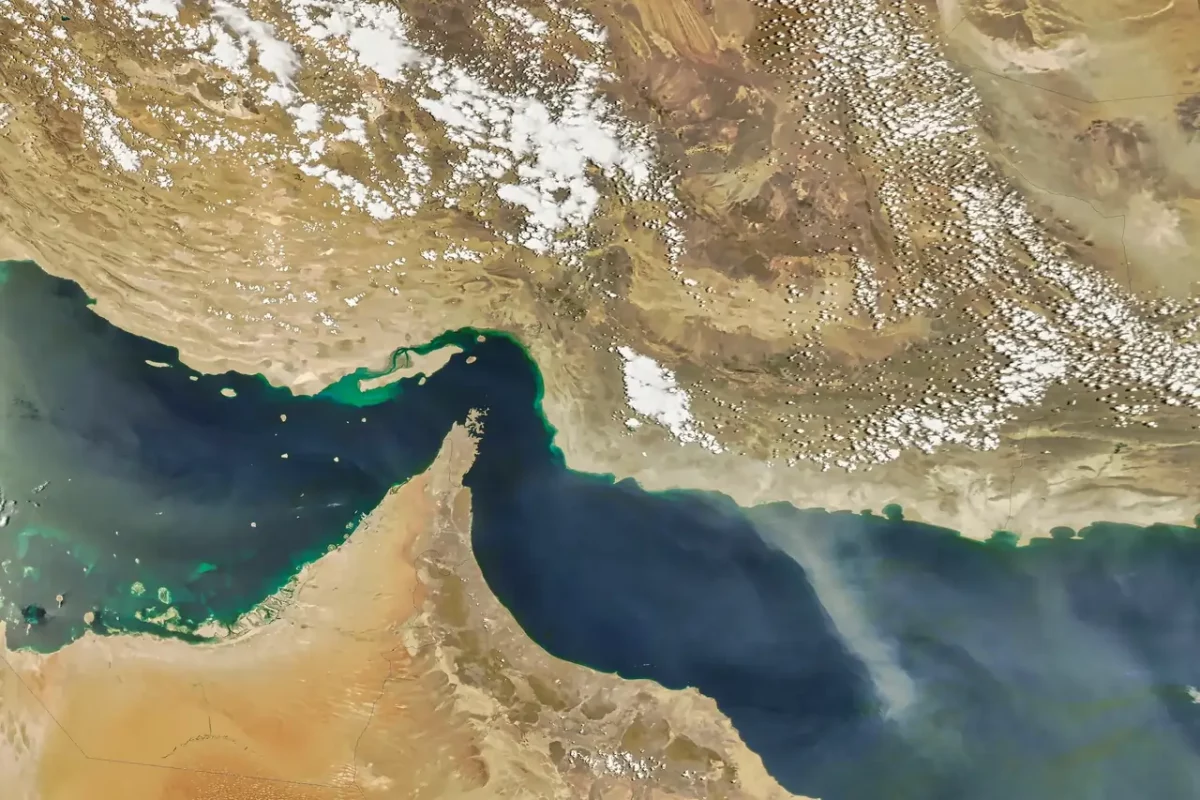
The Strait of Hormuz has long been recognized as one of the world’s most vital maritime chokepoints, serving as the primary gateway for energy exports from the Persian Gulf to global markets. Its significance has been thrust into sharp relief by the recent joint military operations conducted by the United States and Israel against Iran on February 28, 2026. Designated as “Operation Epic Fury” by the US and “Roaring Lion” by Israel, these strikes targeted Iranian nuclear facilities, missile sites, and leadership compounds, including areas near the residence of Supreme Leader Ayatollah Ali Khamenei. President Donald Trump, in a video statement, explicitly called for regime change in Iran, urging the Iranian populace to overthrow their government following the attacks. In response, Iran launched retaliatory missile and drone strikes against Israeli territory and US military assets in the region, including bases in Bahrain, Qatar, the United Arab Emirates, and Kuwait. This escalation has heightened fears of disruptions to the Strait, potentially imperiling global oil supplies and triggering economic repercussions worldwide.





Geographical and Strategic Dimensions
The Strait of Hormuz is a narrow waterway, approximately 21 miles (34 kilometers) wide at its narrowest point, situated between the southern coast of Iran to the north and the Musandam Peninsula of Oman to the south. It connects the Persian Gulf—an enclosed body of water rich in hydrocarbon reserves—with the Gulf of Oman and, subsequently, the Arabian Sea and Indian Ocean. This positioning renders it the sole maritime exit for oil and liquefied natural gas (LNG) exports from key producers in the region, including Saudi Arabia, Iraq, Kuwait, the United Arab Emirates, Qatar, and Iran itself.
Strategically, the Strait functions as a chokepoint, where navigable shipping lanes are confined to two-mile-wide corridors in each direction, separated by a buffer zone. This vulnerability makes it susceptible to military interdiction, such as mining, missile attacks, or blockades. Iran, controlling the northern shoreline, possesses significant capabilities to influence transit, including anti-ship missiles, fast-attack boats, and submarines operated by the Islamic Revolutionary Guard Corps (IRGC). The United States maintains a naval presence in the region through the Fifth Fleet, based in Bahrain, to safeguard passage under international maritime law, which guarantees the right of transit passage through straits used for international navigation.
Economic Significance as an Oil and Energy Lifeline
The Strait’s paramount importance stems from its role in global energy trade. Approximately 20-25% of the world’s seaborne oil trade—equating to over 20 million barrels per day of crude oil, condensates, and refined products—transits through this corridor. This volume represents about one-fifth of global oil consumption, with the majority destined for Asian markets, including China, India, Japan, and South Korea, which are heavily reliant on Middle Eastern imports. Additionally, the Strait facilitates around 20% of global LNG trade, primarily from Qatar, the world’s third-largest exporter.
| Key Metric | Volume/Percentage | Primary Beneficiaries |
|---|---|---|
| Daily Oil Transit | ~20 million barrels | Asia (80%+ of exports) |
| Global Oil Trade Share | 20-25% | OPEC members (Saudi Arabia, UAE, Iraq, Kuwait, Iran) |
| LNG Trade Share | ~20% | China, India, Japan, South Korea |
| Annual Value | ~$500 billion (energy trade) | Global economy, particularly energy importers |
These figures underscore the Strait’s indispensability; alternative export routes, such as pipelines bypassing the Strait (e.g., the Saudi East-West Pipeline or UAE’s Habshan-Fujairah Pipeline), have limited capacity and cannot fully compensate for a prolonged closure. A disruption could lead to immediate spikes in Brent crude prices, as evidenced by past incidents where tensions alone elevated costs by several dollars per barrel.
Historical Context of Tensions
The Strait has been a flashpoint in geopolitical conflicts for decades. During the Iran-Iraq War (1980-1988), both sides targeted tankers in the “Tanker War,” prompting US naval intervention to escort vessels. More recently, Iran has repeatedly threatened to close the Strait in response to sanctions or military pressures. In 2019 and 2022, seizures of tankers by Iranian forces heightened global concerns. These threats are not mere rhetoric; Iran’s military exercises in the area, including live-fire drills, demonstrate its capacity to impede traffic.
The Current Crisis: Strikes and Potential Disruptions
The February 28, 2026, strikes have amplified risks to the Strait. Reports indicate that Iran has effectively disrupted transit, with the IRGC issuing warnings against passage and halting tanker movements. Insurers have suspended coverage for vessels in the Persian Gulf, with war-risk premiums projected to rise by up to 50%. Oil prices surged approximately 3% to over $67 per barrel immediately following the attacks, reflecting market anxieties over supply interruptions. Dark vessel tracking—where ships disable transponders to evade detection—has increased by 200%, signaling heightened evasion tactics amid the conflict.
Iran’s retaliation, including missile barrages, has targeted not only Israel but also US interests in Gulf states, potentially drawing in regional allies and exacerbating the crisis. While the US and Israel aim to neutralize Iran’s nuclear ambitions and military capabilities, any prolonged engagement could lead to a de facto blockade, as Iran controls critical territorial waters.
Global Implications and Alternatives
A sustained closure of the Strait would have profound effects. Energy-dependent economies in Asia could face shortages, inflating prices and stoking inflation. Europe and the US, though less directly reliant, would experience secondary impacts through higher fuel costs and supply chain disruptions. Gold and other safe-haven assets have already seen increased demand, while equities face downward pressure.
Limited alternatives exist: pipelines can reroute only a fraction of the volume, and rerouting ships around Africa would add weeks to transit times and billions in costs. Diplomatic efforts, including potential UN Security Council interventions, may be necessary to de-escalate, but the strikes’ scale suggests a protracted conflict.
In summary, the Strait of Hormuz’s importance transcends its geographical confines, embodying the fragility of global energy security. The ongoing US-Israel operations against Iran underscore the risks of regional instability, where military actions could precipitate economic shocks with far-reaching consequences. Vigilant monitoring of developments is essential to mitigate these threats.