

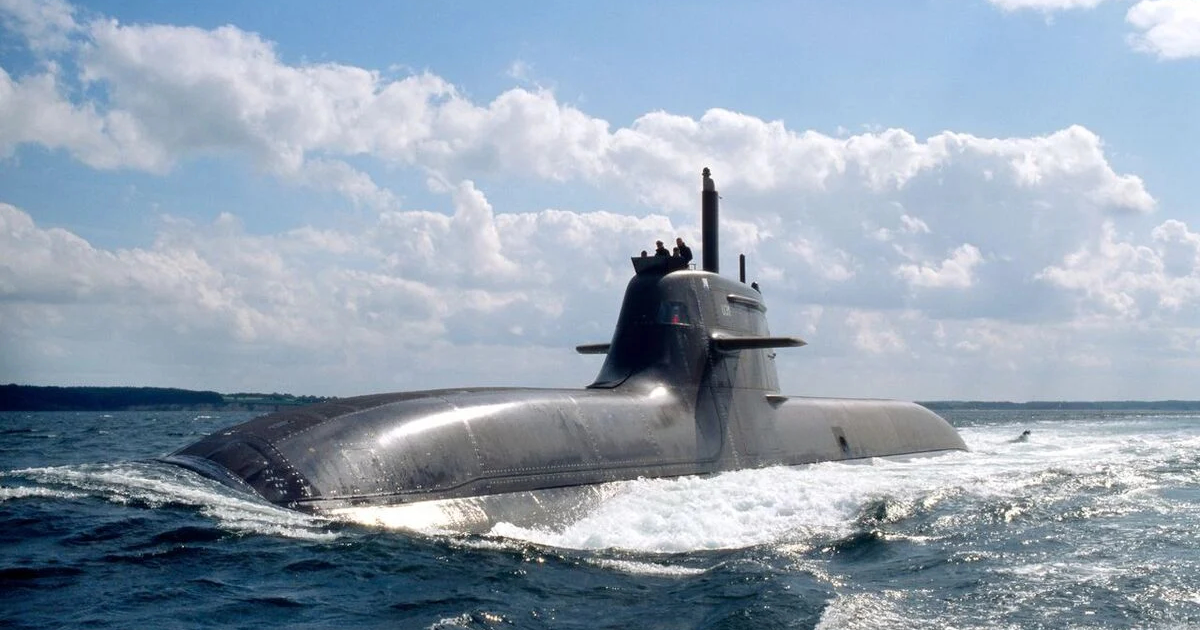
The Indian Navy’s ambitious Project 75(I) submarine acquisition has entered a decisive stage, with cost negotiations between the Ministry of Defence, Mazagon Dock Shipbuilders Limited (MDL) and Germany’s ThyssenKrupp Marine Systems (TKMS) now substantially concluded. The proposal is expected to be placed before the Cabinet Committee on Security (CCS) for approval within the next quarter.





Valued at approximately ₹66,000–70,000 crore after successive rounds of price rationalisation, Project 75(I) is set to become one of the largest conventional submarine contracts globally and the most expensive underwater capability project ever undertaken by India.
Conceived as a follow-on to the original Project 75 Scorpene line, the programme aims to induct six next-generation diesel-electric submarines equipped with Air Independent Propulsion (AIP), advanced stealth features, modern combat management systems and heavyweight torpedoes for both anti-surface and anti-submarine warfare. The AIP capability, enabling extended submerged endurance of up to three weeks, represents a significant leap over the existing Kalvari-class submarines.
Under India’s Strategic Partnership model, MDL has emerged as the Indian strategic partner, leveraging its experience from the Scorpene programme, while TKMS is expected to provide the design, AIP package and critical technologies based on its proven Type-214/Type-218 lineage, customised to Indian Navy requirements.
Cost negotiations for the programme have been prolonged and sensitive. The original Acceptance of Necessity in 2018 pegged the project at around ₹43,000 crore, but internal estimates later surged due to taxes, technology transfer costs and lifecycle support. The Cost Negotiation Committee has since brought the figure back to the ₹60,000–70,000 crore range, which the government now views as strategically justifiable.
With the negotiation phase largely complete, the focus has shifted to financial vetting and inter-ministerial scrutiny before the file is moved to the CCS. Defence officials indicate that approval is being targeted within the current financial year, allowing contract signature by late FY 2025–26 and release of the initial payment tranche soon thereafter.
Operationally, Project 75(I) is critical to addressing India’s growing undersea capability gap amid the rapid expansion of Chinese naval presence in the Indian Ocean Region and Pakistan’s induction of Chinese-origin AIP submarines. The new boats are expected to enhance sea-denial capabilities, protect vital sea lanes and strengthen deterrence across the Arabian Sea and Bay of Bengal.
Beyond operational gains, the programme is expected to significantly boost India’s domestic shipbuilding ecosystem. It will generate sustained work for MDL and its supply chain while embedding advanced skills in modular construction, systems integration, quieting technologies and fuel-cell AIP—capabilities seen as vital stepping stones for future indigenous submarine designs.
While residual risks remain over liability clauses, intellectual property rights and indigenous content thresholds, strategic signalling from the political and military leadership suggests strong intent to push the project through. If cleared by the CCS within the anticipated timeframe, Project 75(I) will provide the Indian Navy with a predictable pipeline of advanced submarines into the next decade, buying crucial time for parallel indigenous conventional and nuclear submarine programmes.