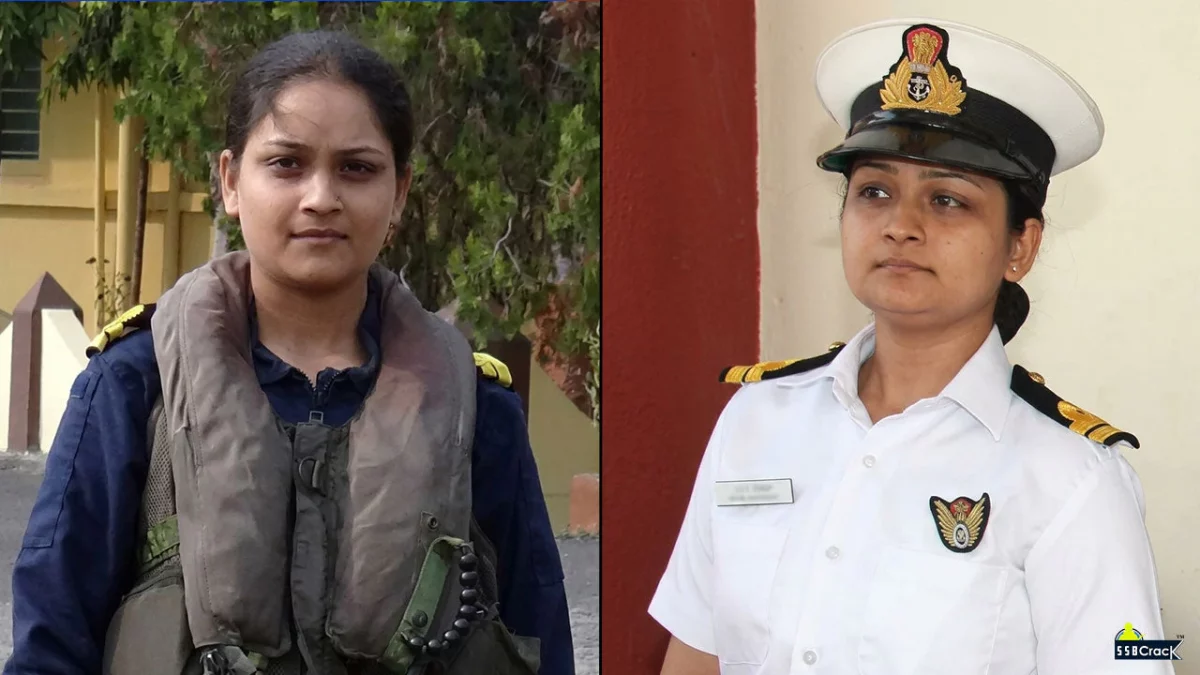
Lieutenant Kiran Shekhawat (1 May 1988 – 24 March 2015) holds a unique and poignant place in the history of the Indian Navy. She was the first woman officer in the Indian Navy to sacrifice her life while serving in the line of duty. Her untimely death in a Dornier aircraft crash during a routine night maritime surveillance mission off the coast of Goa on 24 March 2015 marked a significant milestone in the evolving role of women in the Indian Armed Forces. At just 26 years of age, Lieutenant Shekhawat exemplified courage, professionalism, and unwavering commitment to national service. Her story continues to inspire generations of women aspiring to join the defence forces, underscoring the sacrifices made by those who wear the uniform.





Early Life and Family Background
Born on 1 May 1988 in Mumbai, Kiran Shekhawat hailed from a distinguished Rajput family with deep roots in military service. She was the daughter of Hon. Lieutenant Vijendra Singh Shekhawat, a retired Master Chief Petty Officer in the Indian Navy, and Smt. Madhu Chauhan. The family originated from Sefarguwar village in Khetri tehsil of Jhunjhunu district, Rajasthan. Her upbringing in a naval household instilled in her a profound sense of duty, patriotism, and discipline from an early age.
Kiran married Lieutenant Vivek Singh Chhoker (later promoted to Lieutenant Commander), a fellow naval officer serving as an instructor at the Indian Naval Academy in Ezhimala, Kerala, in February 2013. The couple shared a common bond of dedication to the nation. Her mother-in-law, Sunita Chhoker, served as the sarpanch of Kurthala village near Gurugram in Haryana, where the family owned agricultural land. Kiran’s personal interests included reading novels by Nicholas Sparks, watching films based on his works, and maintaining physical fitness through various activities. She was also known for her love of music, particularly songs by Enrique Iglesias and Shania Twain, and enjoyed dancing.
Education and Entry into the Indian Navy
Kiran Shekhawat received her early education at various Kendriya Vidyalayas across India, including a notable stint at the Japan International School in Tokyo. She later completed her schooling at Kendriya Vidyalaya-II in Visakhapatnam. Demonstrating academic excellence, she graduated with a Bachelor of Science degree in Physics from Andhra University.
Prior to joining the military, she briefly worked with a private bank. However, her childhood aspiration to serve in the Indian Navy—fueled by her father’s legacy—led her to the Indian Naval Academy in Ezhimala, Kerala. She was commissioned into the Indian Navy on 5 July 2010 as part of the 11th Naval Orientation Course and the 5th Short Service Commission Observer Course. Upon completion of her training, she earned her Observer Wings, signifying her proficiency in operating Dornier aircraft and managing onboard sensors for surveillance missions.
Military Career and Contributions
Lieutenant Shekhawat was assigned to the Indian Naval Air Squadron (INAS) 310, popularly known as the “Cobras,” a premier intelligence warfare squadron based in Goa. As an observer in the Executive Branch, her role involved operating advanced sensors during tactical sorties over the ocean. She conducted maritime reconnaissance, tracked and engaged hostile ships violating India’s maritime boundaries, and recorded critical environmental data for intelligence analysis.
In her short but impactful five-year career, she served across various naval stations and was transferred to Goa in 2015. She participated in numerous operational missions, showcasing exceptional skill and dedication. A notable highlight was her involvement in the first all-women marching contingent of the Indian Navy during the Republic Day Parade in January 2015, just months before her martyrdom. Her expertise in intelligence warfare and commitment to duty earned her respect among peers and superiors alike.
The Tragic Incident: The Dornier Crash
On the evening of 24 March 2015, Lieutenant Kiran Shekhawat was aboard a Dornier 228 surveillance aircraft for a routine night training sortie focused on maritime patrol and reconnaissance, approximately 25 nautical miles southwest of the Goa coast. The aircraft, piloted by Commander Nikhil Joshi (with over 4,000 flying hours of experience) and co-piloted by Lieutenant Abhinav Nagori, disappeared from radar around 22:08 hours while attempting to gain altitude from a low-level flight.
Search and rescue operations were immediately launched by the Indian Navy, involving ships, helicopters, and the hydrographic vessel INS Makar. The wreckage was located about 60 meters underwater using side-scan sonar. Lieutenant Shekhawat’s body was recovered inside the fuselage of the aircraft two days later, on 26 March 2015, along with that of Lieutenant Abhinav Nagori. Commander Nikhil Joshi was rescued by a local fisherman shortly after the crash. An official inquiry was conducted to ascertain the precise cause of the accident.
This incident claimed the life of the first woman naval officer to die in harness, highlighting the inherent risks faced by personnel in aviation and surveillance roles.
Aftermath, Cremation, and Immediate Honors
Lieutenant Shekhawat’s mortal remains were transported to Kurthala village in Mewat (now Nuh), Haryana, for the final rites. On 29 March 2015 (with cremation reported on 30 March in some accounts), she was laid to rest with full military honours. Her body, draped in the national tricolour, was consigned to flames amid tributes from Navy officials, politicians across party lines (including former Haryana Chief Minister Bhupinder Singh Hooda), and local villagers. The ceremony reflected the nation’s gratitude for her supreme sacrifice.
Legacy and Enduring Impact
In recognition of her service, several memorials and initiatives were established. A Shaheed Park spanning 2 acres was developed in Kurthala (Nuh), Haryana, featuring a life-size statue of Lieutenant Shekhawat. A 7.5-kilometre stretch of road between Chechera and Village Bighwali was named after her. The Haryana government also announced plans for a girls’ college in her honour.
In March 2016, her family founded the Lt Kiran Shekhawat Foundation, a charitable organisation aimed at supporting underprivileged sections of society and organising events to inspire the youth toward national service. Her father, Vijendra Singh Shekhawat, played a key role in these efforts.
Lieutenant Kiran Shekhawat’s martyrdom symbolises the growing integration and equal participation of women in combat and operational roles within the Indian Armed Forces. Her story serves as a beacon of inspiration, reminding us that duty, bravery, and sacrifice transcend gender. As India continues to empower women in defence services, her legacy endures—not only in memorials and foundations but in the hearts of countless aspirants who draw strength from her example.
Lieutenant Kiran Shekhawat will forever be remembered as a trailblazer who paid the ultimate price in the service of the nation. Her name is etched in the annals of Indian naval history as the first woman officer to lay down her life in the line of duty.