
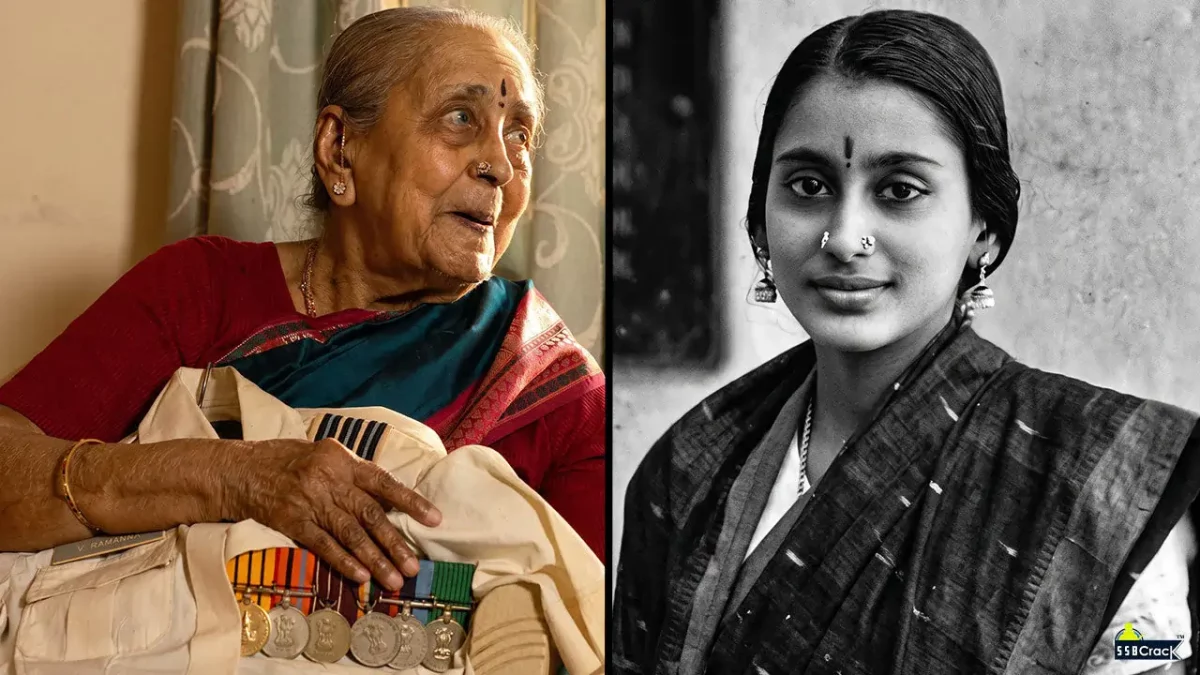
Wing Commander (Retd) Dr Vijayalakshmi Ramanan VSM remains one of the most remarkable pioneers in India’s military history. At a time when women had little to no representation in the armed forces, she broke barriers to become the first woman officer in the Indian Air Force. Over a distinguished career spanning 24 years, she served as a dedicated medical professional, contributed during three major wars, and laid the foundation for generations of women officers who would follow.


Born on 27 February 1924 in Madras (now Chennai), Vijayalakshmi Ramanan grew up in a family that valued discipline, education, and service. Her father, T.D. Narayana Iyer, a World War I veteran and public health official, played a significant role in shaping her outlook towards national duty. From a young age, she also displayed exceptional talent in music, becoming an A-grade artist with All India Radio at just 15. She trained in Carnatic classical music under renowned gurus and performed at prestigious gatherings attended by national leaders such as Sarojini Naidu and Mahatma Gandhi.
Despite her achievements in music, she chose to pursue medicine, inspired by the pioneering women of her time. She joined Madras Medical College in 1943, where she excelled academically. She was awarded the Balfour Memorial Medal for Medicine and the Madras University Prize for Surgery, graduating as the best outgoing student in 1948. She later completed her MD in Obstetrics and Gynaecology and began her medical career at Egmore Maternity Hospital in Chennai, where she developed the clinical expertise that would define her professional life.

In 1955, she married Wing Commander K.V. Ramanan, an Indian Air Force officer who encouraged her to join the armed forces. That same year, she made history by being commissioned into the Indian Army Medical Corps and subsequently seconded to the Indian Air Force. This marked the beginning of a groundbreaking journey as the first woman officer in the IAF.
Her induction into the Air Force was not without challenges. At the time, there was no official uniform for women officers. Undeterred, she designed her own—an elegant blue sari paired with a tan blouse—which eventually became the standard uniform for women in the IAF. She also faced practical challenges while performing medical duties, such as sleeve length during procedures, which she addressed with confidence and innovation.
Throughout her career, Dr Ramanan served in various Air Force hospitals, including those in Jalahalli, Kanpur, Secunderabad, and Bengaluru. She specialised in obstetrics and gynaecology and became known for her dedication to patient care. From 1968 onwards, she served as Senior Gynaecologist and Obstetrician in the Family Wing of Air Force Hospital in Bengaluru, often managing the department single-handedly. She remained on call at all hours, handling emergencies, conducting deliveries, and ensuring the well-being of both service personnel and their families.
Her service coincided with three major conflicts—the 1962 Sino-Indian War, the 1965 Indo-Pak War, and the 1971 Indo-Pak War. During these periods, she worked tirelessly as part of the medical teams treating the wounded and managing critical cases. Her unwavering commitment during wartime highlighted her resilience and sense of duty.
In 1971, she faced a personal tragedy with the loss of her husband. Left to raise her two children, she continued her demanding military service with remarkable strength and composure. Her ability to balance personal responsibilities with professional excellence stands as a testament to her character.
In recognition of her exceptional service, she was awarded the Vishisht Seva Medal in 1977 by President Neelam Sanjiva Reddy. This honour acknowledged her dedication, especially her work in the Family Wing and her contributions to family planning initiatives within the armed forces.
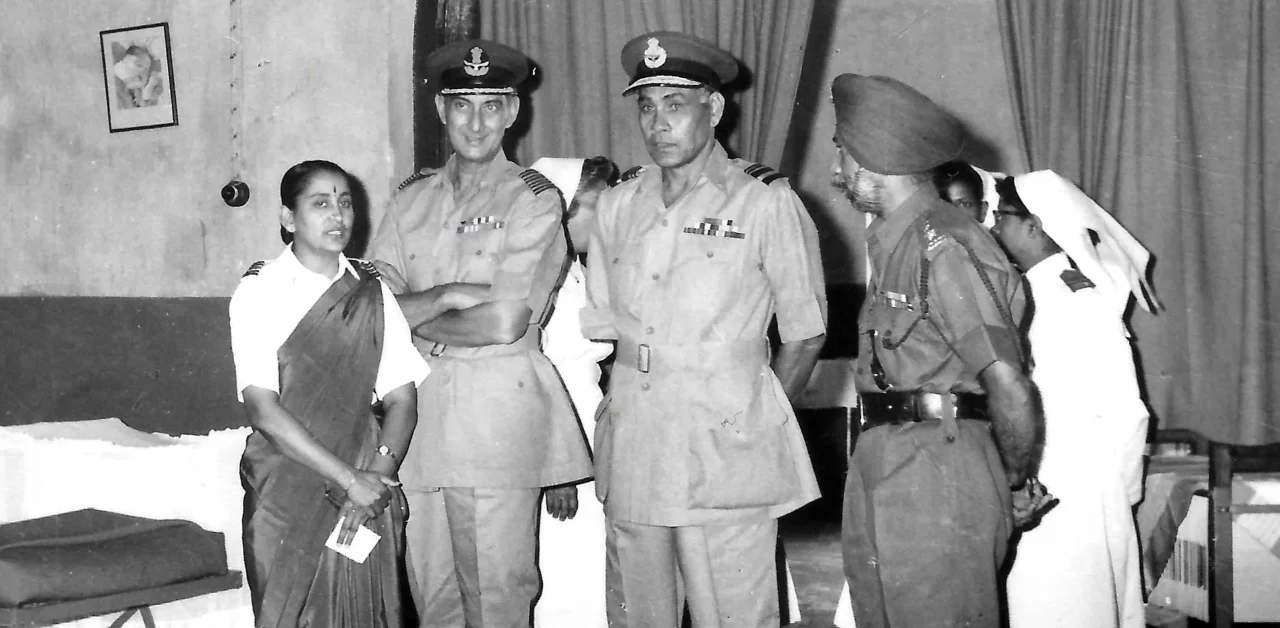
She retired from the Indian Air Force on 28 February 1979 with the rank of Wing Commander. However, retirement did not mark the end of her service. She established a private medical practice in Bengaluru, where she continued to treat patients, often providing free care to those in need. She also mentored young doctors, particularly women aspiring to join the Armed Forces Medical Services, encouraging them to pursue excellence with discipline and compassion.
Beyond medicine, she remained deeply connected to music and cultural traditions, teaching younger members of her family and preserving the art she had loved since childhood. She also quietly supported various social causes, contributing to healthcare and education initiatives without seeking recognition.
Wing Commander Vijayalakshmi Ramanan passed away on 18 October 2020 at the age of 96 in Bengaluru. Her life story is not just about being the first woman officer in the Indian Air Force—it is about perseverance, courage, and service above self. She opened doors for women in uniform and proved that dedication and capability know no gender.
Today, she is remembered as a trailblazer who combined professional excellence with humility, a doctor who served selflessly in times of peace and war, and a role model whose legacy continues to inspire generations across the nation.