
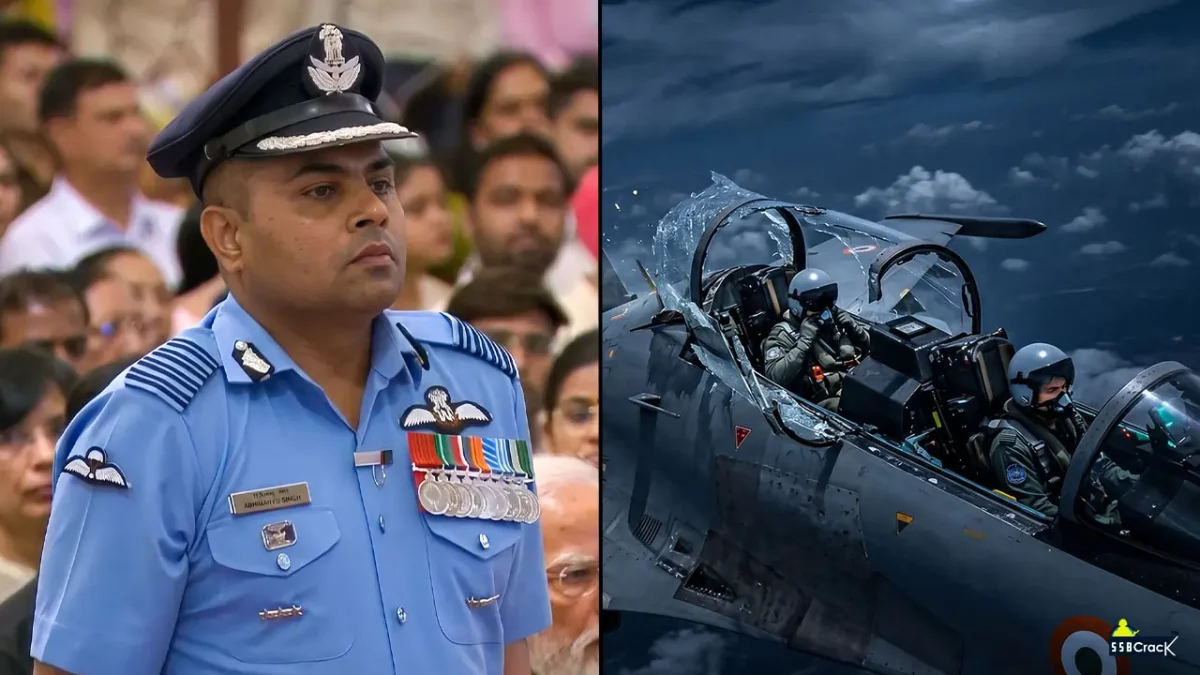
In military aviation, emergencies can develop within seconds and demand calm decision-making from the crew. One such incident took place on the night of 21 November 2024, when Wing Commander Abhimanyu Singh, now Group Captain Abhimanyu Singh, faced a serious in-flight emergency while flying a Su-30MKI fighter aircraft of the Indian Air Force.
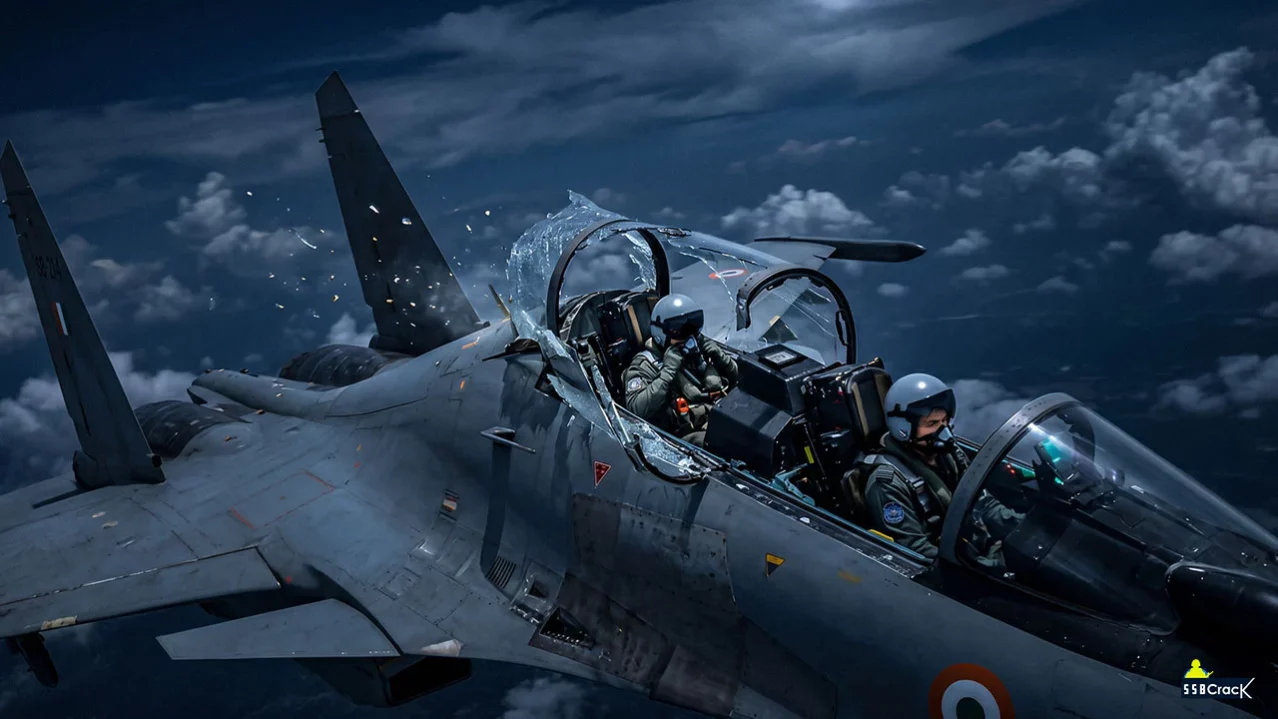
During a night training sortie, the rear canopy of the aircraft fractured, leading to sudden explosive decompression inside the cockpit. Despite being injured by canopy fragments and bleeding, the officer maintained control of the aircraft, ensured the safety of the trainee pilot onboard, and safely recovered the damaged fighter aircraft.
For his courage, flying skill and devotion to duty, he was awarded the Shaurya Chakra, India’s third-highest peacetime gallantry award.
A Night Training Sortie That Turned Into an Emergency
On 21 November 2024, Wing Commander Abhimanyu Singh was assigned as the aircraft captain for a training sortie. The purpose of the sortie was to evaluate a trainee pilot. The aircraft involved was the Su-30MKI, a frontline multirole fighter aircraft operated by the Indian Air Force.
Night flying is among the more demanding aspects of fighter operations. It requires high levels of concentration, instrument flying proficiency, coordination between crew members and constant situational awareness. During this sortie, the trainee pilot was carrying out a difficult manoeuvre when the situation suddenly changed.
The rear canopy of the Su-30MKI fractured, causing explosive decompression inside the cockpit. The sudden failure created a serious emergency for both pilots onboard.
Injured by Canopy Fragments
The fractured canopy sent fragments into the cockpit, injuring Wing Commander Abhimanyu Singh. He suffered bleeding and physical trauma from the broken pieces.
In such conditions, a pilot has to deal with several challenges at once. The cockpit environment becomes difficult, communication can be affected, and the aircraft may become harder to control. Since the sortie was being conducted at night, the level of difficulty was even higher.
Despite the injury and discomfort, Wing Commander Singh remained composed. He did not allow the emergency to affect his judgement. Instead, he quickly assessed the situation and took the required action.
Taking Manual Control of the Aircraft
After the canopy failure, Wing Commander Abhimanyu Singh took manual control of the Su-30MKI. His immediate priority was to stabilise the aircraft and ensure that the trainee pilot onboard remained safe.
Handling a damaged fighter aircraft requires both technical knowledge and practical flying experience. The pilot must judge the condition of the aircraft, monitor its behaviour, control the descent and ensure that the aircraft remains away from unsafe areas.
In this case, Wing Commander Singh had to do all this while dealing with injuries and bleeding. His actions showed strong professional competence and presence of mind.
Saving the Trainee Pilot and the Aircraft
The timely response of Wing Commander Abhimanyu Singh helped save the life of the trainee pilot. He successfully managed the emergency and brought the aircraft back safely.
The Su-30MKI is one of the most important fighter aircraft in the Indian Air Force inventory. Apart from saving lives, his actions also prevented the loss of a valuable national asset.
His handling of the situation also reduced the risk to civilians on the ground. A damaged fighter aircraft, if not controlled properly, could pose danger beyond the aircrew. By maintaining control and safely recovering the aircraft, he prevented a larger accident.
Awarded the Shaurya Chakra
For his courage and devotion to duty, Wing Commander Abhimanyu Singh was awarded the Shaurya Chakra. The Shaurya Chakra is awarded for acts of gallantry otherwise than in the face of the enemy.
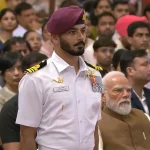
His name appeared in the official gallantry awards list approved by the President of India in August 2025. The award was later conferred by President Droupadi Murmu during the Defence Investiture Ceremony 2026.
The citation recognised his calm response, flying skill and decisive action during a life-threatening emergency.
Importance of Calm Decision-Making in Fighter Aviation
The incident highlights the importance of training, discipline and quick decision-making in fighter aviation. Fighter pilots regularly operate in high-performance aircraft where emergencies can develop suddenly.
In such situations, the difference between a safe recovery and a serious accident often depends on the pilot’s ability to remain calm and apply training under pressure.
Group Captain Abhimanyu Singh’s actions are an example of professional handling of an aviation emergency. His response was not only about individual bravery but also about responsibility towards the trainee pilot, the aircraft and the people on the ground.
A Professional Example for Young Officers
Group Captain Abhimanyu Singh’s story will serve as an important example for young officers and defence aspirants. It shows that courage in the armed forces is not limited to combat situations. It is also seen in moments of crisis, where an officer must take responsibility and act with clarity.
On the night of 21 November 2024, he faced a serious emergency inside a damaged Su-30MKI. Despite injuries, he remained composed, took control and ensured a safe recovery.
His Shaurya Chakra is a recognition of his courage, skill and commitment to duty. It also reflects the professionalism of Indian Air Force pilots who train and operate in demanding conditions every day.
Conclusion
Group Captain Abhimanyu Singh’s actions during the Su-30MKI emergency stand as a strong example of calmness under pressure. Injured by canopy fragments and exposed to sudden explosive decompression, he still managed to control the aircraft and safely recover it.
His actions saved a trainee pilot, protected a valuable fighter aircraft and helped prevent possible danger on the ground. For this, he was rightly awarded the Shaurya Chakra.