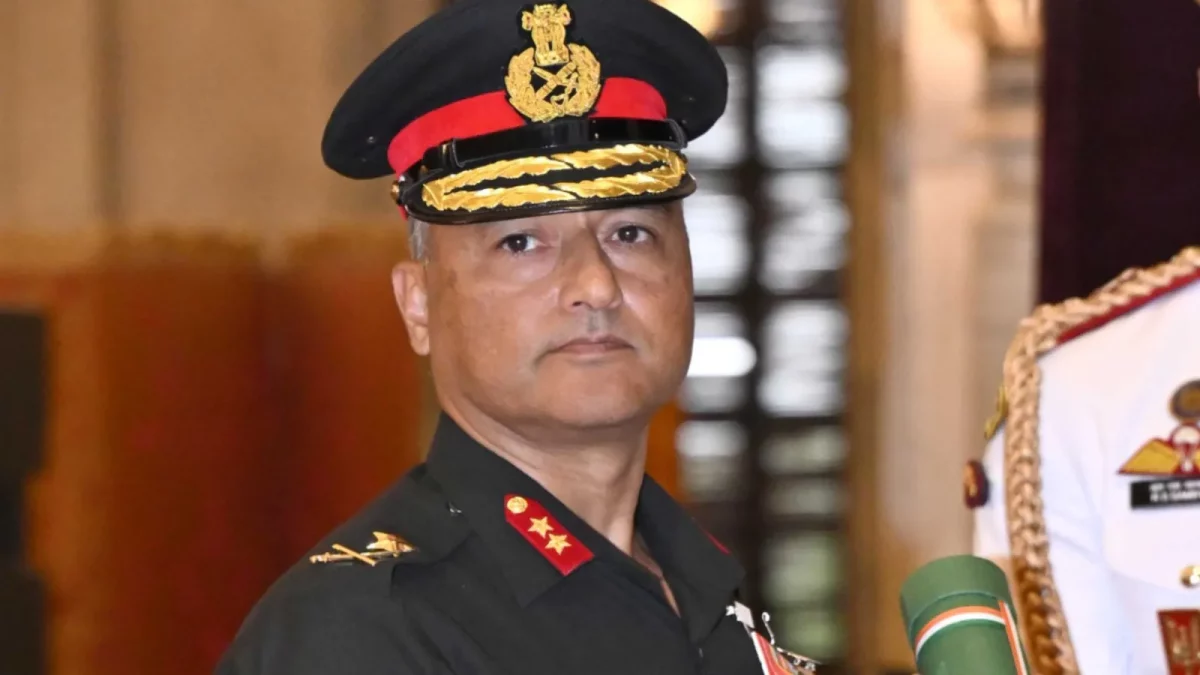
The Indian Army’s strategically significant XIV Corps (Fire and Fury Corps) is set to witness a change of command, with Lieutenant General Madanraj Pandey slated to assume command following his promotion to the rank of Lieutenant General.





Lt Gen Pandey will succeed Lieutenant General Hitesh Bhalla, who is moving to the Northern Command Headquarters as Chief of Staff after completing nearly two years in command of the Corps. Lt Gen Bhalla’s tenure makes him the longest-serving commander of the Fire and Fury Corps in recent years.
Headquartered in Leh, the Fire and Fury Corps is responsible for safeguarding India’s northern frontiers in Ladakh, including sectors along the Line of Actual Control (LAC) with China and areas adjoining Pakistan-occupied territories. The formation has played a pivotal role in managing security challenges arising from the eastern Ladakh military standoff that began in 2020.
The leadership transition comes shortly after the latest meeting of the Working Mechanism for Consultation and Coordination (WMCC) on India-China Border Affairs, a diplomatic platform that helps facilitate dialogue and prepares the groundwork for Corps Commander-level military talks between the two countries.
With Lt Gen Pandey expected to take charge in the coming weeks, he may represent India in future rounds of military discussions aimed at maintaining stability along the LAC. Over the past several years, India and China have engaged in multiple rounds of military and diplomatic negotiations to address border-related issues and reduce tensions in eastern Ladakh.
Recent developments have seen progress in restoring traditional patrolling arrangements. Patrolling activities have reportedly resumed at all seven traditional patrolling points that were accessible prior to April 2020, including five locations in the Depsang region and two in the Demchok sector.
Earlier this year, Lt Gen Bhalla had indicated that coordinated patrolling mechanisms established between the two sides were functioning effectively on the ground and contributing to the maintenance of stability in sensitive border areas.
Defence sources indicate that future discussions between India and China are expected to focus on advancing the next phase of border management efforts, with emphasis on the three key objectives of disengagement, de-escalation and de-induction of forces along the frontier.
The appointment of Lt Gen Pandey reflects the Indian Army’s continued focus on placing experienced commanders in critical operational roles amid evolving security challenges along India’s northern borders.
As he prepares to assume command of one of the Army’s most strategically important formations, Lt Gen Pandey will oversee operational readiness and border management efforts in a region that remains central to India’s national security interests.