

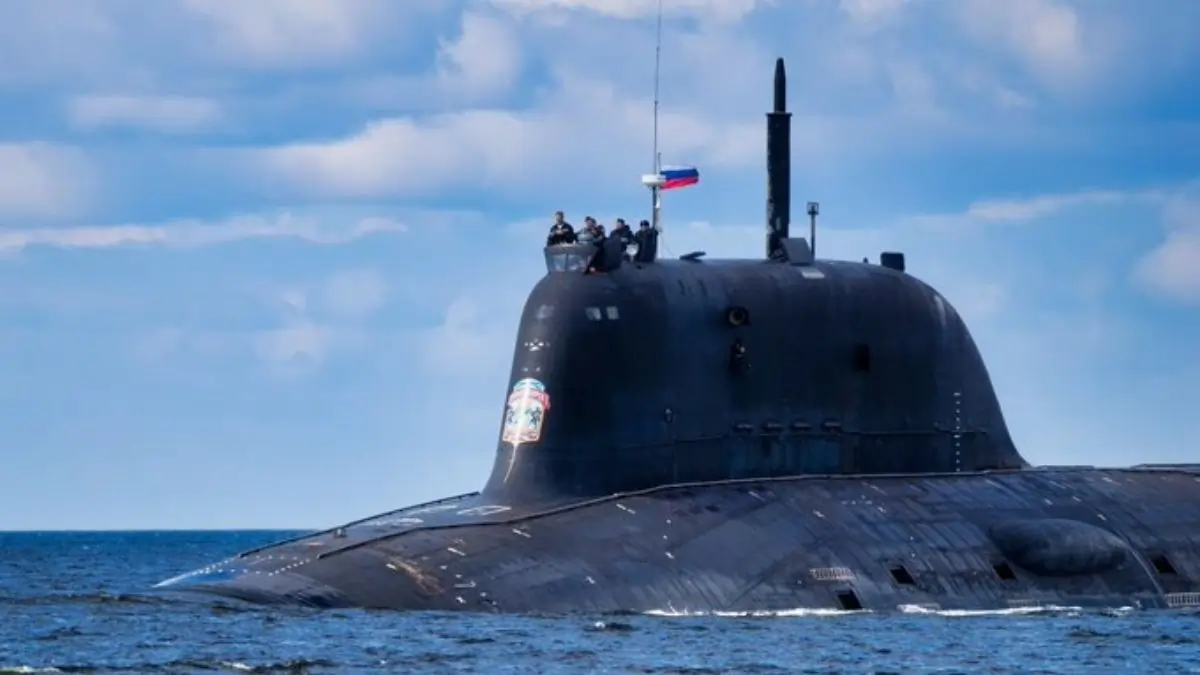
Russia has deployed a submarine to protect a sanctioned oil tanker linked to its so-called “shadow fleet” as the vessel attempts to evade monitoring by the United States Coast Guard in the Atlantic Ocean—marking an unprecedented escalation in the enforcement standoff over illicit oil shipments, according to media reports.

The tanker at the centre of the episode—formerly known as Bella 1 and now operating under the name Marinera—is sailing toward Russia without cargo after failing to load crude in Venezuela. Despite being empty, the ship continues to be tracked as part of Washington’s wider campaign against vessels suspected of transporting sanctioned Russian, Iranian, and Venezuelan oil.
Re-registration and Escalation at Sea
According to officials cited in reports, the tanker’s crew blocked a US attempt to board the vessel in December. Shortly thereafter, the ship repainted a Russian flag on its hull, re-registered under Russian jurisdiction, and changed its name—moves US officials are scrutinising for legal validity.
Moscow has reportedly objected to the continued pursuit, demanding that Washington halt its efforts. The deployment of a Russian submarine to shield the tanker represents a significant escalation and signals the sensitivity surrounding sanctions enforcement on the high seas.
US Coast Guard Monitoring Continues
Automatic Identification System (AIS) data indicates that a United States Coast Guard cutter continues to shadow Marinera in the eastern Atlantic, more than 400 km south of Iceland, as it heads toward the Russian port of Murmansk. Open-source analysts have identified the pursuing vessel as a Legend-class National Security Cutter, the largest and most heavily armed platform operated by the US Coast Guard.
Officials said the cutter has tracked the tanker for over two weeks, maintaining a close but cautious distance. Boarding teams are reportedly on standby, pending political authorisation from the White House.
Legal and Diplomatic Risks
Under international maritime law, vessels suspected of fraudulent registration or lacking verified nationality may be boarded. However, if Russia’s re-registration of the tanker is deemed legally valid, any forced seizure could trigger a serious diplomatic confrontation.
The tanker is reportedly owned by a Turkish company and is under US sanctions for previously transporting oil on behalf of sanctioned entities. It forms part of the “shadow fleet”—a network of aging tankers that employ flag-hopping, opaque ownership, and falsified documentation to bypass sanctions.
Strategic Implications
The presence of a Russian submarine alongside a sanctioned tanker underscores Moscow’s concerns over the economic impact of intensified sanctions enforcement and highlights the growing risks of miscalculation at sea. For Washington, the use of top-tier Coast Guard assets reflects the priority placed on curbing illicit energy trade that sustains sanctioned economies.
As the standoff unfolds in the North Atlantic, officials on both sides appear to be weighing legal authority against escalation risks—turning a single tanker’s voyage into a test case for maritime sanctions enforcement and great-power signalling.