
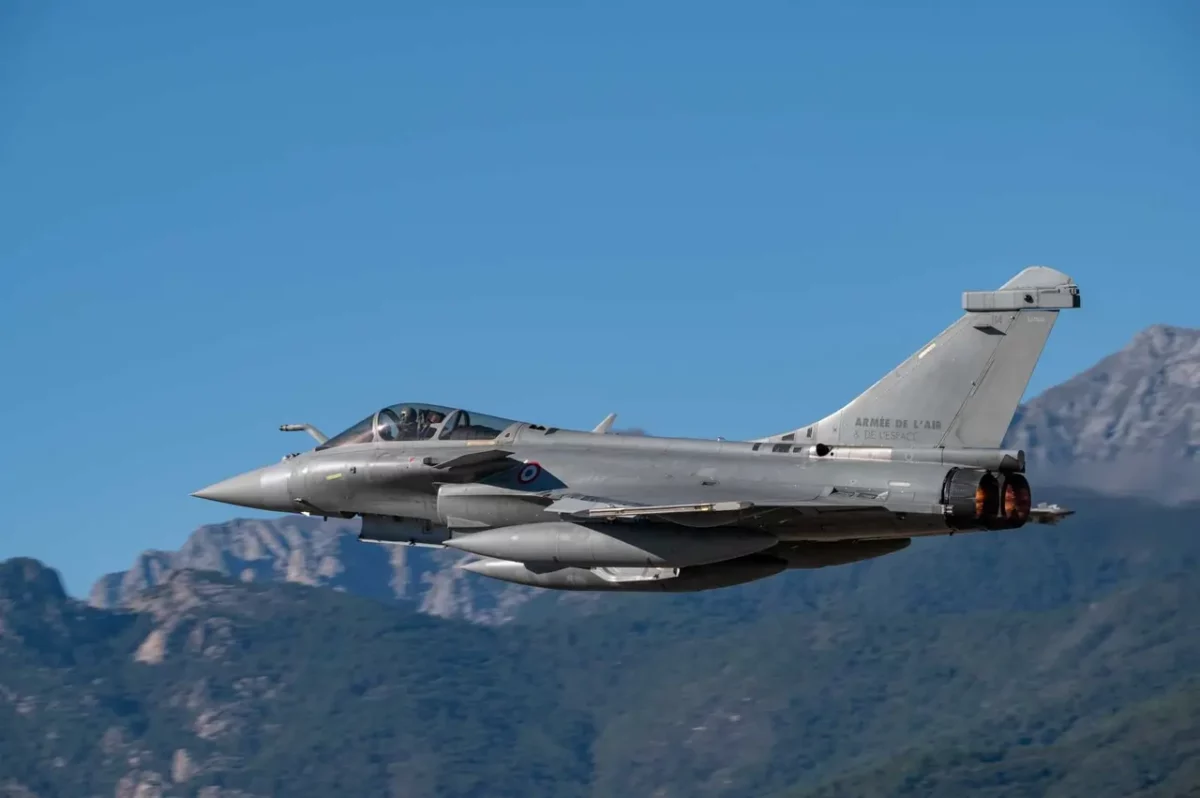
India is poised to consider its largest-ever defence acquisition, with the Defence Ministry set to hold high-level internal discussions this week on a proposal to procure 114 Rafale fighter jets from France at an estimated cost of ₹3.25 lakh crore, according to official sources cited by ANI.



If approved, the deal would significantly bolster India’s air combat capability and take the total number of Rafale aircraft in Indian service to 176—including 36 already inducted by the Indian Air Force and 26 Rafale-M jets ordered for the Navy.
What the Proposal Includes
- 114 Rafale fighters under a government-to-government framework with France
- 12–18 aircraft in fly-away condition for faster induction
- Majority manufactured in India, with ~30% indigenous content
- Integration of Indian weapons and systems sought by India (with source codes remaining with France)
- Final approval to be sought from the Cabinet Committee on Security after Defence Ministry clearance
Strategic Rationale
The proposal comes amid an urgent requirement to arrest declining squadron strength and counter a challenging regional threat environment. Sources say the Indian Air Force’s Statement of Case (SoC) for the 114 aircraft was submitted months ago and is now moving into the decision phase.
The push also follows the Rafale’s reported strong performance during Operation Sindoor, where its SPECTRA electronic warfare suite is said to have provided decisive advantages against adversary air-to-air missile threats.
Industrial & ‘Make in India’ Dimension
France is expected to deepen industrial cooperation:
- M-88 engine MRO facility planned in Hyderabad
- Expanded role for Indian aerospace partners (including private sector firms)
- Strengthening of India’s domestic manufacturing ecosystem, even as indigenous content remains below typical 50–60% thresholds seen in Make in India programmes
Why Rafale, Despite 5th-Gen Offers?
The move forward with Rafale discussions comes even as the US and Russia have pitched fifth-generation fighters (F-35 and Su-57 respectively). Officials indicate that proven capability, faster timelines, existing infrastructure, and interoperability have weighed in Rafale’s favour for near- to mid-term needs.
The Road Ahead
- Defence Ministry internal discussions: next 2–3 days
- Cost negotiations and inter-ministerial vetting to follow
- CCS approval required before contract finalisation
If cleared, the acquisition will anchor the IAF’s future force structure around Su-30 MKI, Rafale, and indigenous programmes like LCA Mk-1A/Mk-2, with India’s AMCA expected post-2035. The proposed Rafale mega-deal would thus serve as a critical bridge—boosting combat readiness while India scales up indigenous fighter development.