

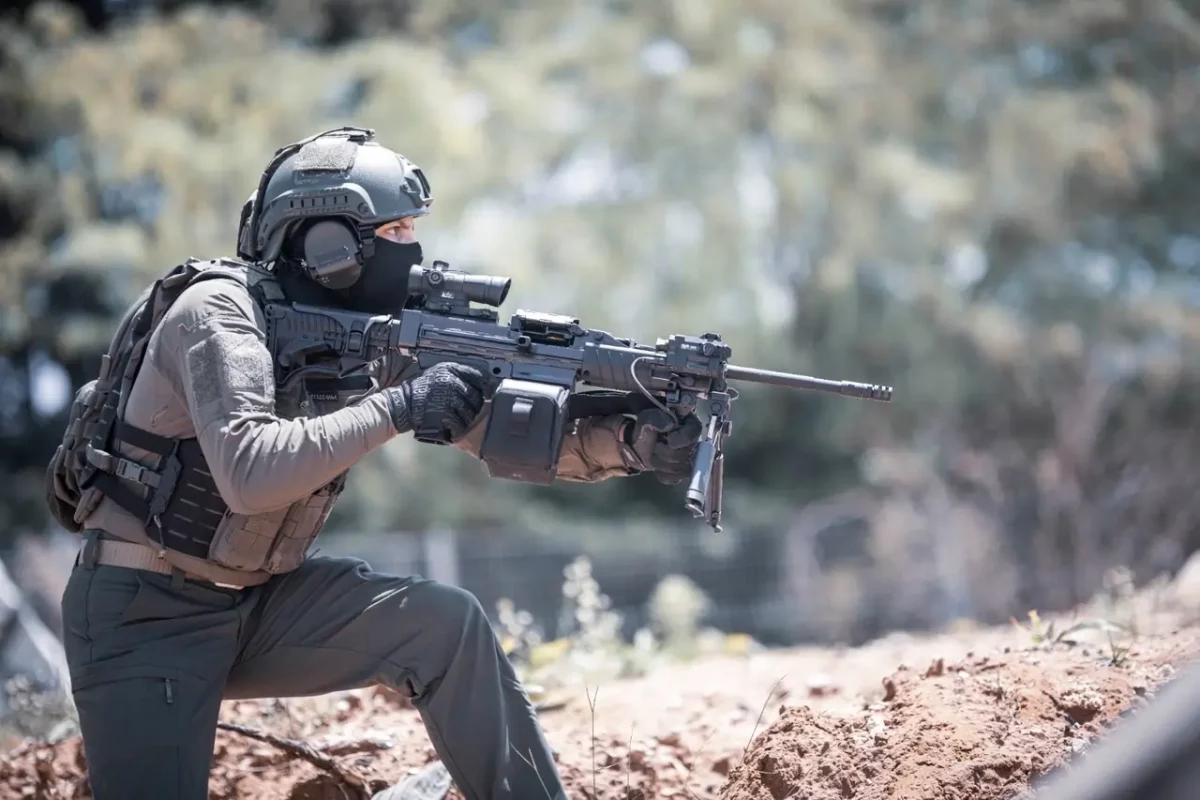
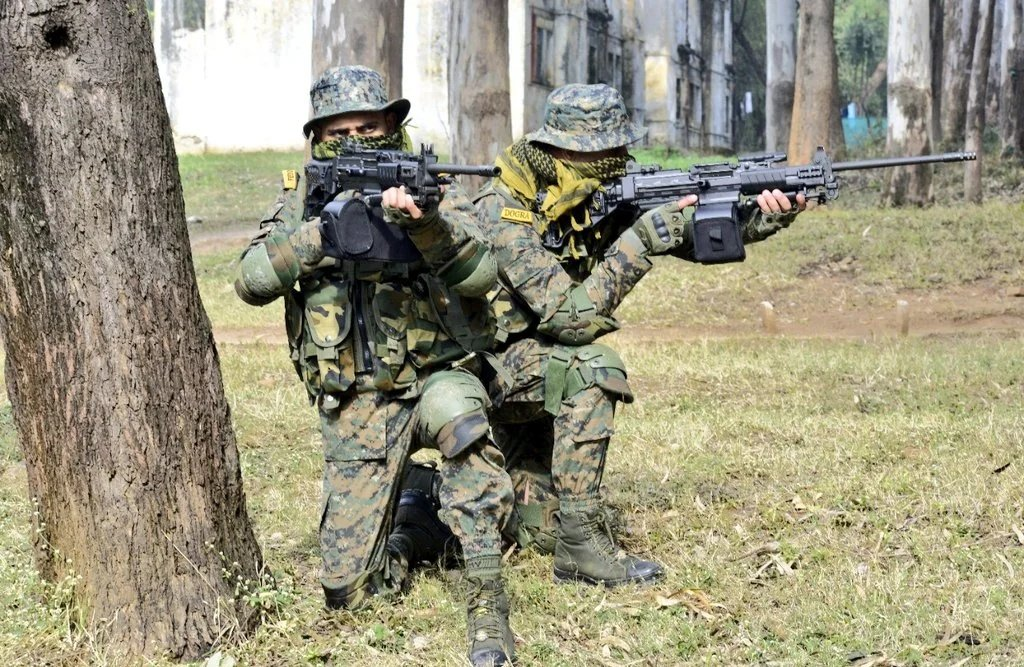
On 28 March 2026, Adani Defence & Aerospace delivered the first batch of 2,000 indigenously manufactured Prahar 7.62 mm Light Machine Guns (LMGs) to the Indian Army at its Small Arms Complex in Gwalior, Madhya Pradesh. This milestone, achieved 11 months ahead of the contracted schedule, marks a significant advancement in India’s defence manufacturing capabilities under the ‘Make in India’ and Atmanirbhar Bharat initiatives. The Prahar LMG, a licensed Indian variant of the proven Israeli IWI Negev NG-7, is engineered to replace the ageing 5.56 mm INSAS LMG and provide infantry units with superior firepower, reliability, and mobility in contemporary combat environments.





Background and Development
The Prahar LMG emerged from a strategic partnership between Adani Defence & Aerospace and Israel Weapon Industries (IWI). Following rigorous trials and the Defence Acquisition Council’s approval in August 2023, India signed a contract for approximately 40,000–41,000 units of the 7.62 × 51 mm NATO LMG. Earlier limited imports of the Negev NG-7 had already demonstrated its effectiveness, paving the way for full-scale indigenous production through PLR Systems, a joint venture aligned with Adani’s capabilities. The weapon addresses longstanding operational gaps in squad-level automatic fire support, particularly along the Line of Actual Control (LAC) and Line of Control (LoC), where sustained suppressive fire and performance in extreme conditions are critical.
Technical Specifications and Design Features
The Prahar LMG is a belt-fed, gas-operated system optimised for both offensive and defensive roles. Its core specifications include:
- Calibre: 7.62 × 51 mm NATO
- Weight (weapon only): Approximately 7.6–8 kg (without magazine)
- Barrel Length: 508 mm (20 inches)
- Overall Length: 1,100 mm (reducible to 820 mm with folding stock)
- Effective Range: 1,000 metres
- Rate of Fire: 600–750 rounds per minute (cyclic)
- Muzzle Velocity: Exceeding 800 m/s
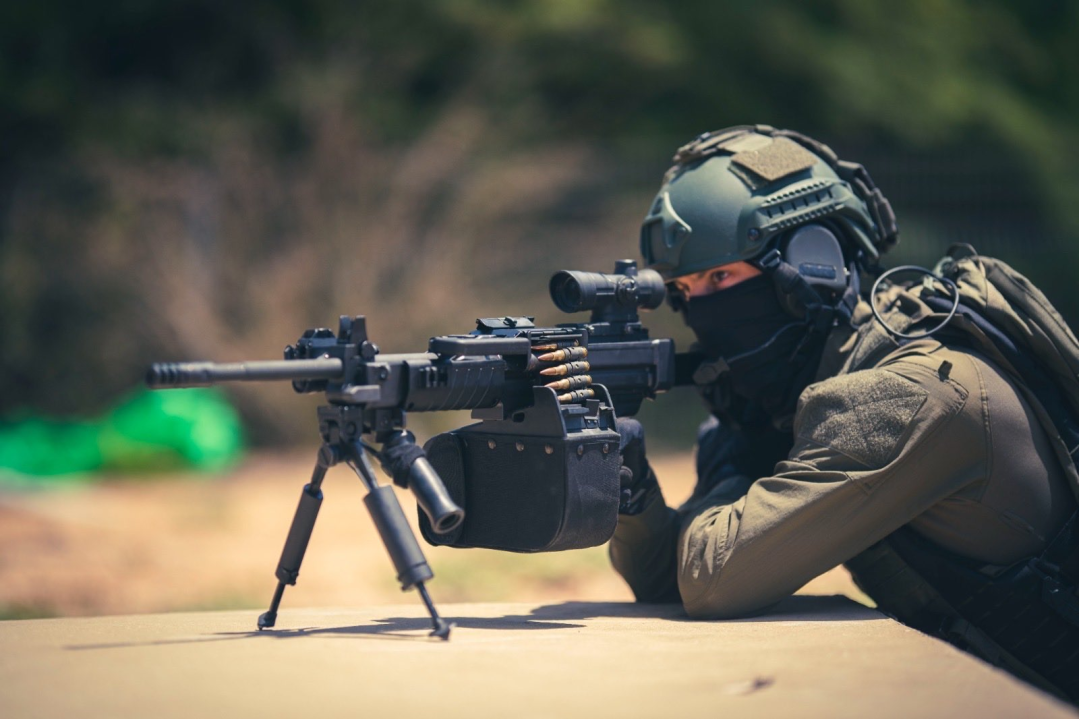
- Feed System: Disintegrating-link belt (up to 250 rounds) or 120-round assault drum magazine
- Firing Modes: Safe, semi-automatic, and fully automatic
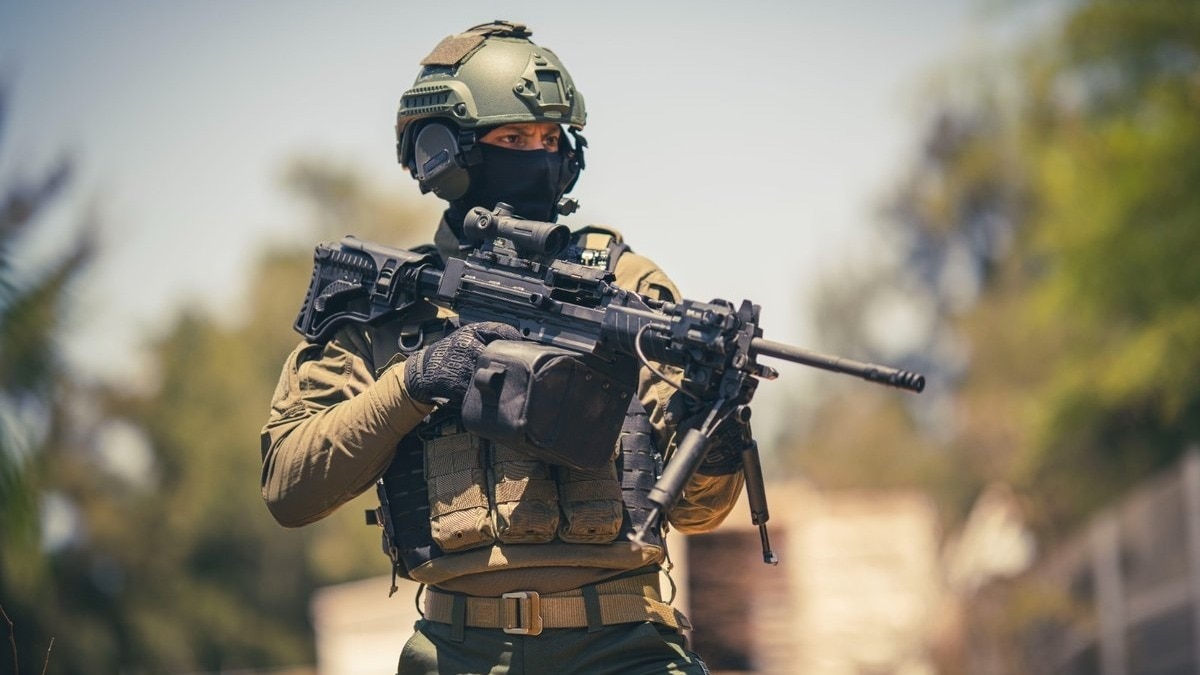
The design incorporates an open-bolt mechanism with a rotating bolt and gas piston actuation. A user-adjustable gas regulator ensures reliable functioning in adverse conditions, including high-altitude, dust, and extreme temperatures. Additional features comprise a robust, foldable bipod for stable firing positions, Picatinny rails for mounting optics and accessories, luminous iron sights, and quick field-stripping capability. The semi-automatic mode enhances precision for targeted engagements, while the belt-feed system enables prolonged suppressive fire without frequent magazine changes—addressing a key limitation of the magazine-fed INSAS LMG.
Compared with its predecessor, the Prahar offers markedly higher lethality due to the larger 7.62 mm calibre, lighter overall weight than many competing 7.62 mm systems (22–38 per cent lighter than select international alternatives), and superior sustained-fire performance. These attributes make it particularly effective for infantry squads operating in mountainous terrain or urban environments.
Manufacturing Excellence and Production Milestones
Production is centred at Adani Defence & Aerospace’s Small Arms Complex in Gwalior—the country’s first fully integrated private-sector facility dedicated to small arms. The plant boasts an annual capacity of up to 100,000 weapons and will ramp up to a monthly output of 1,000 Prahar LMGs from April 2026. Over 90 per cent of components are sourced domestically, creating skilled employment and strengthening the domestic defence supply chain. The first batch was delivered in just seven months from the start of series production, demonstrating exceptional project management and technological transfer efficiency. The entire order is expected to be fulfilled within three years—well ahead of the original seven-year timeline.
Operational and Strategic Advantages
By replacing the INSAS LMG, the Prahar significantly elevates infantry squad firepower. Its belt-fed ammunition supply and higher calibre deliver greater kinetic energy and penetration, while the weapon’s compact, lightweight design improves soldier mobility during long patrols or rapid assaults. Gas regulation and robust construction ensure consistent performance in the harsh conditions prevalent along India’s northern and eastern borders. Senior defence officials have described the Prahar as a “force multiplier” that enhances both offensive capabilities and defensive resilience.
Beyond immediate operational gains, the programme advances India’s strategic autonomy in small arms. It reduces dependence on imports, fosters private-sector innovation in defence manufacturing, and positions Indian industry for potential future exports of modern LMG systems.
Conclusion
The Prahar LMG exemplifies India’s growing prowess in indigenous defence technology. Its timely induction—delivered ahead of schedule with high indigenous content—underscores the success of public-private partnerships in meeting the armed forces’ urgent modernisation needs. As production scales up and additional units reach frontline troops, the Prahar will redefine infantry warfare doctrine, providing soldiers with a reliable, lethal, and truly ‘Made in India’ weapon system capable of dominating the battlefield of the 21st century.
This article draws upon official announcements, manufacturer statements, and verified defence reports released on or before 29 March 2026. Further classified performance data remain restricted to operational users within the Indian Army.