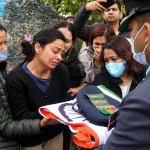

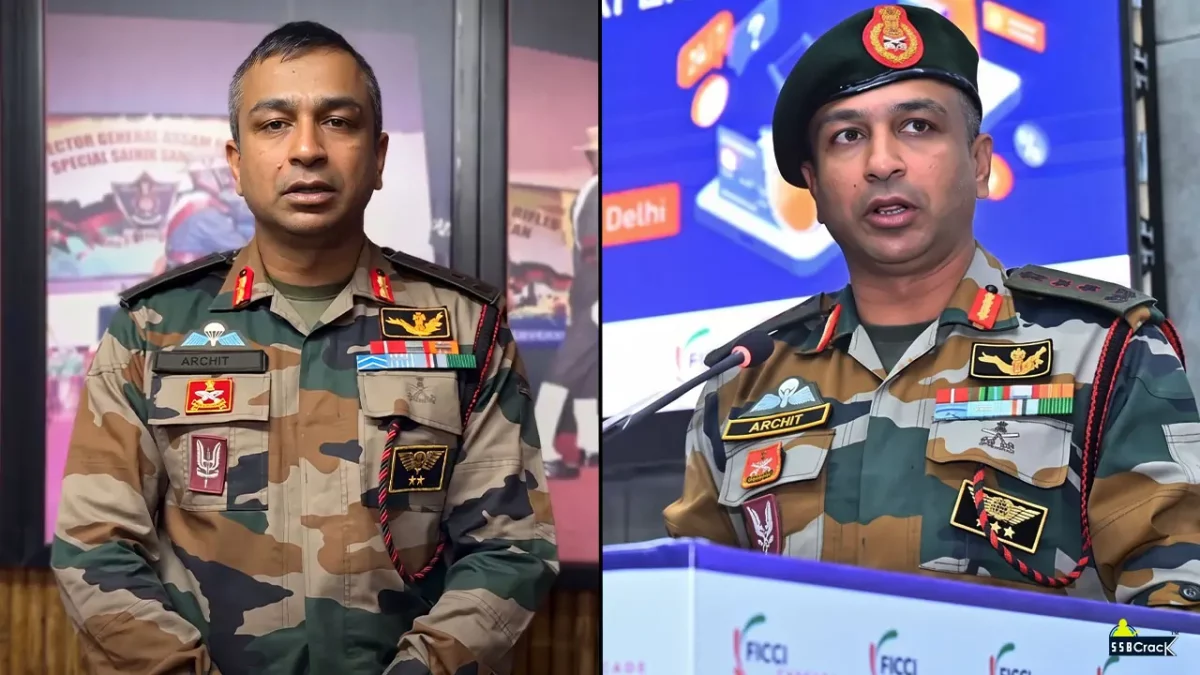
In early May 2026, a deeply emotional video from Mizoram began circulating across social media. It did not show a battlefield, a military operation, or a ceremonial parade. Instead, it showed something far more moving — specially-abled children crying uncontrollably as they bid farewell to an Indian Army officer who had become a source of strength, affection, and support in their lives.
The officer in the video was Colonel Archit Goswami, SM, Commanding Officer of the 14th Battalion, Assam Rifles. As he prepared to leave Mizoram on transfer, students of Shalom Special School, also known as Vohbik School, in Serchhip were seen clinging to him, weeping, and refusing to let him go. Teachers, parents, and locals were equally emotional. For many viewers, the video became a rare glimpse into the human side of military service in India’s Northeast.
Colonel Archit Goswami is not just another officer in uniform. He is a decorated Special Forces veteran from the elite 4 Para SF, a Sena Medal awardee, a counter-terrorism warrior, and a commanding officer whose leadership went far beyond operational duties. His story is one of courage in combat, discipline in command, and compassion in public service.
Colonel Goswami belongs to the 4th Battalion, The Parachute Regiment (Special Forces), one of the most elite units of the Indian Army. Popularly known as 4 Para SF, the battalion is trained for some of the most dangerous and complex military missions, including counter-terrorism operations, hostage rescue, surgical strikes, and deep penetration tasks behind enemy lines.
Officers and soldiers of the Para Special Forces are selected through extremely demanding training and probation. Only those with extraordinary physical stamina, mental toughness, tactical intelligence, and leadership under pressure are able to earn the coveted Balidan badge. Colonel Goswami’s journey through this elite fraternity shaped him into an officer capable of handling both the battlefield and the complexities of command in sensitive regions.
During his early career as a Major, Archit Goswami was selected as part of India’s Special Forces contingent for Exercise Vajra Prahar in 2011. This bilateral Joint Combined Exchange Training exercise was conducted with US Army Special Operations Forces at Joint Base Lewis-McChord in Washington, USA. As an Assault Team Leader, he trained in close-quarter battle, urban warfare, explosive breaching, and advanced mission planning.
Such international Special Forces training is reserved for some of the finest operators. It reflected the professional confidence placed in him and his abilities as a young officer. Long before his name became known to the public through an emotional farewell in Mizoram, he had already proven himself within the demanding world of Indian Special Forces.
One of the defining moments of his military career came on 20 August 2019 during a counter-terrorism operation in Jammu and Kashmir. A group of heavily armed terrorists had taken shelter inside a target house. During the operation, a local police personnel became trapped inside the structure and was pinned down under hostile conditions.
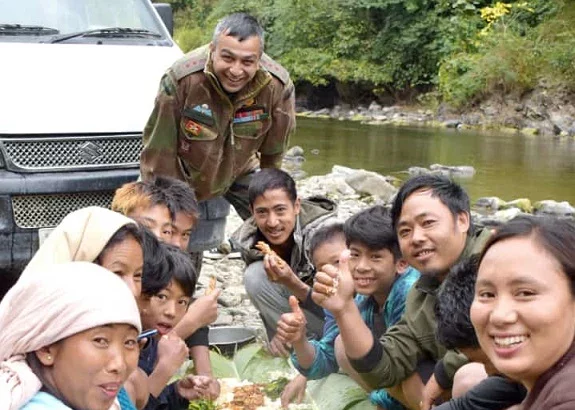
Major Archit Goswami, displaying exceptional courage and leadership, moved forward under danger. He personally eliminated a hardcore terrorist and helped rescue the trapped police personnel from the target house. His action saved a fellow security force member and ensured the success of the operation.
For this act of bravery, Major Archit Goswami was awarded the Sena Medal for Gallantry. The award was approved by the President of India and announced around Independence Day in August 2020. The citation recognised his unflinching bravery, tactical leadership, and courage in the face of danger.
The Sena Medal is awarded to personnel of the Indian Army for acts of gallantry or distinguished service. In Colonel Goswami’s case, it was a recognition earned in direct combat, where the margin between life and death was measured in seconds. It marked him as an officer who led from the front and acted decisively when lives were at stake.
After years in Special Forces and counter-terrorism environments, Colonel Goswami later took command of the 14th Battalion, Assam Rifles. His new responsibility placed him in one of India’s most sensitive and strategically important regions — the Northeast.
The Assam Rifles, often called the “Sentinels of the Northeast,” plays a unique role in the region. Its personnel guard difficult border areas, assist in counter-insurgency operations, support civil administration, and work closely with local communities. In states like Mizoram and Nagaland, the force is not only a security presence but also a bridge between the armed forces and the people.
Under Colonel Goswami’s command, 14 Assam Rifles operated across sensitive areas of Nagaland and Mizoram, including border regions near Myanmar. This frontier has long faced challenges such as illegal movement, smuggling, insurgent activity, and narcotics trafficking. The Indo-Myanmar border remains one of the most difficult borders to monitor due to terrain, dense forests, and cross-border ethnic and social linkages.
One of the major challenges in Mizoram and nearby border districts has been the drug menace. Narcotics, including heroin and methamphetamine, are often smuggled through routes connected to the Golden Triangle region. These substances do not merely represent a law enforcement problem; they destroy families, damage youth, and create long-term social insecurity in border communities.
During Colonel Goswami’s tenure, 14 Assam Rifles took active steps to counter drug trafficking networks. Operations were carried out to intercept smuggling attempts and disrupt the supply chains that moved narcotics through vulnerable border routes. These actions formed an important part of the battalion’s security responsibility.
However, Colonel Goswami’s approach was not limited to enforcement. He understood that the fight against drugs could not be won only with seizures and arrests. It also required awareness, community participation, and youth engagement. Under his leadership, the battalion supported drug awareness campaigns and worked with local organisations to spread the message among young people in border areas.
This approach reflected a deeper understanding of soldiering in the Northeast. Security in such regions is not achieved only through weapons and patrols. It is built through trust, cooperation, and the confidence of local communities. A commanding officer must be firm against threats, but also sensitive to the fears, needs, and aspirations of the people.
This human-centred leadership became visible in Nagaland as well. In Noklak, local communities, including members of the Khiamniungan community, organised a farewell for the battalion and expressed their appreciation for the support received from Colonel Goswami and his men. Locals reportedly described the personnel as helpful, cooperative, and true friends of the hill people.
Small but meaningful acts, such as helping villagers with transport and supporting community activities, created strong bonds between the battalion and the people. In remote hill districts, such gestures matter deeply. They show that the uniform is not distant or intimidating, but present as a source of assistance and reassurance.
Yet it was in Serchhip, Mizoram, that Colonel Goswami’s service left its most emotional mark. His association with Shalom Special School, also known as Vohbik School, became one of the most touching chapters of his tenure.
The school serves specially-abled children, many of whom require special care, patience, and emotional support. Institutions like these often function with limited resources and depend heavily on community support. Colonel Goswami and his battalion extended sustained assistance to the school, including support for infrastructure, improvements, and regular engagement with the children.
For the students, he was not merely a senior officer visiting on official duty. He became someone who cared, someone who returned, someone who remembered them. For children who often communicate more through emotion than words, such consistency builds a deep bond.
When news of Colonel Goswami’s transfer reached the school, the farewell turned into an emotional scene. Children cried openly as they hugged him. Some appeared unable to express their feelings in words, but their tears communicated everything. Teachers and parents too broke down, overwhelmed by the departure of an officer who had quietly done so much for them.
The video resonated across India because it showed a side of the armed forces that is often overshadowed by combat stories. It reminded people that the Indian Army and Assam Rifles do not only fight enemies; they also build bridges, heal communities, and touch lives in places far from the national spotlight.
In Mizoram, Colonel Goswami’s farewell became more than a transfer ceremony. It became a testimony to the emotional bond between a soldier and the people he served. It showed that respect cannot be commanded by rank alone. It is earned through conduct, compassion, and presence.
For defence aspirants, Colonel Archit Goswami’s career offers an important lesson. An Indian Army officer is expected to be more than a warrior. He must be a leader, a protector, a problem-solver, and sometimes even a guardian to communities facing difficult circumstances.
In Kashmir, Colonel Goswami displayed battlefield courage by leading from the front and saving a fellow security force personnel. In the Northeast, he displayed command maturity by taking on security challenges such as drug trafficking while also working closely with communities. In Serchhip, he displayed humanity by supporting children who needed care and attention.
This combination of courage and compassion is what makes his story special. The Sena Medal on his chest speaks of his bravery in combat. The tears of children in Mizoram speak of his kindness in service. Together, they show the complete personality of an officer who served not only with strength, but also with heart.
Colonel Archit Goswami’s journey from 4 Para SF to Assam Rifles reflects the wider spirit of the Indian Army. It is a spirit that fights when needed, protects when required, and serves without seeking applause. His transfer may have taken him away from Mizoram, but the memories he left behind will remain with the people he touched.
In an age where public attention often moves quickly from one viral story to another, the farewell of Colonel Archit Goswami deserves to be remembered for what it truly represents. It is not just the story of an officer leaving a posting. It is the story of a soldier who entered a community as a commander and left as a loved and respected member of their lives.
Colonel Archit Goswami, SM, stands as an example of the Indian Army officer’s finest qualities — fearless in battle, disciplined in command, and deeply humane in service. His story is not only about medals and operations. It is about the lives changed quietly, the trust earned patiently, and the tears that revealed what words could not.