Repeated rejection could not stop Aman Panwar from pursuing his dream of becoming an Indian Army officer. The 23-year-old from Jayrampur village in Uttar Pradesh’s Bulandshahr district reportedly faced nine unsuccessful SSB attempts before finally succeeding on his tenth appearance.





His years of preparation and perseverance culminated at the Indian Military Academy in Dehradun. Aman was commissioned as a Lieutenant after participating in the 158th Passing Out Parade, where hundreds of cadets crossed the historic portals of the academy to begin their careers as military officers.
The ceremony became an unforgettable occasion for Aman and his family. After enduring several disappointments during his selection journey, he finally marched at the IMA wearing the uniform he had dreamed of since childhood and earned the stars of a commissioned officer.
Lieutenant Aman Panwar comes from a family with a strong tradition of service in the Indian Army. His father, Subedar Major Mahesh Kumar, is serving in the Army and is currently posted in Pathankot.
Mahesh Kumar had also served in the Kupwara sector during the 1999 Kargil War. Aman’s three paternal uncles are retired Army personnel, making military service an integral part of the Panwar family’s identity and values.
Despite growing up in a military environment, Aman’s journey towards becoming an officer was not easy. While his family background inspired him to join the armed forces, he had to prove himself through years of academic preparation, competitive examinations and repeated appearances before the Services Selection Board.
Aman was an academically accomplished student from an early age. He completed his schooling at JP Vidya Mandir, securing 92.6 per cent marks in Class 10 and an outstanding 97.4 per cent in Class 12.
He later pursued a Bachelor of Science degree from Delhi University. Although his strong academic record could have opened several career opportunities, Aman remained focused on joining the armed forces as a commissioned officer.
During his preparation, Aman successfully cleared the written examination for the Central Armed Police Forces. He also qualified for entry into the Indian Military Academy through the Combined Defence Services examination.
Clearing a written examination, however, is only one part of the officer-selection process. Candidates must also undergo the rigorous SSB interview, which evaluates their intelligence, personality, communication skills, leadership qualities, psychological suitability and ability to perform effectively in a group.
It was at this stage that Aman faced his greatest challenge. According to reports, he experienced rejection at the SSB nine times before finally being recommended during his tenth attempt.
Every unsuccessful attempt brought disappointment, but Aman refused to treat rejection as the end of his journey. He continued examining his weaknesses, improving his personality and preparing himself to return with greater confidence.
Rather than abandoning his ambition, he viewed each setback as an opportunity to learn. His ability to remain committed despite repeated failures eventually became the defining feature of his journey.
The tenth attempt finally brought the result for which Aman and his family had been waiting. He cleared the SSB process and secured his opportunity to train at the Indian Military Academy, one of India’s most prestigious military institutions.
Training at the IMA tested him physically, mentally and emotionally. The demanding schedule, military exercises, academic instruction and leadership responsibilities transformed him from an aspirant into an officer capable of leading soldiers.
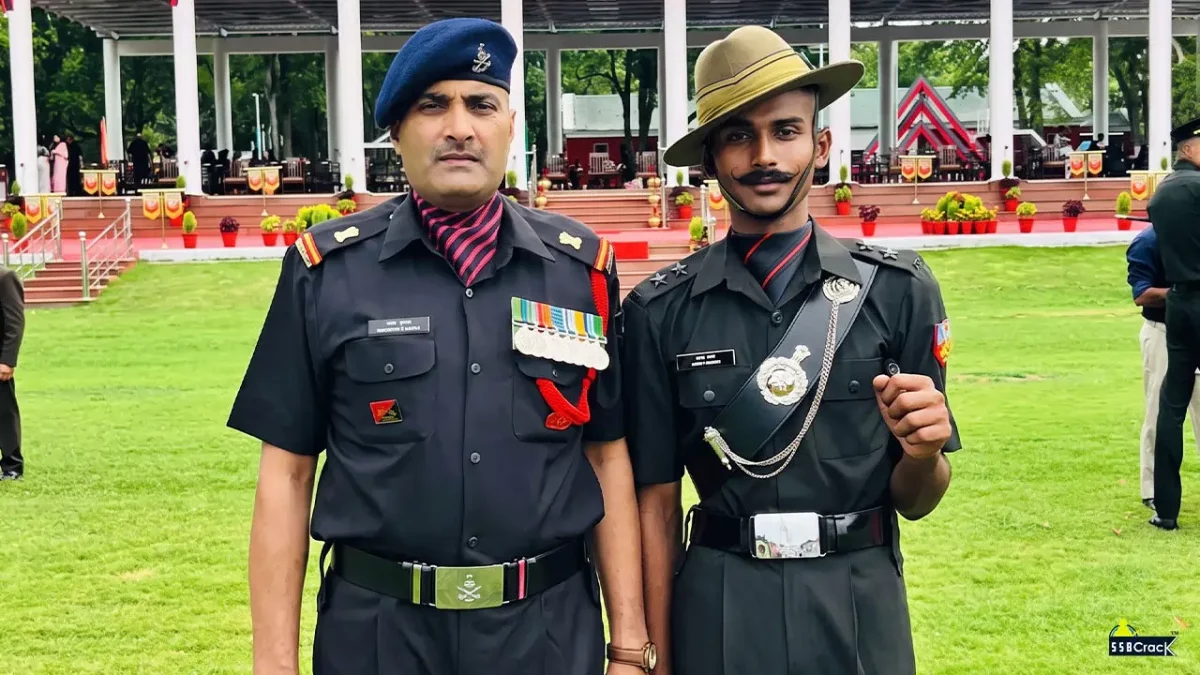
His journey reached its proudest moment during the Passing Out Parade in Dehradun. Aman marched alongside fellow cadets before being commissioned into the Indian Army with the rank of Lieutenant.
President Droupadi Murmu reviewed the parade and took the salute. Uttarakhand Governor Lieutenant General Gurmit Singh and Chief Minister Pushkar Singh Dhami were also present during the prestigious military ceremony.
Following the parade, Aman’s father, Subedar Major Mahesh Kumar, and his mother, Anita Devi, placed the Lieutenant’s stars on his shoulders. The pipping ceremony marked the fulfilment of a long-cherished dream for the entire family.
For his father, who had spent years serving the nation as a soldier, watching his son become a commissioned officer was an exceptionally proud moment. Aman had not only continued the family’s military tradition but had also achieved the family’s aspiration of producing an Army officer.

News of Aman’s commissioning brought celebrations to Jayrampur village and the surrounding areas of Anupshahr. Relatives, neighbours and well-wishers congratulated the family on the young officer’s achievement.
The family also planned a grand welcome for Lieutenant Aman Panwar upon his return home. His success became a source of pride for the village and an example for young people preparing for careers in the armed forces.
Aman’s story holds particular significance for defence aspirants who experience rejection during the NDA, CDS, AFCAT or SSB selection process. Many capable candidates fail to clear the SSB in their initial attempts, often leading them to question their potential.
His journey demonstrates that an unsuccessful attempt does not permanently determine a candidate’s future. With honest self-assessment, disciplined preparation and consistent improvement, aspirants can return stronger and perform better in subsequent attempts.
At only 23 years of age, Lieutenant Aman Panwar has emerged as a symbol of persistence. From achieving excellent marks in school and studying at Delhi University to repeatedly facing the SSB and eventually graduating from the IMA, every stage of his journey demanded commitment.
The stars on his shoulders represent much more than his military rank. They symbolise the nine disappointments he overcame, the faith maintained by his family and the courage required to continue when success appeared distant.
Lieutenant Aman Panwar’s achievement sends a clear message to every young aspirant struggling with failure: rejection should not be allowed to define one’s ability. It should instead become a reason to prepare more intelligently, improve continuously and return with renewed determination.
After falling short nine times, Aman succeeded on his tenth attempt and transformed a long period of struggle into a memorable victory. His journey proves that those who remain committed to their goal can eventually turn repeated setbacks into stepping stones towards success.