The latest annual report by the United States Department of Defense on China’s military power has raised serious concerns for India, warning that Beijing views Arunachal Pradesh in a manner similar to Taiwan, placing it among its expanding list of so-called “core interests.”





The report, titled Military and Security Developments Involving the People’s Republic of China, equates China’s claims over Arunachal Pradesh with its positions on Taiwan, as well as disputed zones in the South China Sea and East China Sea. According to the Pentagon, these claims are central to China’s long-term objective of achieving the “great rejuvenation of the Chinese nation.”
Arunachal in China’s Strategic Calculus
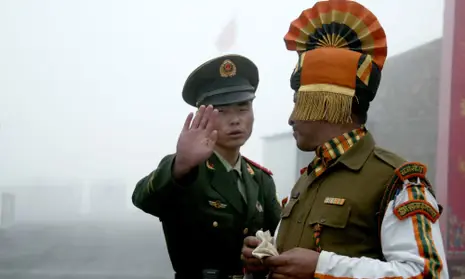
The report notes that China’s leadership has broadened the definition of its core interests, explicitly incorporating territorial claims along the Line of Actual Control (LAC). Particular emphasis is placed on the eastern sector, including Arunachal Pradesh and Sikkim, where the People’s Liberation Army (PLA) has intensified patrols, infrastructure development, and military activities.
While India and China completed disengagement at the remaining friction points of Depsang and Demchok in October last year, the report cautions that no meaningful de-escalation has followed. Both sides remain heavily forward-deployed along the 3,488-km LAC, bracing for yet another winter deployment.
Indian officials cited in the report underline that Arunachal Pradesh—especially the strategically critical Tawang sector, which China refers to as “South Tibet”—is robustly defended, with dense troop presence, artillery, and integrated air and missile defence systems.
Diplomatic Thaw, Strategic Distrust
The Pentagon assessment acknowledges a recent diplomatic thaw, highlighted by the meeting between Narendra Modi and Xi Jinping on the sidelines of the BRICS Summit in October 2024. However, it warns that mutual distrust and unresolved territorial disputes will likely constrain any substantive improvement in relations.
The report suggests China may use this limited détente to stabilise ties with India while attempting to limit the expansion of US–India defence cooperation, particularly within frameworks such as the Quad.
Wider Military Implications for India
Beyond the LAC, the report highlights China’s rapid military modernisation, including a projected nuclear arsenal of over 1,000 warheads by 2030 and ambitions to field six aircraft carriers by 2035. Of particular concern to New Delhi is Beijing’s sustained military support to Pakistan, designed to tie down Indian forces in a potential two-front scenario.
The report notes that China has supplied Pakistan with J-10C multirole fighters, 054A/P frigates, and advanced missiles—capabilities that have already been observed during recent regional military activities.
Additionally, China’s growing overseas footprint, including an operational presence at Ream Naval Base after Djibouti, signals expanding power projection into the Indian Ocean Region, raising alarms for Indian maritime security.
India’s Response
India continues to strengthen its deterrence posture through integrated air defence, deployment of S-400 systems, BrahMos missile units, and enhanced border infrastructure in Arunachal Pradesh. The report aligns with India’s emphasis on Atmanirbhar Bharat in defence, highlighting indigenous platforms and rapid-response formations as key countermeasures.
The Pentagon’s findings reinforce a stark message: China’s ambitions extend well beyond Taiwan, embedding Arunachal Pradesh within a broader revisionist strategy. For India, the challenge lies in balancing diplomacy with vigilance, ensuring preparedness against evolving threats while navigating an increasingly complex regional security environment heading into 2026 and beyond.