
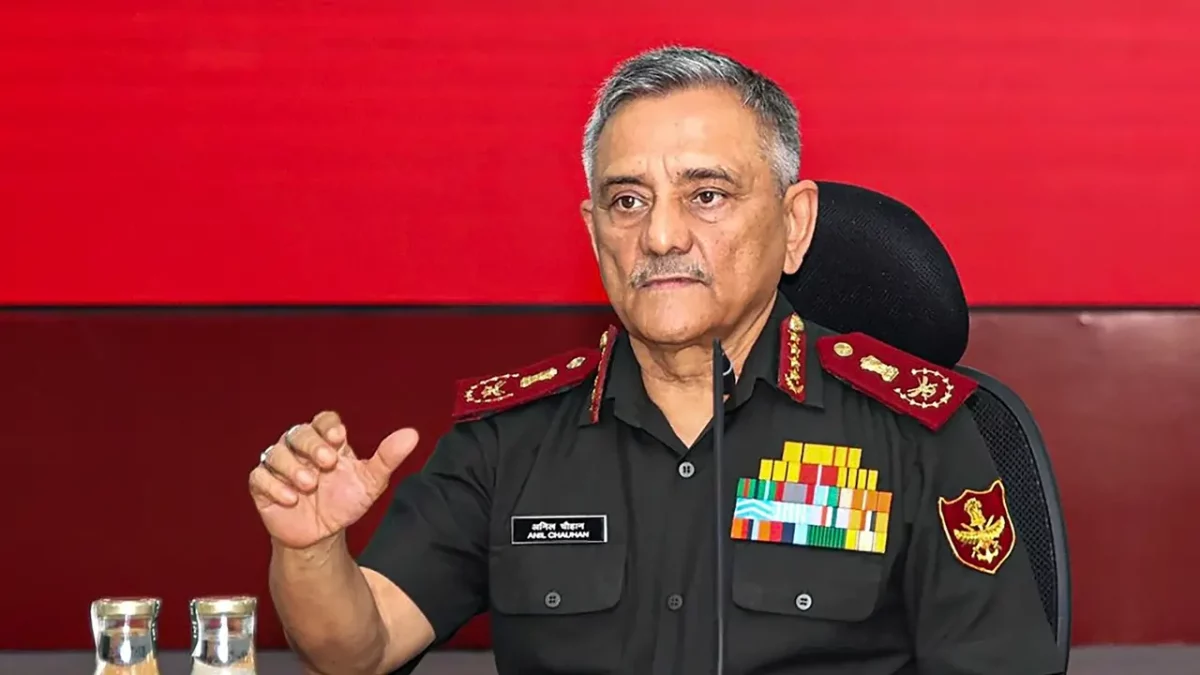
Chief of Defence Staff (CDS) General Anil Chauhan has offered a candid historical assessment of India–China relations, stating that former Prime Minister Jawaharlal Nehru believed the 1954 Panchsheel Agreement had effectively settled the northern border question, while China never shared that interpretation.

Speaking at an event in Dehradun, General Chauhan said that in the immediate aftermath of Independence, defining India’s frontiers was one of the most complex challenges facing the Nehru government. While India was aware of the McMahon Line in the eastern sector and its claims in Ladakh, uncertainty persisted, prompting New Delhi to pursue the Panchsheel Agreement in the hope of stabilising the border.
The CDS explained that India assumed recognising Tibet as part of China would lead to a peaceful and definitive resolution of boundary issues. Indian policymakers also believed that China, having consolidated control over Tibet and Xinjiang, was seeking stability in its peripheries. This expectation shaped India’s decision to formalise relations through the Panchsheel principles of peaceful coexistence.
However, General Chauhan underlined that China viewed the agreement very differently. According to him, Beijing considered Panchsheel to be limited largely to trade and diplomatic engagement, and not as a settlement of the boundary dispute. This fundamental divergence in interpretation, he noted, later contributed to enduring tensions along the Line of Actual Control.
The remarks come at a time when India–China ties are witnessing cautious diplomatic engagement following disengagement at friction points, even as strategic mistrust persists. By revisiting the Panchsheel legacy, the CDS highlighted how differing historical assumptions continue to shape contemporary border dynamics between the two Asian powers.