
In the history of modern air warfare, only a handful of military officers become associated with a moment that fundamentally changes the perception of combat capabilities. One such name is Group Captain Animesh Patni, Vir Chakra, an Indian Air Force officer whose leadership during Operation Sindoor in May 2025 placed him at the centre of one of the most significant air defence achievements ever recorded.


A former fighter pilot turned strategic air defence commander, Group Captain Patni led the S-400 ‘Triumf’ missile regiment that reportedly destroyed a Pakistani Saab 2000 Erieye Airborne Early Warning and Control (AEW&C) aircraft at an extraordinary range of 314 kilometres. The engagement is widely regarded by military analysts as the world’s longest confirmed surface-to-air missile kill.
His journey from the cockpit of frontline fighter aircraft to commanding India’s most advanced air defence platform reflects the evolving nature of modern warfare and the Indian Air Force’s growing emphasis on integrated combat operations.
Early Life and Background
Group Captain Animesh Patni belongs to Kunjed village in Rajasthan’s Baran district. Raised in an environment shaped by discipline and determination, he developed an early interest in aviation and military service.
He was commissioned into the Indian Air Force on 17 December 2005 as part of the 176th Course. Entering the Fighter Pilot branch with service number 28689 F(P), he began his career during a period when the IAF was modernising rapidly and adapting to new operational doctrines.
From the beginning of his service, Patni earned a reputation for professionalism, composure under pressure, and strong tactical understanding.
Career as a Fighter Pilot
Group Captain Patni initially served as a fighter pilot operating the MiG-29, one of the Indian Air Force’s key air superiority aircraft. The role demanded exceptional reflexes, situational awareness, and the ability to take rapid combat decisions in high-pressure conditions.
Over the years, he also gained operational exposure on other advanced fighter platforms, including the Su-30MKI and Mirage 2000. His flying career allowed him to develop deep familiarity with air combat tactics, radar systems, threat analysis, and mission coordination — skills that later proved crucial in strategic missile command.
Within the Air Force, he became known as an officer capable of combining technical expertise with calm battlefield decision-making.
The 2010 MiG-27 Emergency
One of the defining moments of Patni’s early career occurred on 10 November 2010 while serving as Flight Lieutenant A. Patni.
During a routine training sortie from Jodhpur Air Base in a MiG-27 aircraft, the fighter reportedly developed a serious in-flight emergency approximately 15 minutes after takeoff. Reports indicated that the aircraft suffered a fire-related technical failure while flying at roughly 2 kilometres altitude.
Despite the danger and rapidly deteriorating conditions, Patni remained composed. Instead of ejecting immediately, he first ensured that the aircraft was steered away from populated areas to minimise risk to civilians on the ground.
Only after guiding the aircraft away from inhabited regions did he eject safely. The MiG-27 eventually crashed around 60 kilometres south of Jodhpur in Rajasthan’s Pali district.
The incident highlighted the qualities that would later define his military career — courage, presence of mind, and prioritising civilian safety even during life-threatening situations.
Rise Through the Ranks
Patni steadily rose through the officer ranks due to his operational experience and leadership abilities. On 17 December 2018, he was promoted to the rank of Wing Commander.
As his career progressed, he became increasingly involved in integrated operational planning and strategic air defence coordination. His background as a fighter pilot gave him a unique understanding of aerial engagements from the perspective of both attacker and defender.
This dual understanding eventually led to a rare transition within the Indian Air Force.
Transition to the S-400 Air Defence System
In 2024, Group Captain Patni was selected to command a strategic S-400 ‘Triumf’ air defence regiment deployed at Adampur Airbase in Punjab.
The appointment was considered highly significant because transitions from fighter aviation to long-range missile command are relatively uncommon. However, the Indian Air Force viewed his combat flying experience and tactical understanding as valuable assets for operating one of the world’s most sophisticated air defence systems.
The Russian-origin S-400 system is designed to detect, track, and destroy multiple aerial threats simultaneously, including fighter aircraft, cruise missiles, drones, and airborne surveillance platforms.
Under Patni’s command, the regiment became a crucial component of India’s layered air defence network during a period of heightened regional tensions.
Operation Sindoor and the Historic Missile Engagement
Operation Sindoor was launched on 7 May 2025 following the deadly Pahalgam terrorist attack of 22 April 2025 that claimed the lives of 26 civilians. India initiated precision military operations targeting terrorist infrastructure across Pakistan and Pakistan-occupied Kashmir.
During the operation, Group Captain Patni’s S-400 regiment at Adampur Airbase was tasked with defending Indian airspace while supporting offensive operations.
The most dramatic moment came when the regiment reportedly detected and tracked a Pakistani Saab 2000 Erieye AEW&C aircraft operating deep inside Pakistani territory near Dinga.
The aircraft served as an airborne surveillance and battle management platform, making it one of the highest-value targets in the conflict.
According to multiple accounts, Patni’s regiment employed the long-range 40N6 missile variant of the S-400 system to engage the target at an unprecedented distance of 314 kilometres.
The engagement reportedly required precise coordination between radar operators, command networks, and firing units. Group Captain Patni personally supervised the engagement process, authorised final launch procedures, and coordinated the firing sequence with his team.
Moments later, radar signatures confirmed the destruction of the aircraft.
Military experts across the world described the strike as a landmark achievement in modern air defence warfare. The engagement reportedly surpassed all previously known confirmed surface-to-air missile kills in terms of range.
Combat Operations During the Conflict
Beyond the historic AEW&C interception, Patni’s regiment reportedly remained active throughout the duration of Operation Sindoor.
Reports suggest the S-400 unit successfully engaged multiple aerial threats during the conflict, including fighter aircraft and other airborne targets attempting to challenge Indian airspace.
The regiment’s operational success provided critical protection to Indian assets while reinforcing India’s ability to maintain air superiority and strategic deterrence under hostile conditions.
Recognition by National Leadership
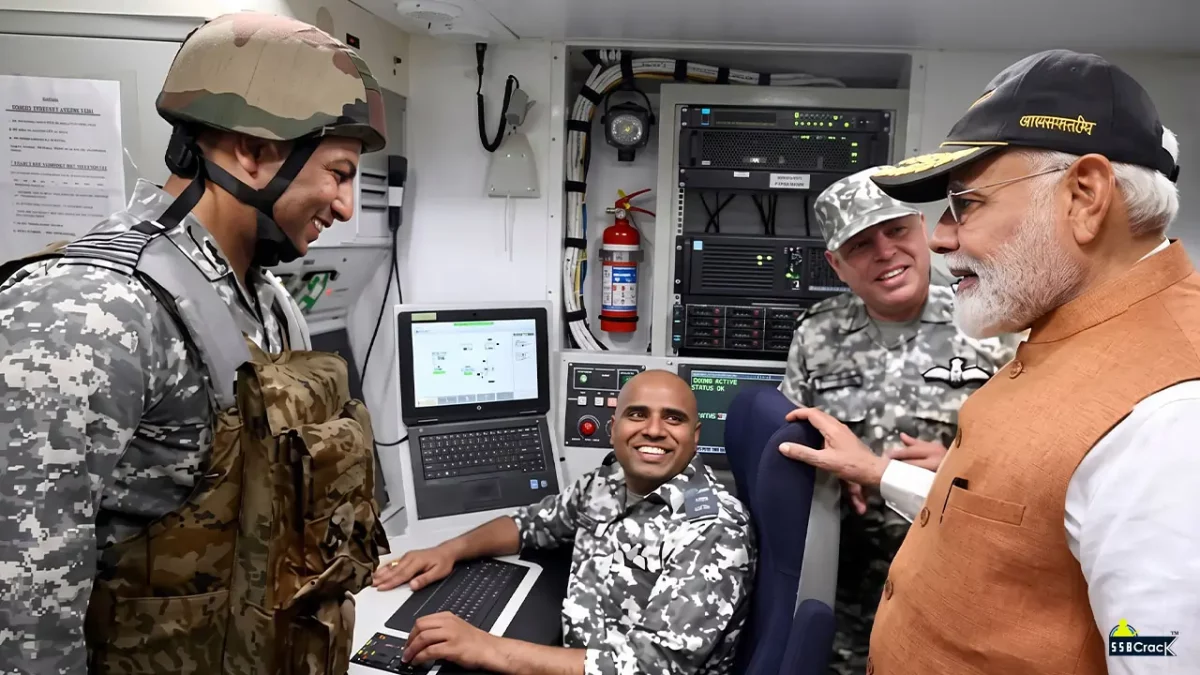
Following the successful conclusion of Operation Sindoor, Prime Minister Narendra Modi visited Adampur Airbase on 13 May 2025 to interact with Air Force personnel and acknowledge the role played by the S-400 regiment.
The visit symbolised the national importance attached to the operation and the strategic impact of the air defence success achieved under Group Captain Patni’s leadership.
Awarded the Vir Chakra
For his leadership, tactical innovation, and operational success during the conflict, Group Captain Animesh Patni was awarded the Vir Chakra, India’s third-highest wartime gallantry award.
The award was approved by President Droupadi Murmu on 14 August 2025 and formally announced during Independence Day honours.
The official citation praised his exceptional leadership while commanding a forward-deployed strategic surface-to-air missile squadron under intense operational pressure.
The citation also recognised his ability to maintain offensive effectiveness while safeguarding his own resources and personnel during high-threat combat operations.
In addition to Patni’s recognition, officers Wing Commander Milind Londhe and Wing Commander Keshav Sharma from the same regiment received Mentions in Despatches for their contributions during the operation.
Global Attention and Strategic Impact
The 314-kilometre missile interception attracted attention from military observers worldwide.
Air Chief Marshal A. P. Singh reportedly described the strike as one of the largest recorded surface-to-air kills publicly acknowledged in modern warfare.
International defence analysts viewed the engagement as proof of the S-400 system’s operational effectiveness under real combat conditions.
The operation also reshaped military thinking regarding long-range integrated air defence, demonstrating how strategic missile systems could be used not only for defensive protection but also for offensive area denial deep into hostile airspace.
Legacy and Inspiration
Group Captain Animesh Patni’s journey reflects the transformation of modern military leadership in the Indian Air Force.
From surviving a dangerous MiG-27 emergency in 2010 to commanding one of the most consequential missile engagements in contemporary warfare, his career embodies professionalism, adaptability, and courage.
For many young defence aspirants across India — particularly in Rajasthan — his achievements have become a source of inspiration and pride.
Today, Group Captain Animesh Patni is remembered as one of the officers who demonstrated how technological mastery, battlefield composure, and strategic thinking can decisively influence the outcome of modern warfare.