
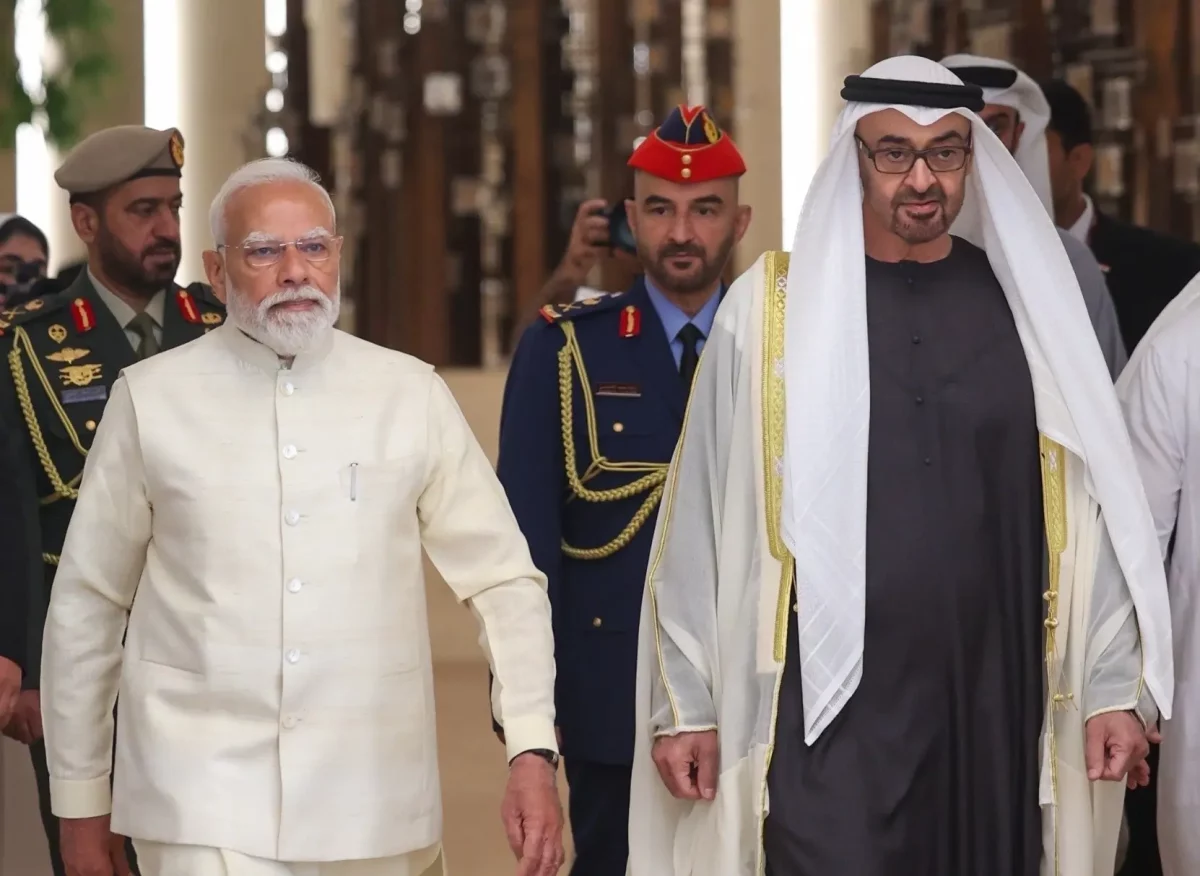
In a brief yet highly consequential visit lasting approximately two hours on the ground, Prime Minister Narendra Modi secured a series of strategic agreements with the United Arab Emirates on Friday, significantly strengthening India’s defence capabilities, energy security, and economic partnerships amid ongoing regional uncertainties in West Asia.





The visit to Abu Dhabi, the first leg of Prime Minister Modi’s five-nation tour covering the UAE, the Netherlands, Sweden, Norway, and Italy, yielded concrete outcomes in defence industrial collaboration, strategic petroleum reserves, long-term LPG supplies, maritime infrastructure, and fresh investment commitments worth USD 5 billion.
High-Level Engagement Amid Geopolitical Tensions
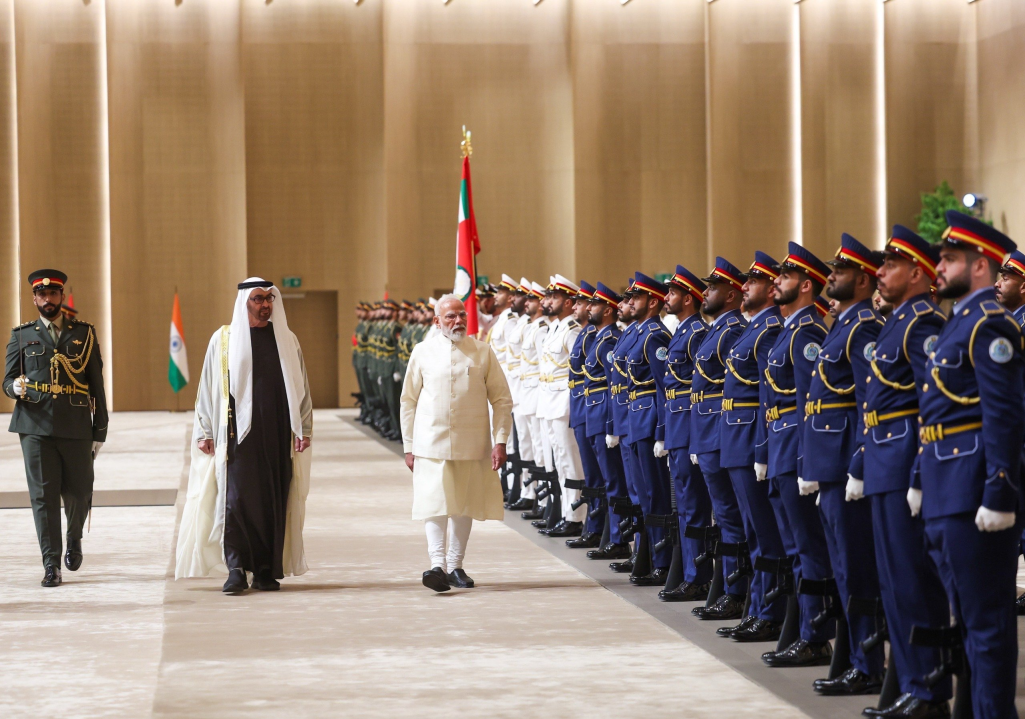
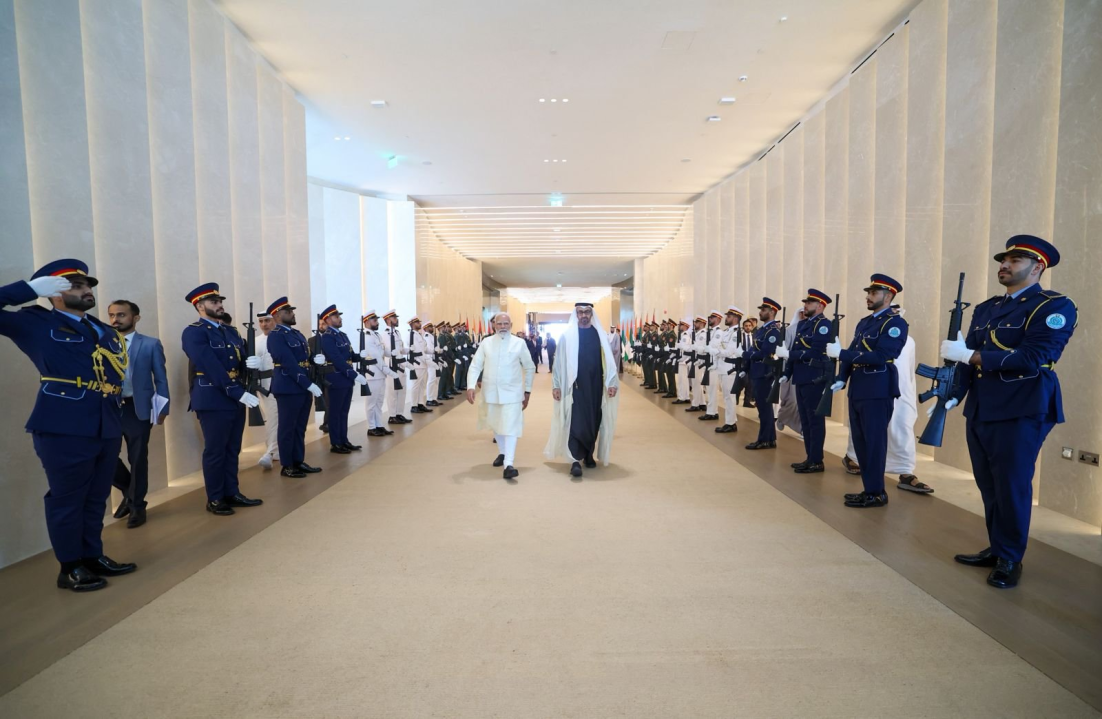
Prime Minister Modi held delegation-level talks with UAE President Sheikh Mohamed bin Zayed Al Nahyan following a ceremonial welcome and guard of honour. His aircraft was escorted by UAE F-16 fighter jets upon entering Emirati airspace, underscoring the warmth of bilateral ties.
The discussions took place against the backdrop of heightened tensions in West Asia and concerns over energy supply routes, particularly the Strait of Hormuz. Both leaders reviewed the progress of the India-UAE Comprehensive Strategic Partnership across energy, trade, defence, security, fintech, infrastructure, and people-to-people domains.
Landmark Defence Framework Agreement
A key highlight was the signing of the Agreement on Framework for the Strategic Defence Partnership. This moves bilateral defence cooperation beyond traditional exercises to deeper collaboration in:
- Joint development and co-production of advanced defence technologies
- Innovation and advanced technology sharing
- Training and military exercises
- Maritime security
- Cyber defence
- Secure communications
- Intelligence and information exchange
The framework positions the UAE as an important partner in India’s defence indigenisation and Atmanirbhar Bharat initiatives.
Major Boost to Energy Security
India achieved significant progress in energy security through two critical agreements:
Strategic Petroleum Reserves (SPR)
A Strategic Collaboration Agreement was concluded between Indian Strategic Petroleum Reserves Limited and the Abu Dhabi National Oil Company (ADNOC). Under this pact, ADNOC’s participation in India’s underground strategic crude oil reserves will increase to up to 30 million barrels. ADNOC will retain ownership of the oil and bear storage costs, while India gains assured priority access during emergencies. The agreement also explores the possibility of crude storage in Fujairah (UAE) and the establishment of strategic gas reserves.
Long-term LPG Supplies
An agreement between Indian Oil Corporation Ltd (IOCL) and ADNOC was signed for stable, long-term supplies of Liquefied Petroleum Gas. This arrangement is expected to provide greater predictability and security for India’s domestic LPG requirements.
These energy pacts assume particular importance given global oil market volatility and potential disruptions to traditional supply routes.
USD 5 Billion Investment Package
The UAE announced fresh investments totalling USD 5 billion in key Indian sectors:
- USD 3 billion by Emirates NBD into RBL Bank to expand credit capacity.
- USD 1 billion by the Abu Dhabi Investment Authority (ADIA) in partnership with India’s National Infrastructure & Investment Fund (NIIF) for priority infrastructure projects.
- USD 1 billion by the International Holding Company into Sammaan Capital, providing liquidity support to the housing finance sector.
These investments reflect the UAE’s continued confidence in India’s growth story and add to the already substantial Emirati investment footprint in Indian infrastructure and financial services.
Maritime and Technology Cooperation
Additional agreements signed during the visit include:
- An MoU between Cochin Shipyard Limited and Drydocks World (Dubai) for establishing a Ship Repair Cluster at Vadinar, Gujarat, including offshore fabrication capabilities under India’s Maritime Development Fund Scheme.
- A tripartite MoU involving Cochin Shipyard, Drydocks World, and the Centre of Excellence in Maritime & Shipbuilding for skill development and training of maritime professionals.
- A term sheet between CDAC (India) and G-42 (UAE) for setting up an 8 Exaflop Super Compute Cluster, advancing high-performance computing collaboration.
- Operationalisation of the Virtual Trade Corridor using the MAITRI platform to digitise and expedite cargo movement between the two countries.
PM Modi’s Remarks and Emphasis on Shared Values
In his interventions, Prime Minister Modi strongly condemned recent attacks on the UAE, describing them as “unacceptable in any form.” He expressed India’s solidarity with the UAE leadership and people, and thanked the Emirati authorities for the safety and welfare of the Indian community, noting that they were treated “like family members.”
He reiterated India’s commitment to dialogue and diplomacy for resolving regional issues and stressed the importance of keeping West Asia “free, open, and safe” in accordance with international law. PM Modi also highlighted the need for safe and unimpeded navigation through the Strait of Hormuz for regional stability and energy security.
Describing the UAE as his “second home,” he noted that the friendship between the two nations is “very strong” and that both countries will continue working together for mutual progress.
Strong Bilateral Foundation
Bilateral trade has already surpassed USD 100 billion, ahead of the original CEPA timeline, with both sides now targeting USD 200 billion in the coming years. The UAE remains one of India’s most important partners for energy imports, investment, and people-to-people linkages.
Prime Minister Modi extended an invitation to President Sheikh Mohamed bin Zayed Al Nahyan to visit India at an early date.
Strategic Significance
Friday’s short but substantive engagement in Abu Dhabi has delivered tangible and immediate gains for India in three critical domains — defence modernisation, energy resilience, and economic investment — while reinforcing the broader strategic partnership with a key Gulf nation.
As India navigates a complex global energy and security environment, the agreements signed during this visit provide both immediate buffers and long-term frameworks for cooperation. The outcomes underscore the maturity and depth of India-UAE relations and the effectiveness of high-level personal diplomacy in advancing national interests.
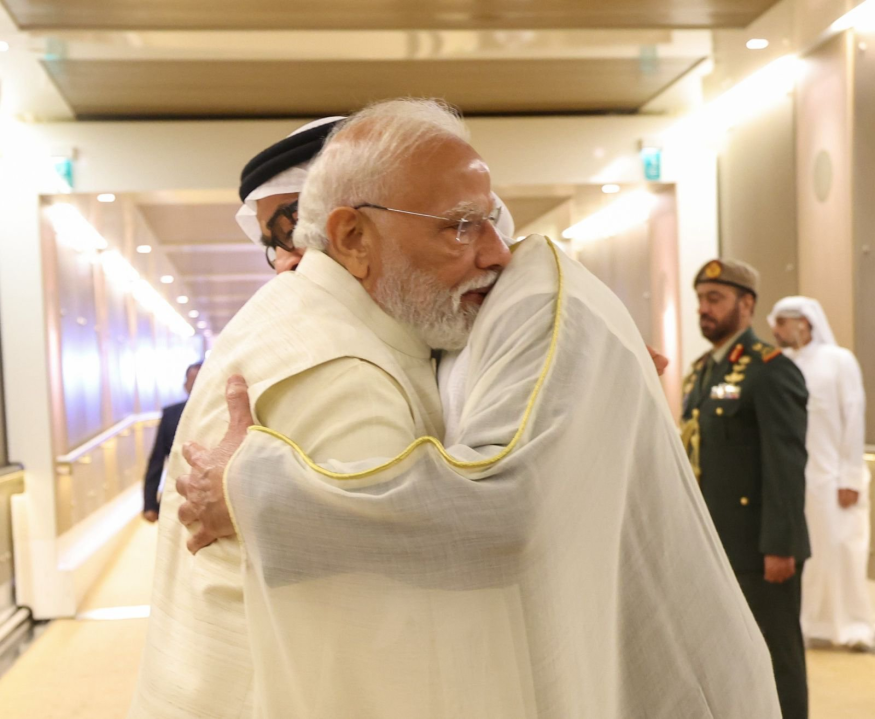
The visit concluded with President Sheikh Mohamed bin Zayed Al Nahyan seeing off Prime Minister Modi as he departed for the next leg of his European tour.