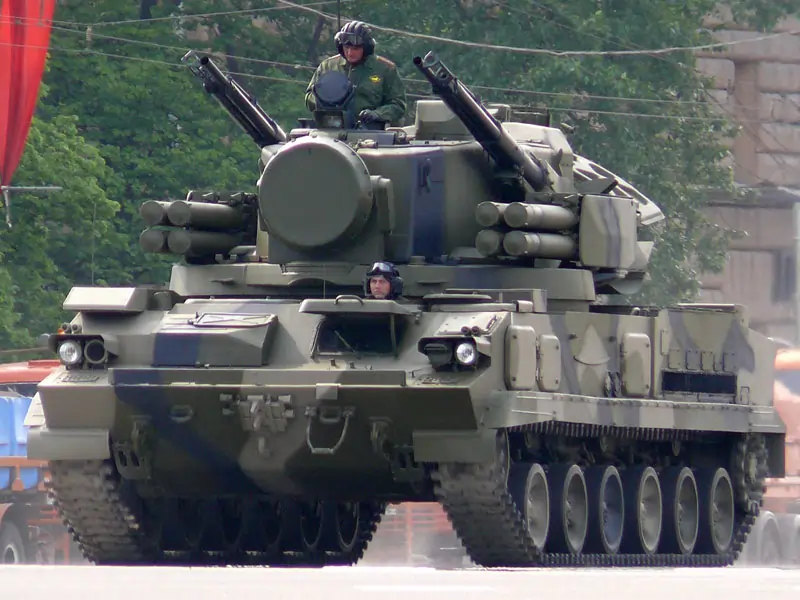
India has approved the procurement of the 2K22 Tunguska, a short-range air defence system from Russia. The contract, signed by the Ministry of Defence on March 27, 2026, is part of a broader effort to strengthen India’s air defence capabilities against modern threats such as drones, helicopters, and cruise missiles.





What is the Tunguska Air Defence System?
The Tunguska (NATO designation: SA-19 “Grison”) is a self-propelled, tracked air defence system designed to protect ground forces from low-flying aerial threats.
Its key feature is a hybrid design, combining:
- Surface-to-air missiles
- Twin automatic cannons
This allows it to engage targets at both medium and close ranges, making it highly versatile in battlefield conditions.
Key Features of Tunguska
1. Missile and Gun Integration
- Uses 9M311 surface-to-air missiles
- Equipped with twin 30 mm autocannons
- Effective against:
- Helicopters
- Drones
- Cruise missiles
- Low-flying aircraft
This dual system ensures layered protection at short range.
2. Range and Firepower
- Missile range: 8–10 km
- Engagement altitude: up to 3,500 metres
- Gun firing rate: 3,900–5,000 rounds per minute
This combination enables both precision strikes and rapid close-range defence.
3. Radar and Tracking Systems
- 360-degree surveillance radar (range up to 18 km)
- Target tracking radar with digital fire control
- Optical tracking system for use during electronic jamming
These features allow the system to operate effectively even in contested electronic environments.
4. Mobility and Battlefield Role
- Mounted on a tracked armoured chassis
- Can move alongside tanks and mechanised units
- Operates in diverse terrains and weather conditions
This makes it suitable for frontline deployment and dynamic combat situations.
5. Network Integration
- Can be integrated into a broader air defence network
- Receives targeting inputs from external systems
This enhances coordination and situational awareness.
Variants and Upgrades
The Tunguska system has evolved over time, with variants such as:
- 2K22M
- 2K22M1
These versions include improved missiles, upgraded fire control systems, and enhanced operational reliability.
Why India is Procuring Tunguska
India’s acquisition is aimed at strengthening short-range air defence (SHORAD) capabilities, particularly against emerging threats like:
- Drone swarms
- Low-altitude precision weapons
- Attack helicopters
The system complements existing platforms such as the Akash missile system and S-400, contributing to a layered air defence network.
Part of Larger Defence Modernisation
The procurement is part of broader approvals by the Defence Acquisition Council, chaired by Rajnath Singh.
Other approved systems include:
- Dhanush artillery guns
- Armoured-piercing ammunition
- High-capacity communication systems
- Advanced surveillance platforms
Operational Significance
The Tunguska remains relevant in modern warfare due to:
- Increasing use of drones and UAVs
- Need for rapid-response air defence
- Protection of mechanised forces in active combat zones
It acts as a last line of defence for troops against low-altitude threats.
Conclusion
The 2K22 Tunguska air defence system is a versatile and mobile platform that enhances India’s ability to counter modern aerial threats. Its combination of missiles and guns, along with advanced radar and mobility, makes it a critical component of India’s evolving air defence architecture.