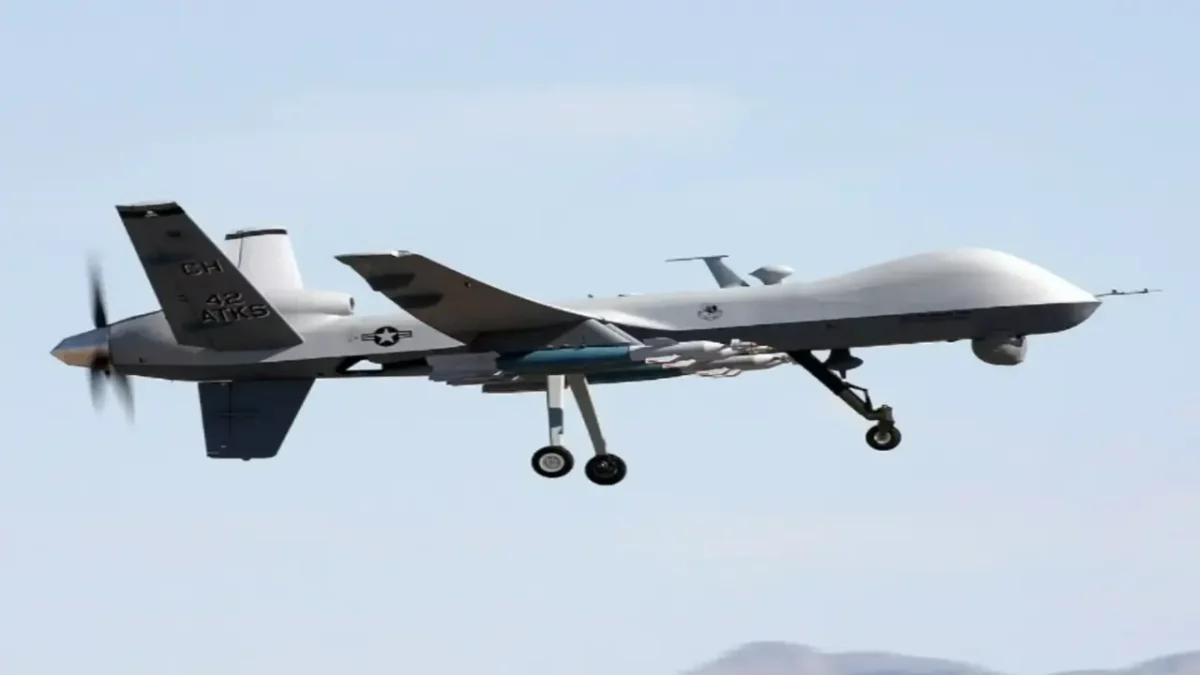
The Indian Army is set to significantly enhance its intelligence, surveillance, and reconnaissance (ISR) capabilities with the planned acquisition of 20 Tactical Remotely Piloted Aircraft (RPAs). The Ministry of Defence has initiated the procurement process by issuing a Request for Information (RFI) to identify suitable platforms and Indian vendors.





According to the RFI, the tactical RPAs—along with the required ground support equipment—will be procured in line with the Make in India and Aatmanirbhar Bharat initiatives. The drones are intended for deployment across diverse operational environments, with equal numbers earmarked for plains and high-altitude or mountainous regions.
All-Weather, All-Terrain Capability
The RFI specifies that the RPAs must be capable of day-and-night operations in commonly encountered weather conditions across all terrains. They should be able to operate in strong winds up to 60 knots in high-altitude areas and 30 knots in the plains, tolerate rainfall of up to 20 mm per hour, and withstand gusts of up to 10 knots during take-off and landing. The systems must also be capable of operating within non-thunderous cloud conditions.
Modular Design, Multiple Payloads
To ensure future readiness, the Army has emphasised a modular and scalable design, allowing upgrades with minimal modifications. The RPAs must be capable of flying with at least two different payloads simultaneously, reflecting the Army’s evolving multi-mission requirements.
As per the RFI, the drones should support a wide range of payloads, including EO/IR (Electro-Optical/Infra-Red) sensors, COMINT, ELINT, Synthetic Aperture Radar (SAR), FOPEN (Foliage Penetrating) radar, and communication relay systems—significantly expanding the Army’s ISR envelope.
Part of a Broader Drone Push
Tactical RPAs are increasingly central to modern warfare, offering rapid deployment, enhanced situational awareness, and operational flexibility, especially in contested and rugged terrain. Their mobility reduces dependence on fixed infrastructure, easing launch and recovery constraints.
The planned acquisition aligns with the Indian Army’s broader effort to scale up drone capabilities. Recently, the Army raised 380 dedicated ASHNI platoons, each comprising specially trained personnel to operate a variety of drones—including ISR platforms and loitering munitions—across infantry units.
Defence officials say the new tactical RPAs will complement existing drone units, improve real-time battlefield awareness, and strengthen the Army’s ability to operate effectively across the full spectrum of conflict, from counter-insurgency to high-intensity operations.
The RFI process will now help finalise Services Qualitative Requirements (SQRs), determine the procurement category, and shortlist probable Indian vendors, paving the way for a key upgrade in the Army’s surveillance and reconnaissance architecture.